


©2023 Savvy360, LLC. All Rights Reserved
PLAN A TRIP IN OUR APP


Quiet Devotion
On Kaua‘i’s only animal rescue farm, animals in need — and the community around them — find care, education, and healing through the work of founder Christy Kaui.
BY Krystal Kakimoto
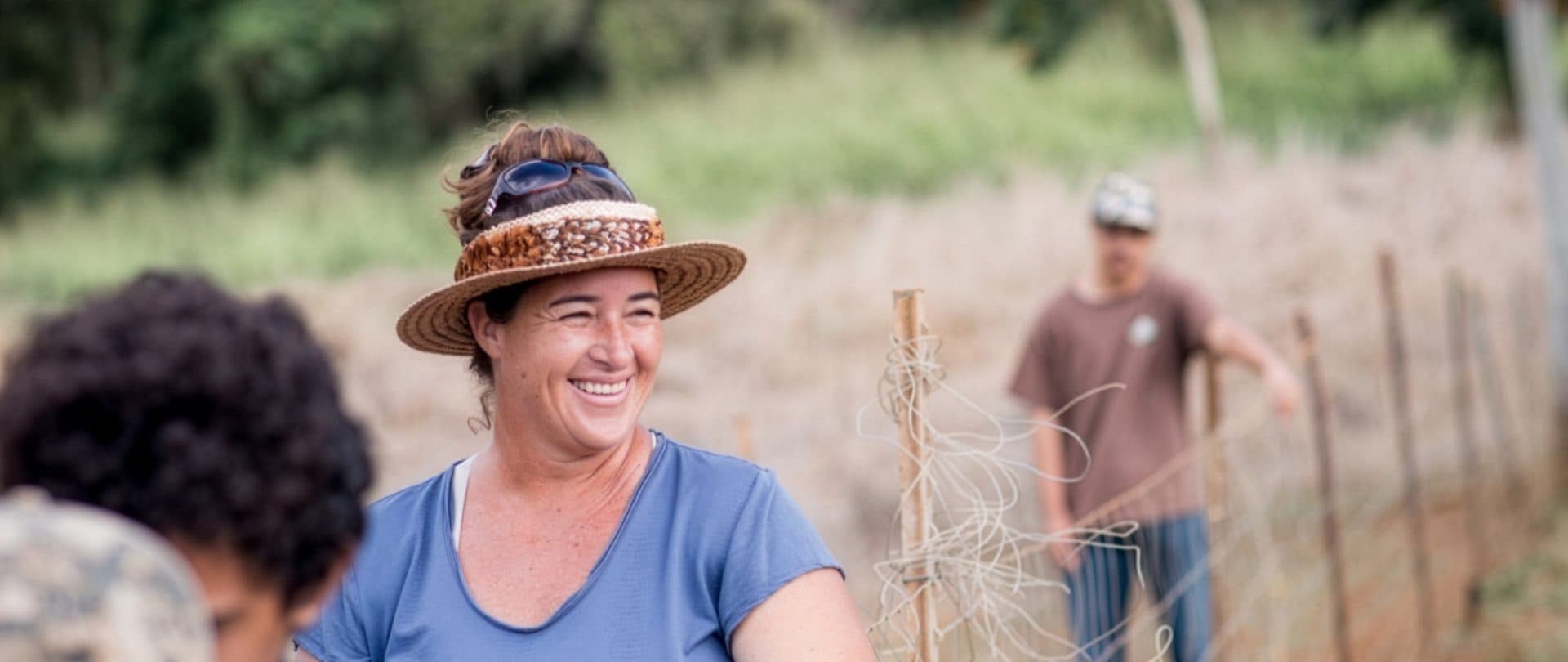
Before the sun rises over Kaua‘i, the farm is already awake. Bottle feedings begin at 5:30 a.m., and the morning settles quickly into a rhythm of care that rarely pauses. At the center of it all is Christy Kaui, founder and executive director of Kaua‘i Animal Education Farm — the island’s only animal rescue farm. Every task is an act of devotion. Born and raised on Kaua‘i, Kaui’s work is rooted in deep love for the island and the community that calls it home. Through grit, grace, and an unshakable sense of purpose, she has built a refuge for animals in need and a gathering place for the community, where healing unfolds naturally for both creatures in her care and the people who walk through the gates.
When Kaui reflects on how the farm began, she describes it as an organic progression. At the time, she was a young mother of three daughters, studying to become a registered nurse while homeschooling her girls. Instead of filling their days with electronics, Kaui chose a different path. She brought animals into their lives — guinea pigs, rabbits, mice, fish — and wove their care into the children’s education. What started as a hands-on learning experience soon grew into something much larger.
Word spread about the family’s ever-expanding menagerie, and people began arriving at Kaui’s door with animals they could no longer care for. One by one, the household grew, eventually surpassing 100 animals. Then life took an unexpected turn when Kaui's husband at the time became seriously ill. After undergoing surgery that left him unable to work for six months, the financial strain became too much to bear, and the family lost their home. “We had to rehome the animals. We were living at the beach. It was a really low time in our lives,” Kaui recalls. “As we stayed there with our girls, my phone kept ringing. I heard every sad story, but I couldn't help the animals — I couldn't even help myself.” It was in that moment of hardship that clarity emerged. “That's when I realized how important this work was,” she says. “And I thought, if we weren't going to do something, who is?”
In time, Kaui and her family rebuilt their lives and created a home once again. With renewed determination, she turned her focus toward a dedicated space for animals in urgent need of care. “I visited organizations on the mainland and learned about generational farms,” Kaui explains. “I saw how they sustained themselves, and not just through crops but through diversified programs and community support.” Building on these insights, she immersed herself in learning about animal-assisted rehabilitation and the science behind its transformative effects, especially for supporting mental health.
Equipped with this knowledge, Kaui reflected deeply on her own community. She thought of its needs, challenges, and cultural foundations. She intentionally wove cultural values into the program she was building. “You can't ignore culture, you can't separate it from what we do,” she says. “Even though these animals are not native to our ecosystem, we protect the ecosystem by preventing them from being released and overpopulating it. We create a safe space for them to live out their lives, while reminding ourselves of the connection to animals that so many of us are missing.”
Today, Kaua‘i Animal Education Farm spans four acres and is home to 16 distinct species. From donkeys and sheep to tortoises, pheasants, quails, and chinchillas — even a turkey — the diversity of animals continues to grow.
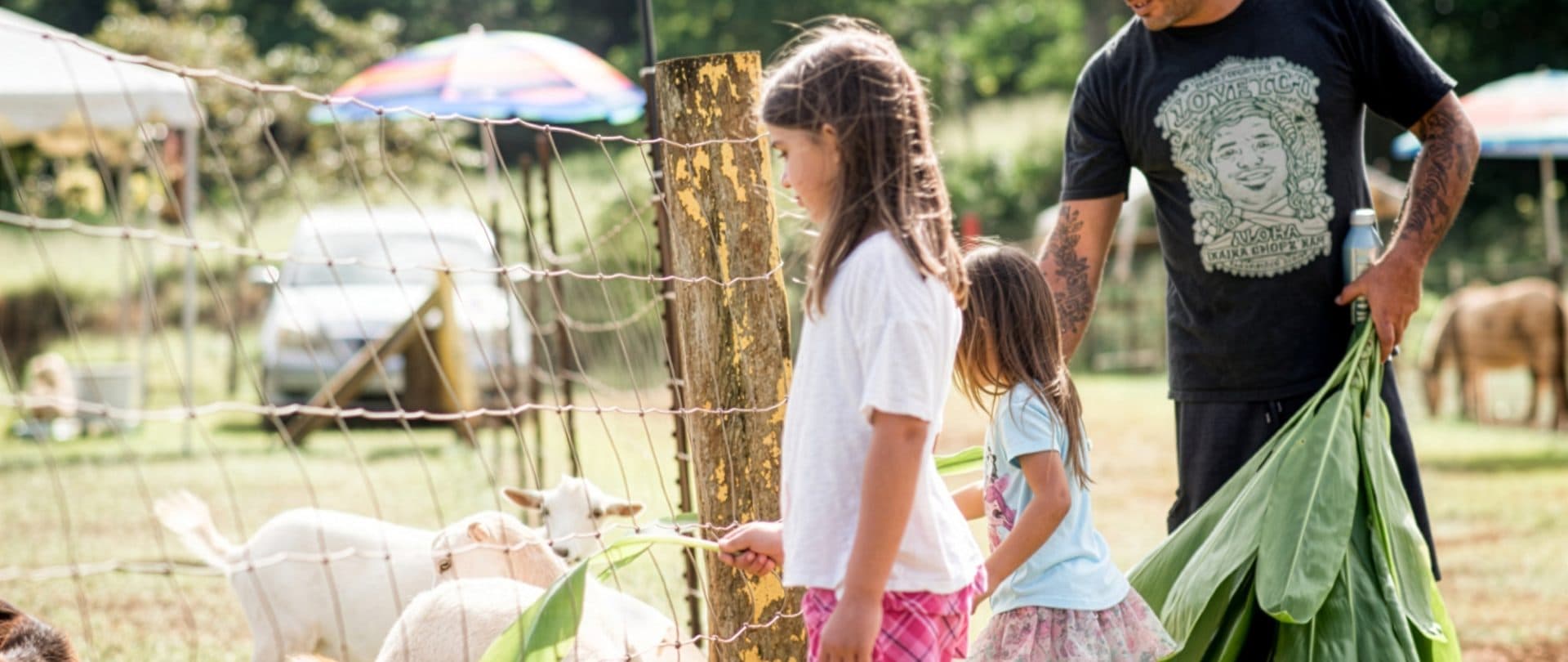
Beyond volunteer days, Kaui and her team open the farm to the wider community through immersive visits. Guests can join a one-hour Animal Interaction Tour, a guided experience that introduces them to the farm’s animals and gardens, or explore the farm at their own pace.
“We take in an average of 15 animals per month,” Kaui shares. “They come to us for so many reasons. Some people want to help and rescue an abandoned chick or baby pig, but they do not have the resources to care for them long-term. Others try farming and realize it is more complex than they expected. And sometimes they just can't afford the vet bills, and we take on their animals, even some on hospice care.”
No matter how they arrive, each animal's journey to the farm often begins with hardship. For Kaui, intake care is heartbreaking work as she stabilizes fragile animals, assesses their needs, and does everything possible to restore their health. With limited veterinary services available on the island — and even fewer educational resources for animal owners — many animals come from situations rooted not in neglect, but in misunderstanding. Some are species introduced through pet stores, less familiar and more complex to care for than the average dog or cat, leaving well-meaning owners unprepared for the responsibility involved.
For Kaui, education has become a cornerstone of the farm's mission. “Creating education around responsible animal ownership and sharing this through contacts and social media is one way we are hoping to address the problem,” she explains. “For example, if you are raising egg-laying hens, you cannot feed them tomatoes because it shuts down their egg production. And you cannot skimp on water, because even one day without it can affect their laying cycle for the entire week. These may seem like small details, but they make a big difference.”
Beyond being a refuge for unwanted animals and expanding educational resources, Kaui has opened the farm as a place of healing for the community. “We had eight suicides — all teenagers — in our community,” she shares. “When I say community, I mean your cousin, someone's aunty, brother, or classmate. We are so close-knit that when something happens, it touches everyone.”
In response, Kaui has worked tirelessly to build partnerships across the island, creating programs that uplift lives from keiki (children) to kūpuna (elders). At the farm, learning becomes tangible and alive. Second-grade students can visit, meet the animals, and return to their classrooms, inspired to write stories featuring the animals they encountered as main characters. Local organizations, including the Boys & Girls Club, bring youth to the farm to create small works of art inspired by their time with the animals, which are later sold to support the club’s expenses.
One of the most meaningful ways the farm serves the island is by offering a space for foster families to reconnect. With the goal of reunifying families, those first visits between birth parents and their children can feel tense, often taking place in sterile offices that lack warmth and comfort. Kaui envisioned something different. At the farm, reunions unfold in an open, engaging environment filled with life. “This is a lighthearted and beautiful space,” she says. “And, for families that want to return and conduct their visits on the farm, they can hānai (adopt) an animal that they care for together or have an area of the garden that they are responsible for.”
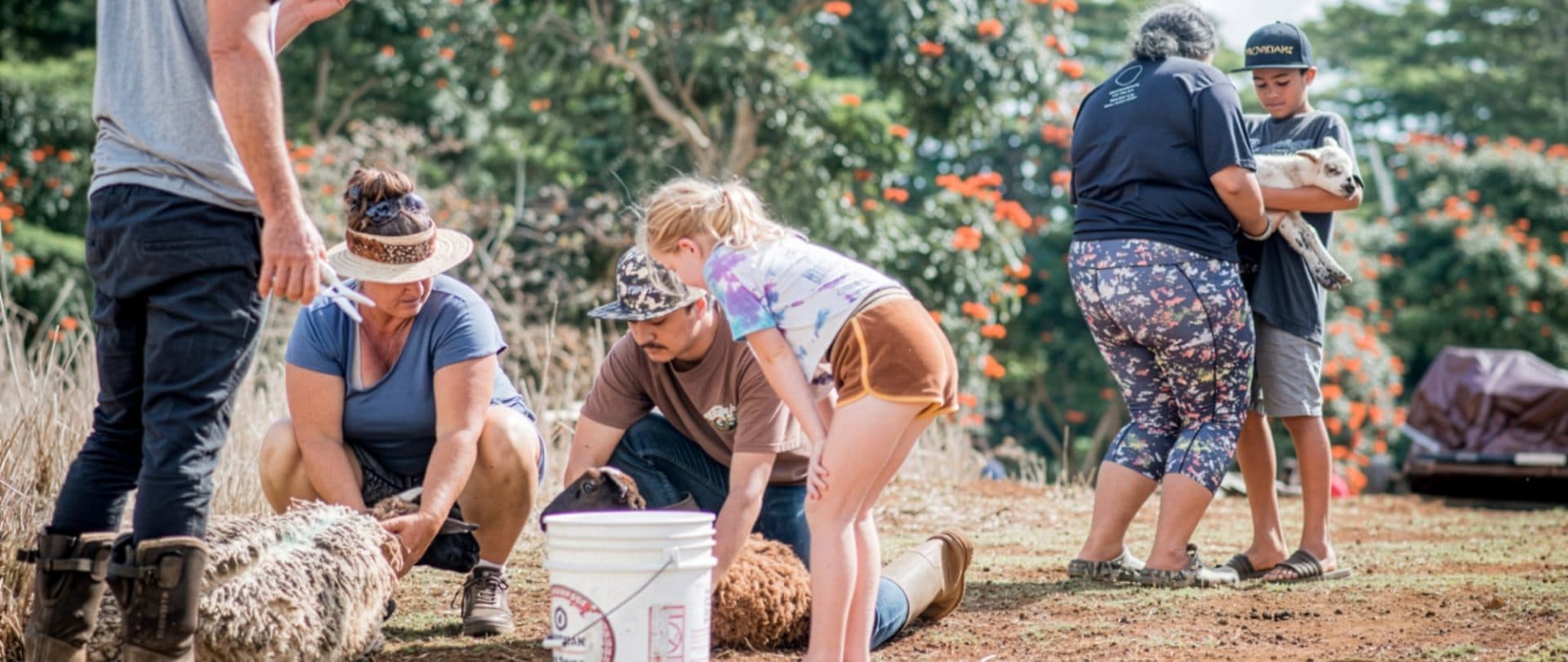
Kaui and her small but devoted team manage the day-to-day rhythm of the farm with quiet determination. By her side is her 16-year-old daughter, her now-husband, and a staff member who first joined the team as a volunteer before becoming an integral part of her organization. While this core group keeps the farm running, the community volunteers are the heart and soul of the mission. On the third Saturday of every month, the farm hosts volunteer workdays, welcoming individuals and families to gain hands-on experience with animals and native Hawaiian plants. Whether tending the gardens, cleaning animal enclosures, or assisting with administrative tasks, every contribution makes a meaningful difference.
Looking ahead, Kaui holds deep hope for the farm's future — for its animals and for the community it serves. Realizing that vision will require strategic partnerships, sustainable funding, and, most urgently, permanent land. "Our next big issue is needing to move and secure land for us. We are currently operating on a gentleman's handshake on a farm without running water, electricity, or the ability to build structures," she explains. Even as the farm operates at capacity, so does her heart — full of gratitude for the support that has carried them this far. “Staying motivated is easy, because I do this for the love of my island and its people,” she says.
She recalls a recent day when 40 preschool children visited the farm, met the animals, and picked fruit grown by members of a drug rehabilitation program, individuals rebuilding their lives. “There is nothing better than seeing a full circle moment like that.” On Kaua‘i Animal Education Farm, those moments happen every day — in the quiet rhythm of care that begins long before sunrise.
Kaua‘i Animal Education Farm; 1234 Uilama Road, Kapa‘a, HI 96746; (808) 822-0881; Open Monday–Thursday, 9 a.m.–6 p.m.; Friday and Sunday, 9 a.m.–5 p.m.; Saturday, 9 a.m.–6 p.m.; Tours available by appointment; sites.google.com/view/kauaianimaleducationfarm
Ways to support the farm: Venmo @KAEC16; Amazon Wishlist: amazon.com/hz/wishlist/ls/JV9I2KGG6FI3