


©2023 Savvy360, LLC. All Rights Reserved
PLAN A TRIP IN OUR APP




Water & Vision
From the irrigation ditches of Līhu‘e to the hospital bearing his name, George Norton Wilcox helped shape Kaua‘i through water, ingenuity, and quiet devotion.
BY Krystal Kakimoto
In Līhu‘e, water still moves through irrigation ditches carved more than a century ago, carrying mountain rain across fields that once fed Kaua‘i’s sugar plantations. They are part of the legacy of George Norton Wilcox, the engineer, plantation owner, and philanthropist who helped redirect not only water, but the course of Kaua‘i’s growth. Today, his name endures across Kaua‘i, from Grove Farm to Wilcox Medical Center. Though the plantation era has long since faded, the ditches, harbor, and institutions tied to Wilcox’s vision still shape life on the island he called home.
George Norton Wilcox was born on August 15, 1839, in Hilo, the second son of Abner Wilcox and Lucy Eliza Hart Wilcox. His parents were members of the eighth company of American Protestant missionaries who arrived in Hawai‘i in 1837. Raised in a household shaped by faith, discipline, and service, Wilcox grew up immersed in both his family’s New England heritage and the culture of the islands, becoming fluent in English and Hawaiian. In 1846, the family relocated to Kaua‘i to assume the Wai‘oli Mission post in Hanalei. Over the next decade, their household grew to include eight sons, all raised in a two-story white clapboard house built in the colonial New England style. Life in Hanalei unfolded with a steady rhythm centered on education, faith, and responsibility.
At age 10, Wilcox was sent to O‘ahu to attend Oahu College, later renamed Punahou School. There, academic study was paired with structured manual labor, reflecting the school’s emphasis on discipline and practical learning. Alongside his studies, Wilcox helped tend gardens and agricultural fields, work that quietly foreshadowed the path his life would later follow. After graduating from Punahou in 1860, Wilcox briefly worked for shipping magnate Samuel Gardner Wilder. His work included unloading shipments of guano imported from Jarvis Island, which at the time was highly valued as fertilizer for Hawai‘i’s expanding sugar plantations. Soon afterward, Wilcox traveled to the mainland to study civil engineering at Yale University’s Sheffield Scientific School.
When Wilcox returned to Kaua‘i in 1862, the island’s sugar industry was entering a period of rapid growth. He initially joined his younger brother Albert at Princeville Plantation under Robert Crichton Wyllie. He later worked at William Hyde Rice’s plantation in Hule‘ia Valley as a shop clerk and bookkeeper, roles that sharpened the business skills that would guide his future success. The defining opportunity of Wilcox’s career arrived in 1864, when he leased Grove Farm from Hermann A. Widemann. Initially hired as a land surveyor and supervisor of irrigation ditches, Wilcox stepped into a plantation struggling with drought and financial uncertainty. When Widemann prepared to relocate to O‘ahu to serve as a Supreme Court justice, Wilcox seized the opportunity to purchase the property.
Water was Grove Farm’s greatest challenge. The plantation’s fields lay in a dry region of Līhu‘e where rainfall alone could not sustain large-scale sugar cultivation. Drawing on his engineering training, Wilcox began constructing an extensive network of irrigation ditches that carried water from Kaua‘i’s mountain streams down to the plains below. Using little more than handheld tools and blasting powder, Wilcox and his crew carved channels across the landscape. The system redirected mountain water across miles of fields, turning once-parched land into productive sugarcane acreage and transforming Grove Farm’s future. While managing the plantation, Wilcox worked tirelessly to repay the remaining $10,000 owed on the property. To meet his financial obligations, he also served as tax collector, road supervisor, and postmaster in Līhu‘e. By 1874, he had paid off the debt entirely and established Grove Farm as one of Kaua‘i’s most successful sugar plantations.

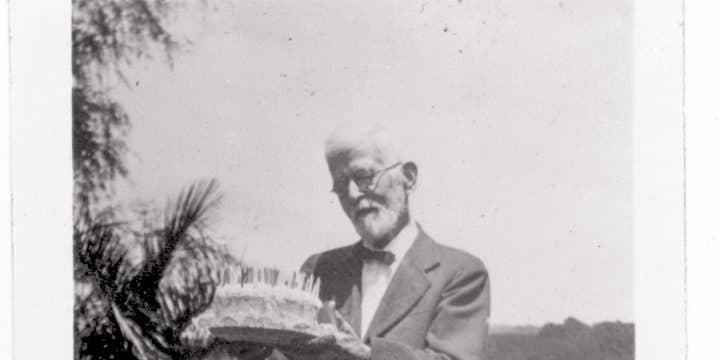

Innovation remained central to Wilcox’s approach. He installed the island’s first telephone line, replaced oxen with steam plows, and imported Kaua‘i’s first automobile in 1907 — signs of a man consistently drawn to new tools and faster ways of doing things. Time and again, he demonstrated a willingness to adopt new technologies long before they became commonplace. Wilcox’s influence extended beyond agriculture into public service. King David Kalākaua served in the House of Representatives of the Kingdom of Hawai‘i from 1888 to 1892. He later served as Minister of the Interior from November 8, 1892, to January 12, 1893. The Hawaiian Kingdom was undergoing significant political upheaval during this period. Wilcox’s time in government coincided with debates over the constitution known as the Bayonet Constitution, which significantly limited the authority of the monarchy.
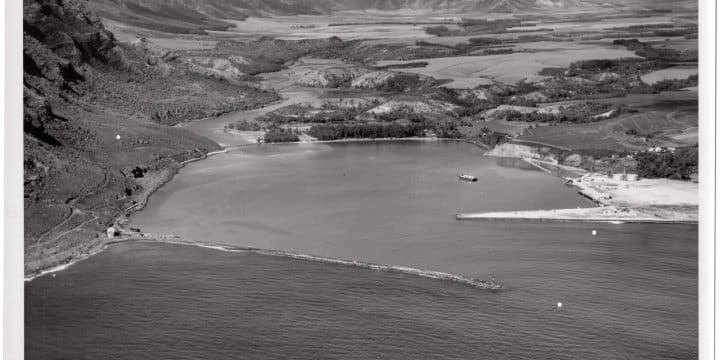
Following the overthrow of the Hawaiian Kingdom, Wilcox continued his public service in the Senate of the Republic of Hawai‘i until 1898. Though he later stepped away from politics, he remained active in business ventures, including a guano import enterprise and a partnership in the Inter-Island Steam Navigation Company, which played a vital role in connecting the Hawaiian Islands. In his later years, Wilcox increasingly turned his attention toward strengthening Kaua‘i’s infrastructure and long-term prosperity. When the U.S. Army Corps of Engineers proposed building a harbor at Nāwiliwili, Wilcox personally purchased the bond issue needed to finance the project. His investment helped establish the harbor that would become Kaua‘i’s primary maritime gateway.
He also created a trust to support public health on Kaua‘i. Though he amassed considerable wealth, Wilcox lived modestly in Līhu‘e, directing much of his fortune toward the island’s future. By 1915, he had donated approximately $1.5 million, and by 1920 that figure had grown to an estimated $3 million. Wilcox passed away at age 93 after a prolonged illness. Never married and without children, he left his estate to his nieces and nephews. Using the trust he established, his heirs created Wilcox Memorial Hospital, which opened in 1938 as a 30-bed facility. Today, Wilcox Medical Center has expanded into a 72-bed regional hospital serving Kaua‘i. Like the irrigation ditches that still move water across Līhu‘e, Wilcox’s legacy continues to run through Kaua‘i — in its land, its infrastructure, and the institutions that bear his vision forward.