


©2023 Savvy360, LLC. All Rights Reserved
PLAN A TRIP IN OUR APP



Cultivating Voyagers
Hui O Wa‘a Kaulua’s floating classroom is inspiring the next generation of voyagers.
BY Sara Stover
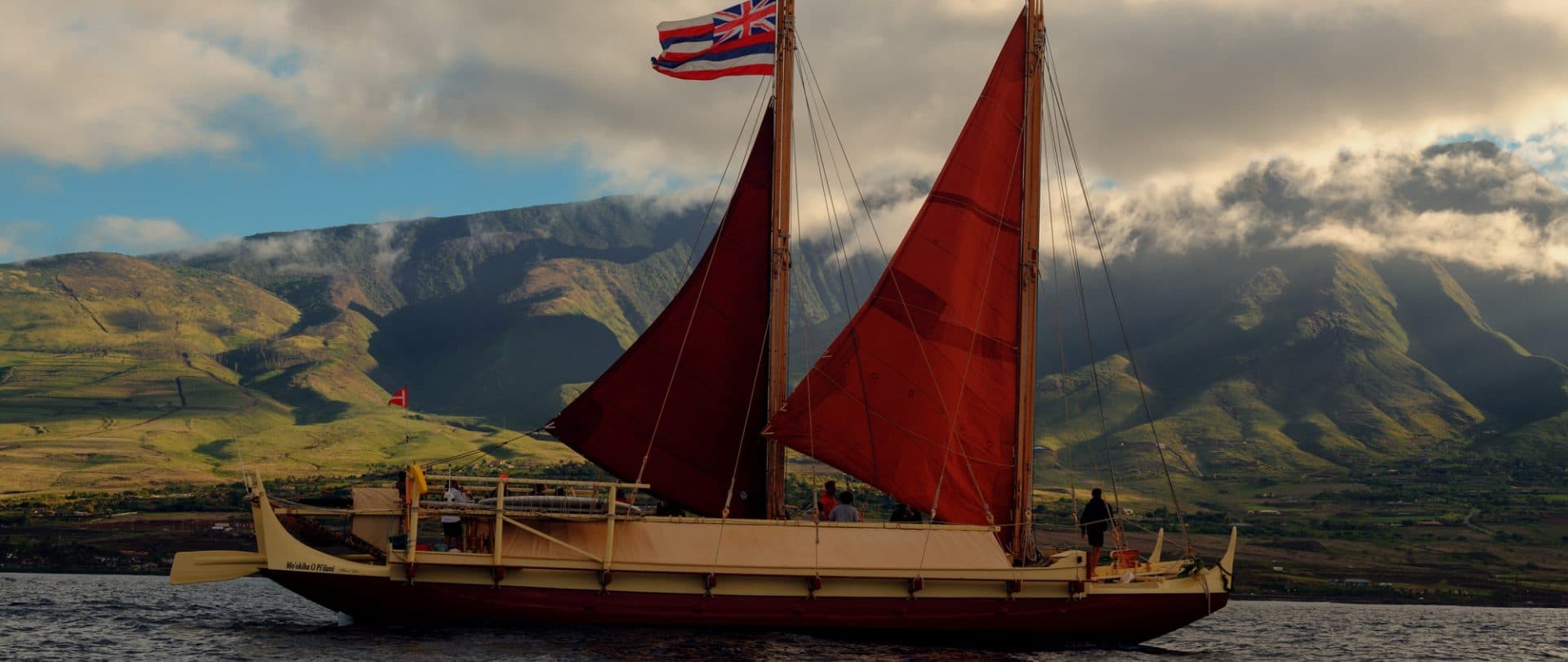
A gentle rain fell as Moʻokiha O Piʻilani slowly rolled up Front Street to Māla Wharf before sunrise on the morning of July 7, 2014. Four days later, the nearly 63-foot, 12-ton, wa‘a kaulua (double-hulled traditional sailing canoe) was launched into the ocean off the shores of Lāhainā at high tide. Crew of the Mo‘okiha, paddlers from 40 Maui canoe and paddling clubs, and Hawaiian practitioners from across the island gathered on the historic pier and in the water for a traditional Hawaiian canoe launching ceremony.
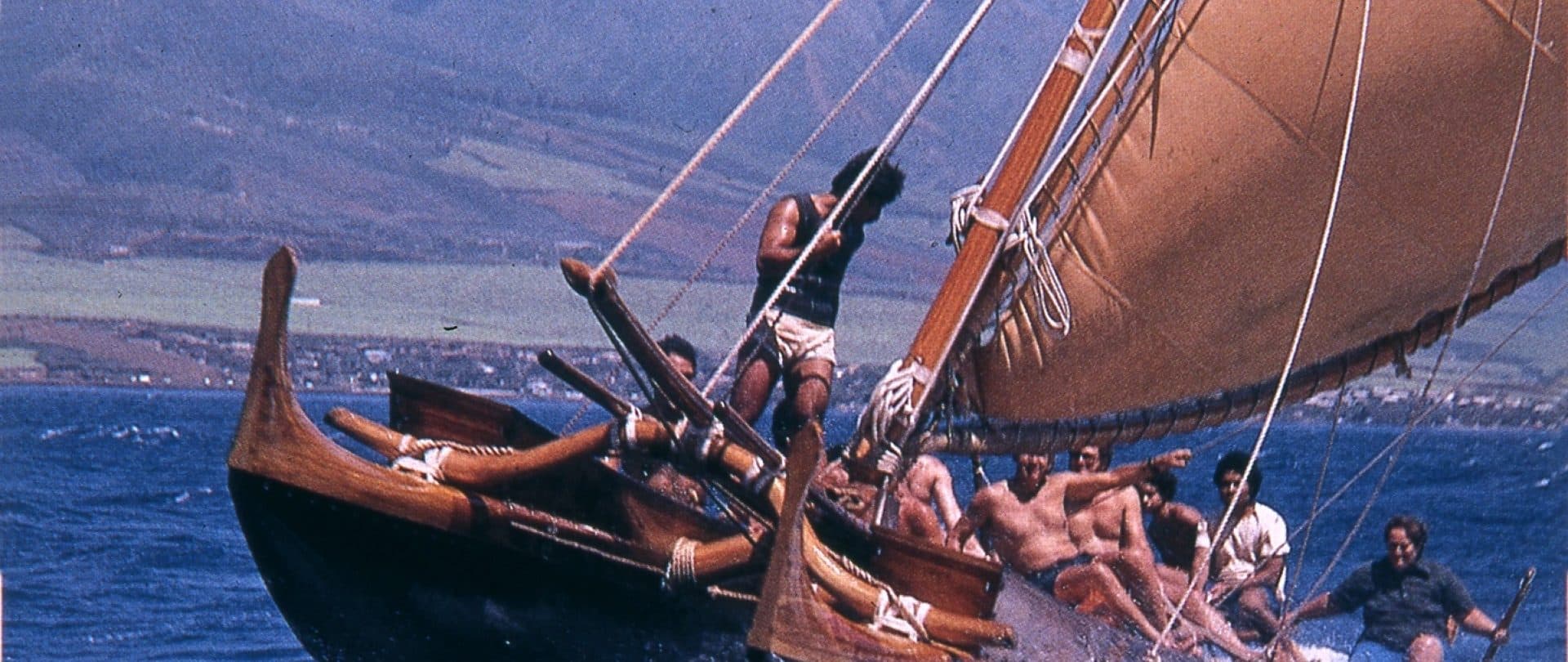
Since being launched, Mo‘okiha O Pi‘ilani, which means “The Sacred Lizard of Pi‘ilani,” has served as a floating classroom for Hui O Wa‘a Kaulua, an organization that formed in 1975 to fund the building of its first canoe, Mo‘olele, which translates to “The Leaping Lizard.” “In 1974, the late master carver and wa‘a builder LeVan Keola Sequeira began building Mo‘olele, a solid wood 42-foot wa‘a kaulua with a single mast and a traditional crab claw sail. This was occurring while the Hōkūle‘a was being constructed on O‘ahu. The launch of both canoes in 1975 represented a revival of ancient Hawaiian voyaging. It was a crucial part of the Native Hawaiian Cultural Renaissance movement of the 1970s,” says Kalā Baybayan Tanaka, a navigator and the Hui’s education director. The Hōkūle‘a is a double-hulled Hawaiian canoe best known for completing a voyage from Hawaiʻi to Tahiti using only traditional navigation techniques in 1976.
Meaning “the group of the double hull canoes,” Hui O Wa‘a Kaulua was officially formed in 1978 as a 501(c)(3) organization, and by the mid-1990s, work on the Mo‘okiha o Pi‘ilani began. Made from wood, fiberglass and resin with a twin mast, the waʻa kaulua was crafted for outer island voyaging over the course of 17 years at West Maui’s Kamehameha Iki Park. When she isn’t out on a voyage, the Mo‘okiha can be found moored in her slip at Mā‘alaea Harbor. In 2023, however, Mo‘okiha o Pi‘ilani made an unexpected voyage. When the catastrophic wildfire swept through Lāhainā on August 8, the canoe’s crew sprang into action, sailing her from where she was floating offshore to the shores of Moloka‘i and then O‘ahu. There, the ash-covered canoe went into dry dock.
Mo‘olele, which was in a park on Front Street where it was being restored, wasn’t as fortunate. 48 years after the launch of the canoe, she was lost in the fires along with all of Hui O Wa‘a Kaulua’s operations. Despite the devastating loss, the Hui has continued sailing along, fueled by a clear vision to cultivate future generations of voyagers who will perpetuate Hawaiian culture through Mo‘okiha O Pi‘ilani. At the Hui’s stern is an inspiring trio made up of Kalā, Beth Montalvo, and Timi Gilliom. Serving as Executive Director, Beth is no stranger to overcoming challenges. In 1991, she was severely injured while on an all-terrain vehicle. Today, Beth is an active paraplegic who uses adaptive equipment to paddle an outrigger canoe.
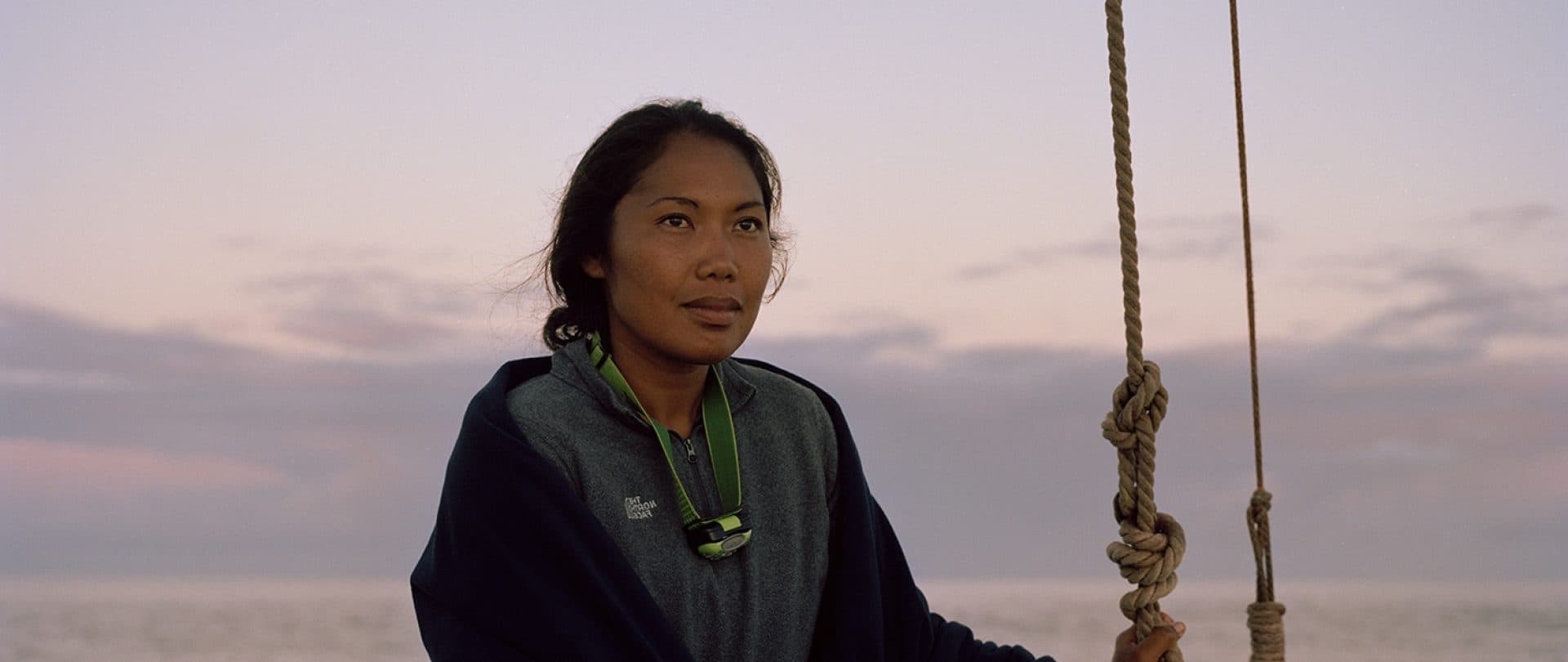
Timi joined the Hui more than two decades ago, learning to sail on Mo‘olele and being mentored by many Pwo (master navigators), including the late Pwo Kālepa Baybayan, before completing the building of Mo‘okiha O Pi‘ilani. Today, Timi is the kapena (captain) of the Mo‘okiha. Kalā, the daughter of Pwo Baybayan, also studied with her father. “After my first sail with my dad, I wanted to know everything about voyaging and navigation. He told me that I needed to find my canoe. At that time, Hui O Wa‘a Kaulua was building Mo‘okiha, so one day I went down to see if I could help. That day, I helped with sanding. After that, I helped every day. Being on the wa‘a changed my life. It led me to education,” says Kalā, who is also a middle school teacher for Lāhainā Intermediate School’s Kaiapuni o Lāhainā Hawaiian Immersion program. “After the fire, lots of kids had to move too, but many still come back and do the Hui’s programs.”
The programs include Wa‘a Mo‘olau, the ‘ōpio (junior) voyaging program, which reaches around 100 school children and community members every year. The program teaches haumāna (students) about celestial navigation, which is a bridge to astronomy, and voyaging on the ocean, which is a gateway to marine biology and other physical sciences. Papa Holokai is Hui O Wa‘a Kaulua’s crew training program for junior and senior voyagers, empowering crew through in-depth education of Hawaiian voyaging knowledge. This includes the history of voyaging, cultural protocol, celestial navigation, sense of place, nature awareness, health and fitness, and the cultivation and use of native plants.
The program ensures vessel and passenger safety by training students as lifeguards and in CPR and AED, embarking and disembarking harbor dock procedures, navigation voyaging procedures in and out of the water, vessel maintenance, protocols like oli (chants), and food storage for voyaging. In partnership with Pu‘u Kukui Watershed Preserve, which focuses on reforesting Hawai‘i to prevent runoff that is likely damaging to coral reefs, junior voyagers may even spend half a day planting koa trees in the watershed. In addition to skill building, the wa‘a kaulua also engages students in the practice of traditional Hawaiian behavior norms and beliefs like kōkua (help), kuleana (responsibility), and ho‘omau (persevering). Programs can range from a single hour of instruction on knot tying and cleating to multi-week courses that teach skills to become a skilled kanaka holomoana (seafaring person), including practical lifesaving tactics, waterfront training, and ocean safety.
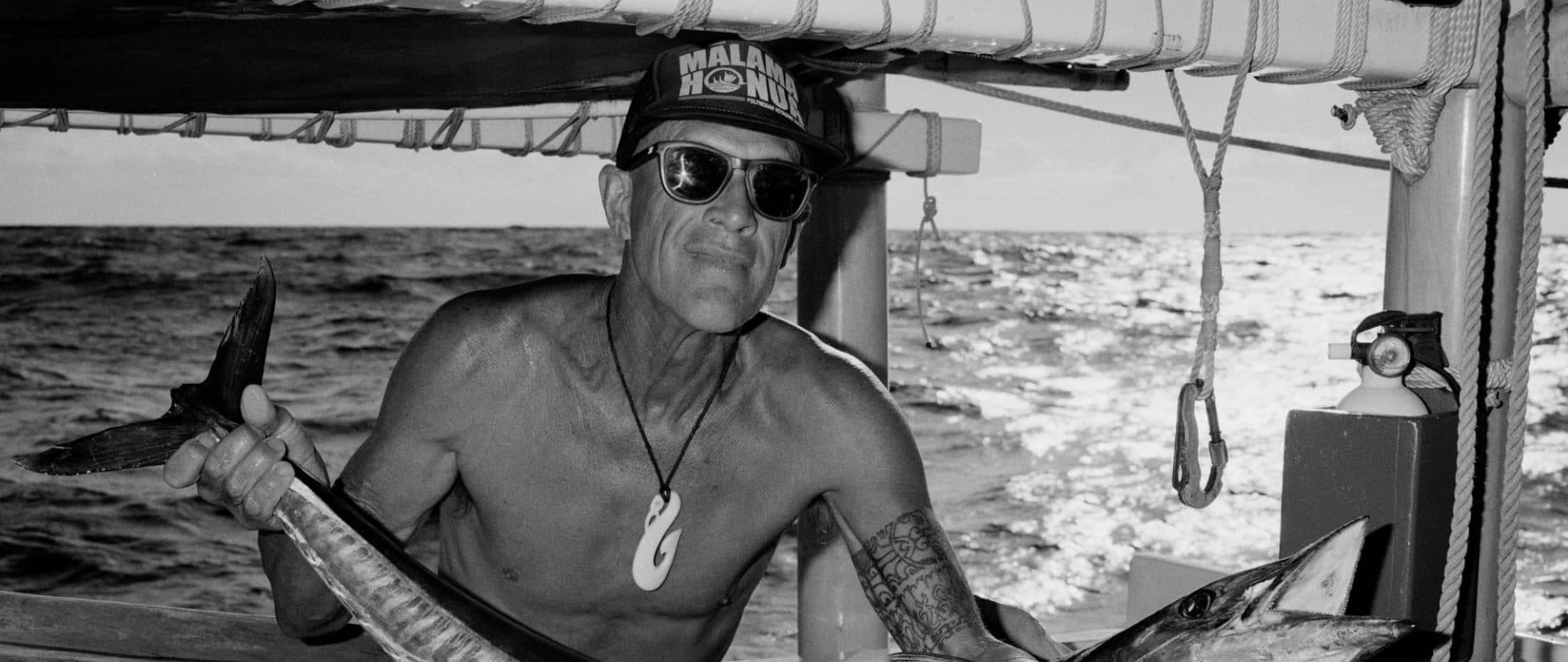
Longer programs conclude with an overnight or multi-day voyage on Mo‘okiha O Piʻilani. From whales and dolphins to sharks, haumana observe the kai, the realm of the ocean, while on their way to a neighboring island where they participate in community outreach at festivals and public events. Often, junior voyagers even learn how to can, preserve, bottle, and pressurize food for a deep-sea voyage. “The food part is now a major thing for us. The first time we did a multi-day voyage, it was 100% provisioned by our community’s hands through preserved meals. And it was delicious! Since then, one component of our voyages is to bring along all the food. It’s grown on the island and is preserved and freeze-dried by their hands. At night, the crew sits around talking about how the fish they are eating was caught by one person’s friend and another person’s family preserved it for us,” Kalā recalls. “We’ve also partnered with other voyaging organizations that have invited merchant mariners to talk to youth and adults alike about careers in maritime. It makes them think about our ancestors. We’re a maritime people—that’s how we traversed between the islands!” Learning about career pathways into the maritime industry from professional guest speakers is just the beginning. The keiki also learn cooperation and unity.
“There is a saying: ‘He wa‘a he moku, he moku he wa‘a—The canoe is an island, the island is a canoe.’ We use this to teach the keiki that when we are on the wa‘a, that’s our island, so we need to get along, manage resources, take care of our canoe, respect everyone’s roles, and work together in unity to arrive at the destination. Then, we instruct them to look at the island and ask: What does a healthy island canoe look like?” Kalā explains. It is this question that led to partnerships that supported two weeks at the Hawai‘i Wildlife Fund’s Discovery Center in June. Immersed in stories, songs and seamanship skills, sixth through eighth-grade students learned how to create virtual 3D maps of Maui’s reefs from Professor Haunani Kane, a traditional navigator who also leads this technique at the University of Hawai‘i at Hilo’s (UH Hilo) Multi-scale Environmental Graphical Analysis (MEGA) Lab using emerging technologies to mālama ‘āina (care for the land) and to make research accessible to everyone. “The students learned to map the coral heads, which taught them to rebuild relationships our ancestors had that allowed them to thrive.”
The Hawaiʻi Wildlife Fund has partnered with Hui O Wa‘a Kaulua since opening its Discovery Center in 2021. Partnerships with groups like MEGA Lab emphasize the life lessons that mapping can teach, poignantly conveyed by Pwo Baybayan in his keynote address at UH Hilo’s fall commencement in 2017: “Draw your own map, become the map maker, the cartographer for your own life. Don’t let anyone tell you what you should be. Don’t let others define you. Be responsible for owning your own dream and vision of where you want to arrive at. Be persistent and relentless and working that sail plan so that you arrive at your destination.” These integral partnerships also advance the Hui’s commitment to developing and conducting model educational programs by using voyaging to challenge and inspire students and their communities to learn about, respect, and care for the natural and social environment around them.
“Hui O Wa’a Kaulua also teaches its participants lessons that they can apply locally and globally. They learn to put the ‘āina (land) first. And when you put the ‘āina first, it ensures that limu and fish can grow, and we have food to eat and water,” Kalā shares. “It teaches us to value interpersonal relationships and treat each other and all of humanity with aloha, acknowledging that every person has a strength and we have the ability to work together and uplift each other, leading to a successful voyage. This translates to school, home, the workplace, and beyond. It’s bigger than just learning voyaging.”
As a tribute to voyaging and specifically to the Mo‘olele, a new wa‘a, Nāleilehua, is being built from the same molds as the original canoe by Hui O Wa‘a Kaulua, led by builder and Kapena Timi. Kalā anticipates that the keiki will have the opportunity to help with the final stages of the canoe building. “This wa‘a is Mo‘olele’s descendant and connects the keiki (children) back to LeVan Sequeira. I see our youth coming in once all the hulls are finished, and it’s time to help with lashing,” says Kalā. The Hui has also received help replacing the voyaging canoe that burned in the wildfires from the DLNR Division of State Parks, which donated over 22,000 pounds of koa. Kaua‘i trucker Timmy Lopez hauled the donated koa to the harbor, where Pasha Hawai‘i loaded it onto a ship bound for Maui. Along with the koa and the land and ocean transportation, the fiberglass hulls were also donated.
The 44-foot-long Nāleilehua is being built with donated koa to appear and function as traditional, while incorporating modern components such as hatch covers for storage. Kapena Timi and his crew of three are working tirelessly to have the new wa‘a finished this year. “We still feel the loss of Mo‘olele. She is now with our kūpuna who transitioned,” Kalā concludes. “But I know she continues to live on through Nāleilehua and the keiki. And as long as she does, we will continue to provide educational programs to all of Maui Nui. E ola mau loa nā wa‘a kaulua o Hawai‘i—Let the traditions of the canoe live on.”
Learn more about how the Hui keeps canoe traditions alive at huiowaa.org.
To learn more about Hawaii’s native marine life, whaling era, culture, and conservation, visit Hawaiʻi Wildlife Discovery Center. Located on the third floor of Whalers Village, 2435 Kāʻanapali Pkwy, Suite H-14, Lāhainā; (808) 900-7124; hawaiiwildlifediscoverycenter.org; Open daily 9 a.m. to 3 p.m.; Admission is by donation.
Shop + Style
See + Do
See + Do
See + Do
Shop + Style
See + Do
See + Do
See + Do