


©2023 Savvy360, LLC. All Rights Reserved
PLAN A TRIP IN OUR APP


Chris Beringer
Chris Beringer
Going Mauka
Minutes from downtown Honolulu, a network of trails threads valleys, ridgelines, and overlooks you can enter and leave in a morning
BY Natalie Schack
One moment you’re sipping coffee in Kaimukī or lingering over brunch in Kaka‘ako. Fifteen minutes later, you’re crossing a stream beneath a canopy of towering bamboo. By afternoon, you could be standing atop a ridgeline overlooking Diamond Head before heading back into town for dinner. In Honolulu, the edge between urban life and wilderness is remarkably thin. Nature and city sit so closely together you can hop between them as easily as taking the next exit.
It’s a rhythm that surprises even longtime residents. While best-known hikes like Diamond Head and Koko Crater attract much of the attention, they’re only a small part of O‘ahu’s hiking story.
Threaded through the mountains above Honolulu is one of the island’s great outdoor treasures: the Honolulu Mauka Trail System. Most visitors experience only a small piece of it on the popular Mānoa Falls Trail, but beyond the waterfall lies a network of 18 trails stretching across Mānoa, Makiki, Nu‘uanu, Pauoa, and Tantalus, mixed and matched into countless combinations. Some connect directly through the forest. Others are linked by scenic roads like Round Top Drive and Tantalus Drive, where one trail quietly ends, and another begins just a short walk over the pavement.
The system is part of Hawai‘i’s statewide Nā Ala Hele Trail and Access Program, established in the late 1980s to preserve, maintain, and expand public access to trails throughout the islands. But many of the routes themselves are much older than the program that cares for them. Long before there were hiking trails, pathways like these connected communities from mauka (toward the mountain) to makai (toward the ocean), carrying families, farmers, and travelers through the mountains. In 1892, Queen Lili‘uokalani signed the Highways Act, declaring that public roads and trails would remain public rights-of-way, helping preserve access to many historic routes that hikers still enjoy today.
The beauty of the Honolulu Mauka Trail System isn’t simply that it offers great hikes. It’s that it functions as a network. Rather than choosing a single destination, hikers can build routes that combine valleys, ridgelines, and overlooks in nearly endless variations.
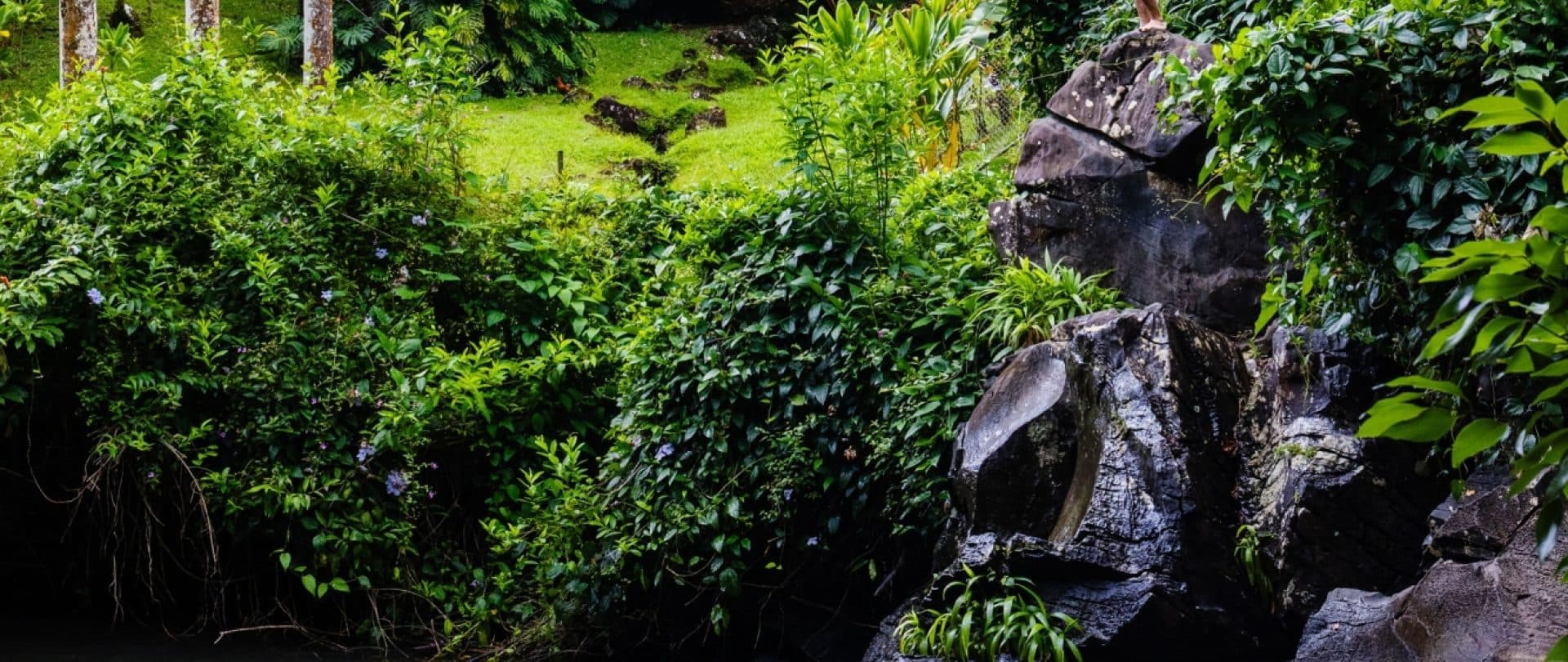
Within a relatively small corner of O‘ahu, you’ll find rocky mountain streams, towering ironwood groves, bamboo forests, native plants, restored lo‘i (irrigated taro terrace), panoramic lookouts, and a quiet rainforest that feels a world away from downtown Honolulu.
Perhaps nowhere else in Hawai‘i is the relationship between city and wilderness so immediate, where trailheads are next-door neighbors to residential homes, and the heart of the city is only a few minutes’ drive away. In a city celebrated for its beaches, the mountains remain one of its greatest luxuries: wild enough to feel like an escape, yet close enough to become part of everyday life.
Distance: 1.2 miles
Elevation Gain: 177 feet
Difficulty: Moderate
Parking: Limited roadside parking along Nu‘uanu Pali Drive. Exercise caution crossing the road, and never leave valuables visible. Trailheads like these are notorious for car break-ins.
Bathrooms: No
Dog-Friendly: Yes, for dogs comfortable with stream crossings.
What to Bring: Mosquito spray (and swimsuits, if you’re planning to take a dip in the Jackass Ginger Pool). There’s a stream crossing when you first enter, so shoes that can get wet are a smart addition.
Trail Connections: Nu‘uanu Trail, Pauoa Flats Trail, Mānoa Cliffs Trail
If there’s a perfect introduction to the Honolulu Mauka Trail System, this is it.
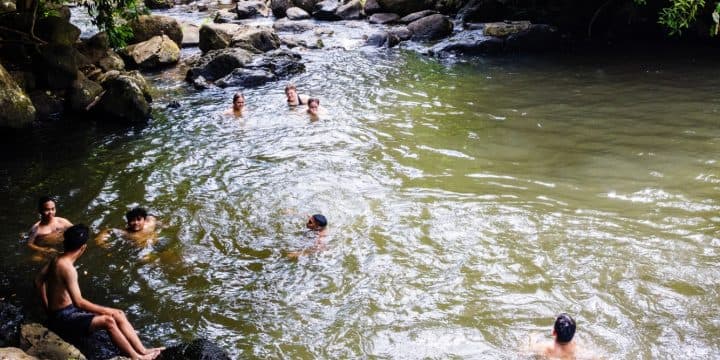
For many locals, the destination isn’t the trail at all; it’s Jackass Ginger Pool. Older accounts know it as Kahuailanawai, the site of tranquil water. Just a short walk from the trailhead, the freshwater swimming hole has long been a favorite place to cool off on a warm afternoon. On any given weekend, you’ll find families, groups of friends, and teenagers arriving in slippers and swimsuits, spreading towels across the rocks and taking turns splashing beneath the tiny cascades that tumble into the pool below. If you’ve never swum in a mountain pool, it’s a completely different experience from the ocean. The water is cool, clear, and startlingly fresh, a welcome contrast to a morning spent in the saltwater.
The pool alone is worth the visit. But don’t stop there.
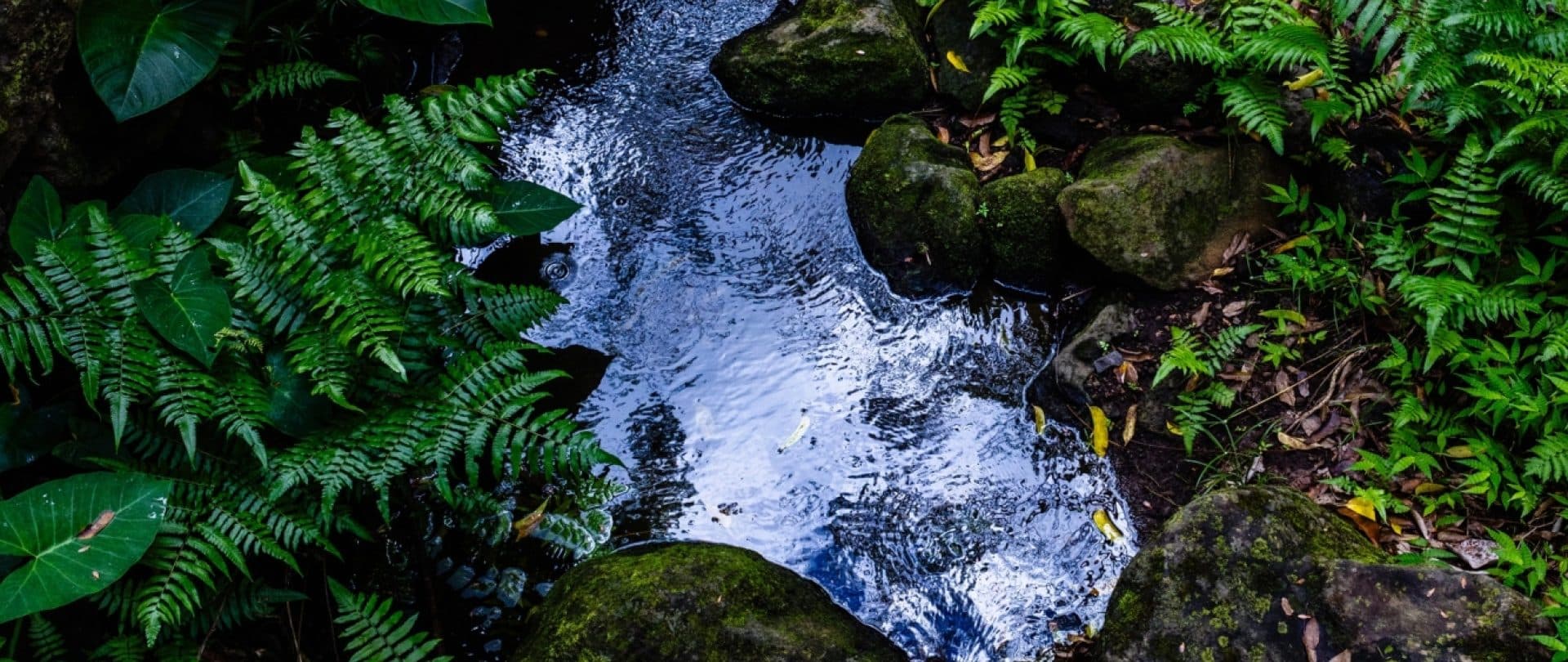
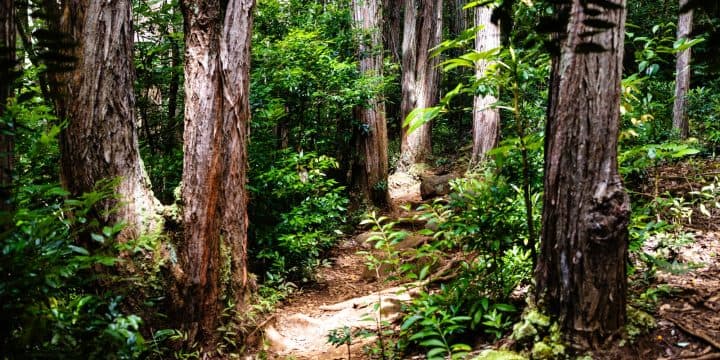
Continue around the rest of the loop, and Judd Trail reveals another side of the valley. The path winds beneath ironwoods and towering bamboo before disappearing into dense rainforest, where tangled roots, moss-covered rocks, and birdsong quickly replace any reminder that you’re only minutes from downtown Honolulu.
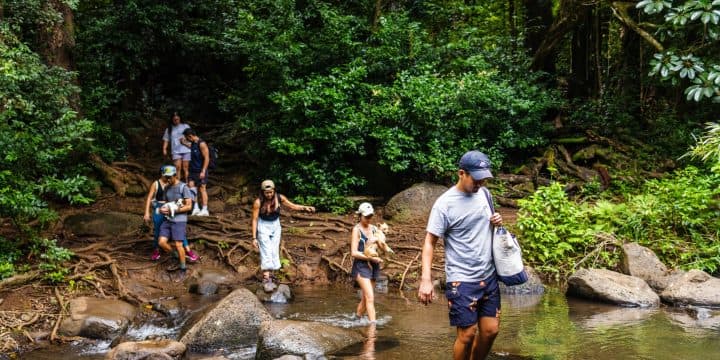
The only obstacle is also part of the fun: crossing Nu‘uanu Stream. Most days, careful footing across a series of rocks will keep your shoes dry. After heavy rain, though, the water can rise enough to turn the crossing into a more adventurous wade. Either way, it’s a fitting welcome to one of Honolulu’s most accessible stretches of rainforest.
Most visitors return to the parking lot after completing the loop. But for hikers who want to keep exploring, the trail offers another possibility. Along the mauka side of the loop, the Nu‘uanu Trail branches uphill toward Pauoa Flats, where one rainforest walk can become an entirely different adventure through the larger Honolulu Mauka Trail System.
Distance: 3.1 miles
Elevation Gain: 997 feet
Difficulty: Moderate
Parking: Makiki Forest Recreation Area
Bathrooms: Yes
Dog-Friendly: Yes
What to Bring: Water, sturdy shoes, and a camera.
Trail Connections: Kānealole Trail, Maunalaha Trail, Makiki Valley Trail, Moleka Trail, Pu‘u ‘Ualaka‘a (via Round Top Drive)
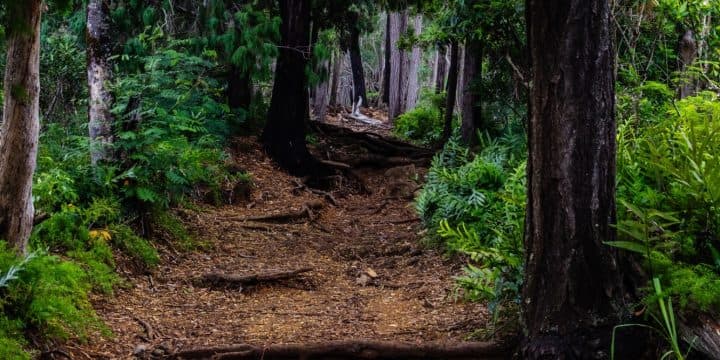
Where Judd feels wild, Makiki feels approachable. There’s a reason this easy-to-access trail is so popular among hikers, especially locals: dedicated parking, a clear, well-maintained trail, and a genuine workout. It is also one of the few mountain trails that boasts a bathroom, as well as a water fountain with a bottle refill station. Both are rare finds at a trailhead.
Known simply as “Makiki Loop” to most hikers, the route is a collection of interconnected trails, including Kānealole, Makiki Valley, and Maunalaha, woven together into one of Honolulu’s most popular rainforest hikes. It’s the Honolulu Mauka Trail System in miniature, where many of the island’s best adventures aren’t confined to a single trail, but unfold across a network of routes that invite hikers to keep exploring.
Getting to the trailhead requires a short hike of its own. From the parking lot, follow the signs onto the connector trail rather than the access road; it winds around the Hawai‘i Nature Center and drops you at picnic tables and a boot scrub station next to the bathrooms. From there, a bridge takes you over the babbling stream, and the forest immediately immerses you.
Small interpretive signs identify native and introduced trees that many hikers would otherwise pass without a second glance. A restored lo‘i sits quietly beside the trail, while native plantings and educational displays transform portions of the hike into something resembling an open-air botanical garden. A modest waterfall spills alongside the path, and sturdy bridges take you over the water at several other points.
It’s one of the few places where you can come for exercise and leave having learned something about the landscape itself.
The trail is also one of the best examples of how interconnected the system really is. From the main loop, side trails branch across Makiki Valley in multiple directions. Reach Round Top Drive, and you’re not finished; you’re simply standing at another crossroads. Walk across the road, and Pu‘u ‘Ualaka‘a offers sweeping city views. Continue farther, and you’ll find trailheads leading toward Moleka, Mānoa Cliffs, and Pauoa.
That’s part of Makiki’s charm. You don’t have to hike it the same way twice.
Distance: 4.3 miles
Elevation Gain: 1,341 feet
Difficulty: Moderate
Parking: Small roadside lot along Round Top Drive
Bathrooms: No
Dog-Friendly: Yes
What to Bring: Water, bug spray, and a light jacket if rain is in the forecast.
Trail Connections: Moleka Trail, Pauoa Flats Trail, Pu‘u ‘Ōhi‘a Trail
Of these three hikes, Mānoa Cliffs is by far the quietest. If you’re hoping to trade crowds for birdsong and spend a morning forest bathing in peace, this is the place to do it. Even getting there feels like part of the experience. Round Top Drive climbs steadily into the mountains until, almost unexpectedly, you’ve left the city behind before taking a single step on the trail.
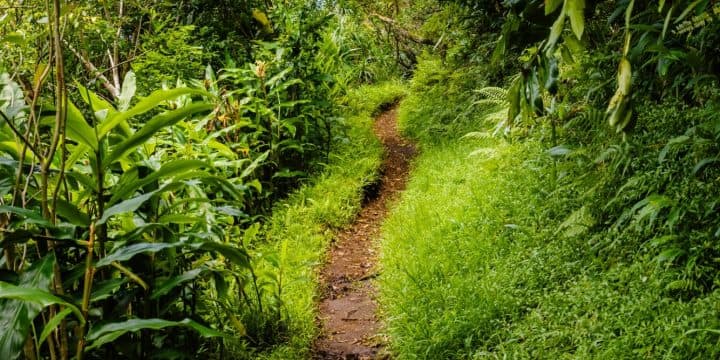
From the trailhead, the forest feels different. Where many of Honolulu’s rainforest hikes surround you with dense walls of vegetation, Mānoa Cliffs seems to draw your gaze upward. Towering trees stretch overhead, their delicate canopies filtering the light into shifting shades of green. If you’re lucky enough to visit during a light mist of rain, you’ll find that the entire forest seems to glow, transforming into something that feels closer to a fairy tale than a city park.
Soon, the trail rises over a staircase of tangled roots that will leave your legs feeling the climb. The route winds through strawberry guava, and if you’re hiking during fruiting season, you’ll likely spot bright red berries scattered among the branches. Those who know what they’re looking for may even recognize edible wood sorrel tucked beside the trail, with its bright, lemony flavor, or clusters of pink peppercorns growing nearby.
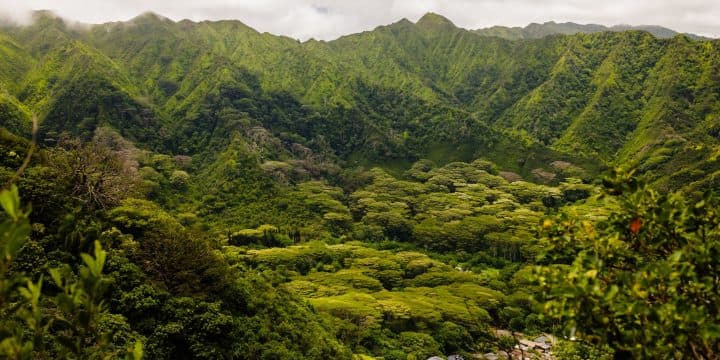
Much of the trail hugs the contours of Mānoa Valley, wrapping around narrow spurs that seem to float above the neighborhoods below. Every so often, the forest parts, revealing views across the valley toward the Ko‘olau Mountains and the ocean beyond. One of the trail’s quietest surprises is a solitary wooden bench perched along one of those overlooks — a simple place to catch your breath and appreciate just how removed you feel from the city.
At the end of the trail, you’ll come to a metal conservation gate that forms part of a fenced watershed designed to keep invasive wild pigs out of the native forest. Be sure to latch it securely behind you. It’s a small gesture, but one that helps protect the very landscape that draws you here.
That may be the real pleasure of the Honolulu Mauka Trail System: there is no single “right” way to experience it.
You can spend an hour splashing through streams on Judd Trail before heading back into town for lunch. Or devote an entire morning to linking Makiki, Moleka, and Mānoa Cliffs into one long rainforest traverse. One trail naturally leads to another, and another after that, making it easy to customize a hike to match your schedule, your fitness level, or your curiosity.
That’s a rarity in Hawai‘i, where many hikes are designed around a single destination like a waterfall, a summit, or a lookout. Here, the journey is more fluid. Scenic roads become connectors. Neighborhood streets bridge one valley to the next. Every return visit offers another route to try, another forest to wander, or another overlook waiting just beyond the next junction.
In a city known around the world for its beaches, it’s easy to overlook what’s happening just above the skyline.
Yet within minutes of downtown cocktail bars, museums, and surf breaks lies a remarkably accessible network of mountain trails where history, conservation, and adventure intersect. It’s a place where ancient pathways still shape modern recreation, where public access remains a priority, and where the next hike rarely ends where you expect it to.
Perhaps that’s the real magic of the Honolulu Mauka Trail System.
Not just that it offers dozens of great hikes, but that it encourages you to keep walking long after you’ve found one.