


©2023 Savvy360, LLC. All Rights Reserved
PLAN A TRIP IN OUR APP


Hidden in Plain Sight
The legacy of Don Francisco de Paula Marín, Hawai‘i’s forgotten agricultural pioneer
BY Krystal Kakimoto
If you browse through history books or wander museum walls, you will rarely find mention of Don Francisco de Paula Marín. Yet this remarkable man, who arrived in the Kingdom of Hawai‘i in the late 1800s, left an indelible mark on the islands. Marín was a true Renaissance figure — a sailor, trader, translator, distiller, and trusted advisor to Hawaiian royalty. However, among all his contributions, his agricultural legacy endures most visibly today, shaping both the landscape and the diet of Hawai‘i. Once a towering figure in the islands, Marín has somehow faded into little more than a footnote, a forgotten pioneer whose impact still grows, quite literally, across the land.
Born on November 25, 1774, in Jerez de la Frontera, a region of Spain near Cádiz, little is known about Marín’s early life. What we do know begins at sea, when, at the age of sixteen, he entered the Spanish Navy, embarking on a life of adventure that would ultimately carry him halfway around the world. During his naval service, Marín joined the renowned Alessandro Malaspina expedition to Nootka Sound and the Vancouver Islands, a scientific exploration voyage that spanned from 1789 to 1794.
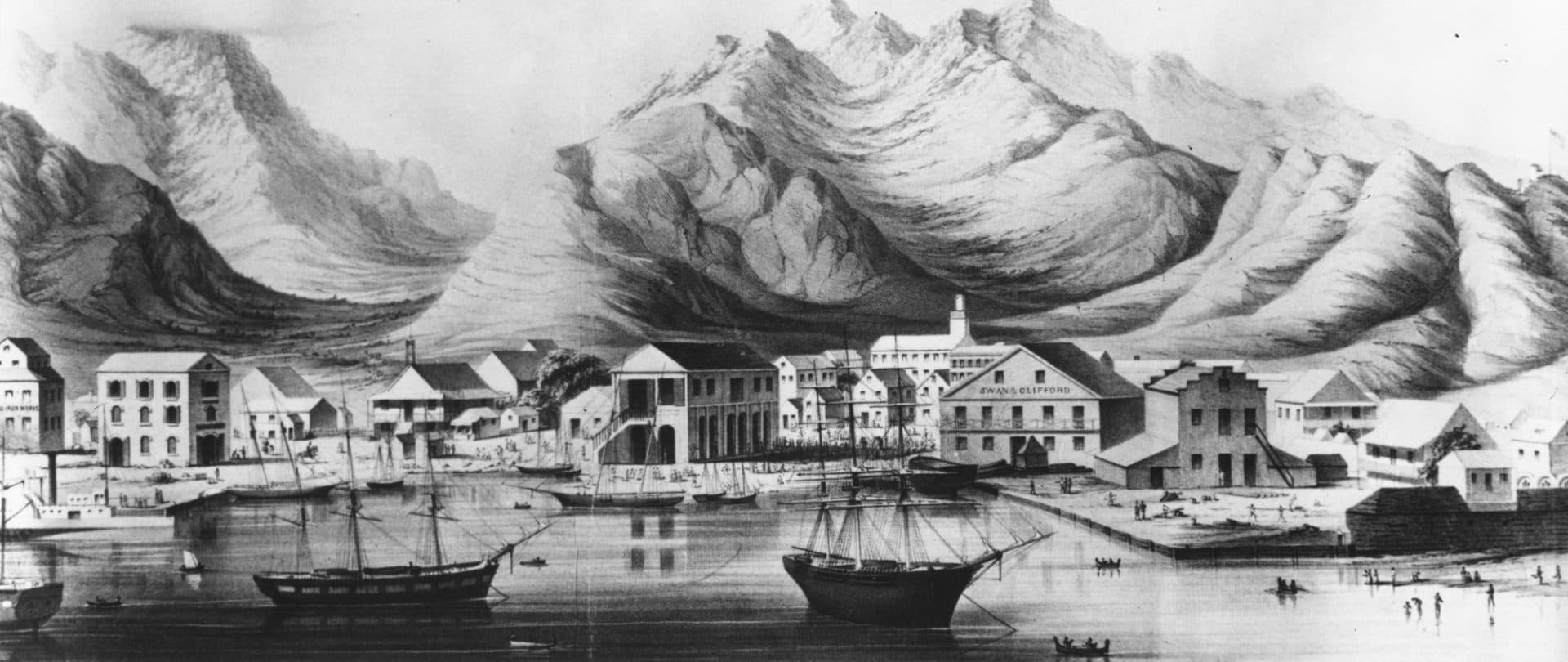
Yet somewhere during the journey, Marín made a fateful decision to desert the Spanish fleet and jump ship. Though his reasons remain unclear, historians believe he sought opportunity and freedom from the rigid discipline of naval life. In time, he found passage aboard the Lady Washington, an American merchant brig with trade routes in the Pacific. Between 1793 and 1794, the ship dropped anchor in Honolulu Harbor, an arrival that would mark not only a turning point in Marín’s own life but the beginning of his profound influence on the Hawaiian Kingdom.
Upon his arrival in Honolulu, Marín quickly found companionship among a small but growing community of foreigners — roughly 60 individuals. Within just two years of settling on O‘ahu, he had firmly established roots by marrying native Hawaiian women, having children, and weaving himself into the fabric of Hawaiian society. His industrious nature and easy rapport with both locals and foreigners soon drew the attention of King Kamehameha I. The monarch took a particular interest in the diligent foreigner who had a famed gift for languages. A true polyglot, Marín spoke Spanish, French, and English fluently, and, after his arrival, mastered the Hawaiian language as well. Recognizing the value of such a skill, Kamehameha enlisted Marín as a translator and intermediary in matters of business, diplomacy, and trade.
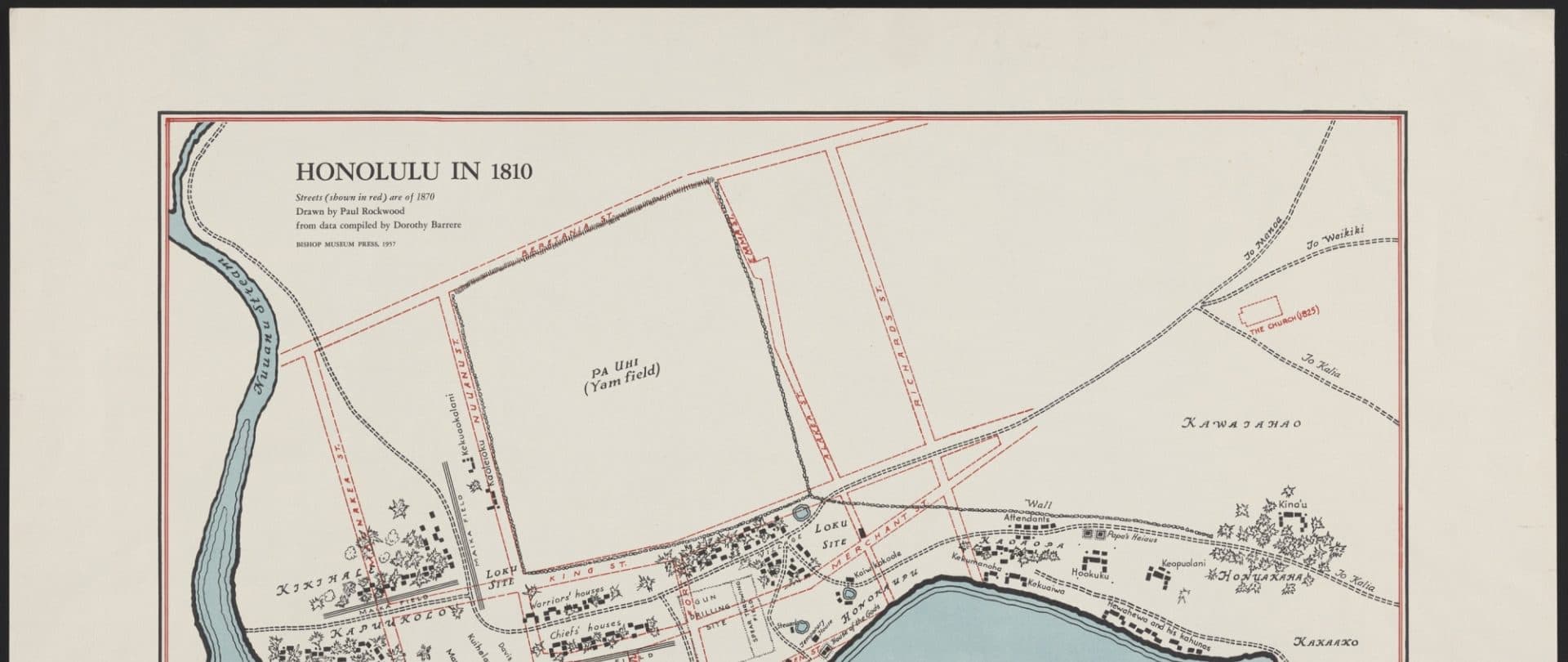
In recognition of his loyal service to King Kamehameha I, Marín was granted several acres of prime waterfront property situated between the royal compounds and Nu‘uanu Stream, now the site of Marin Tower, located between Smith and Maunakea streets in Honolulu’s Chinatown. On this land, he built a handsome stone residence surrounded by thriving gardens and animal pens. He also constructed a small breakwater and dock, along with additional dwellings to accommodate his growing family.
Over the years, Marín’s household became large and lively. He is known to have had at least four Native Hawaiian wives and as many as twenty-three children, though the exact number remains uncertain. Ever enterprising, Marín diversified his ventures beyond translation, and, in 1810, he opened what is believed to be Hawai‘i’s first hotel. On his property, he welcomed transient sailors and ship captains to stay in one of the grass houses. Guests were served meals at Marín’s own table, earning him a reputation for both hospitality and industry.
By this time, Marín’s pursuits had expanded far beyond translation and trade. He served as a customs collector, navigator, and trusted advisor to the king; yet it was his enduring fascination with plants that ultimately defined his legacy. Maintaining friendly ties with the Spanish Navy, Marín frequently corresponded with visiting officers to request seeds, cuttings, and saplings from ports around the world. Whenever foreign ships docked in Honolulu Harbor, he would eagerly approach their crews to inquire about the plants and fruits they carried, hoping to secure specimens to cultivate.
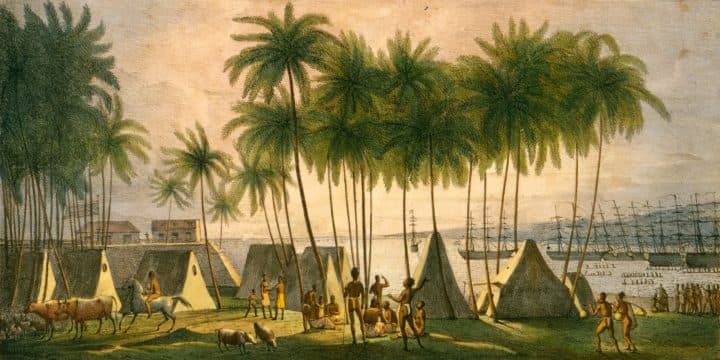
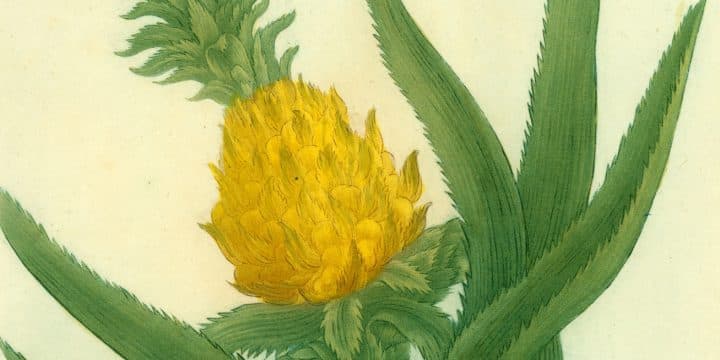
Back on his property, Marín transformed his estate into a thriving botanical experiment. He tested countless permutations of soil, sunlight, and water to determine how foreign plants might adapt to the islands’ environment. Over time, his efforts yielded an abundance, and he was able to sell his seeds to local farmers, including those for olives, oranges, coffee, mangoes, pineapples, avocados, peaches, apples, pears, guava, tobacco, cabbage, potatoes, figs, cotton, palms, and medicinal herbs.
Marín is also credited with introducing the first grapevines to the Hawaiian Islands. In a journal entry dated February 24, 1815, he records planting the initial vines — cuttings he likely acquired during a trip to California in years prior — near his home at the waterfront. The plants flourished in the tropical soil, and his vineyard grew. Marín soon needed more space, and he expanded mauka (towards the mountains), transplanting his vines to higher ground beyond his seaside property.
The new vineyard thrived, and its lush clusters of sweet, juicy grapes drew the attention of passersby as well as roaming pigs. To protect his crop, Marín appealed to his close friend and patron, King Kamehameha I, who declared the vines kapu (sacred) and off-limits to all. From then on, the vineyard was known as “The King’s Vines.” Now with his grapes protected, Marín was able to produce Hawai‘i’s first wines and brandies. Though the vineyard itself disappeared after his death, the legacy endures in name and memory with Vineyard Boulevard named in quiet tribute to the land where Marín’s historic vines once grew.
Of all Marín’s many roles and occupations, one of the most remarkable unfolded during the final days of King Kamehameha I. In the spring of 1819, the great ruler fell gravely ill at his residence in Kona. At first, he sought the aid of kahuna (Hawaiian priests and healers), but when their remedies failed to restore his strength, a ship was dispatched from Hawai‘i Island to O‘ahu with an urgent plea for Marín to come and save the king’s life.
Marín arrived in Kona on April 19, 1819, and immediately began tending to his ailing friend. Though he lacked formal medical training, he possessed some knowledge of Western medicine and did all he could to ease the king’s suffering. Despite his best efforts, however, the king’s condition worsened, and, in May 1819, the great unifier of the Hawaiian Islands passed away. As the kingdom entered a period of deep mourning, Marín quietly returned to his home on O‘ahu.
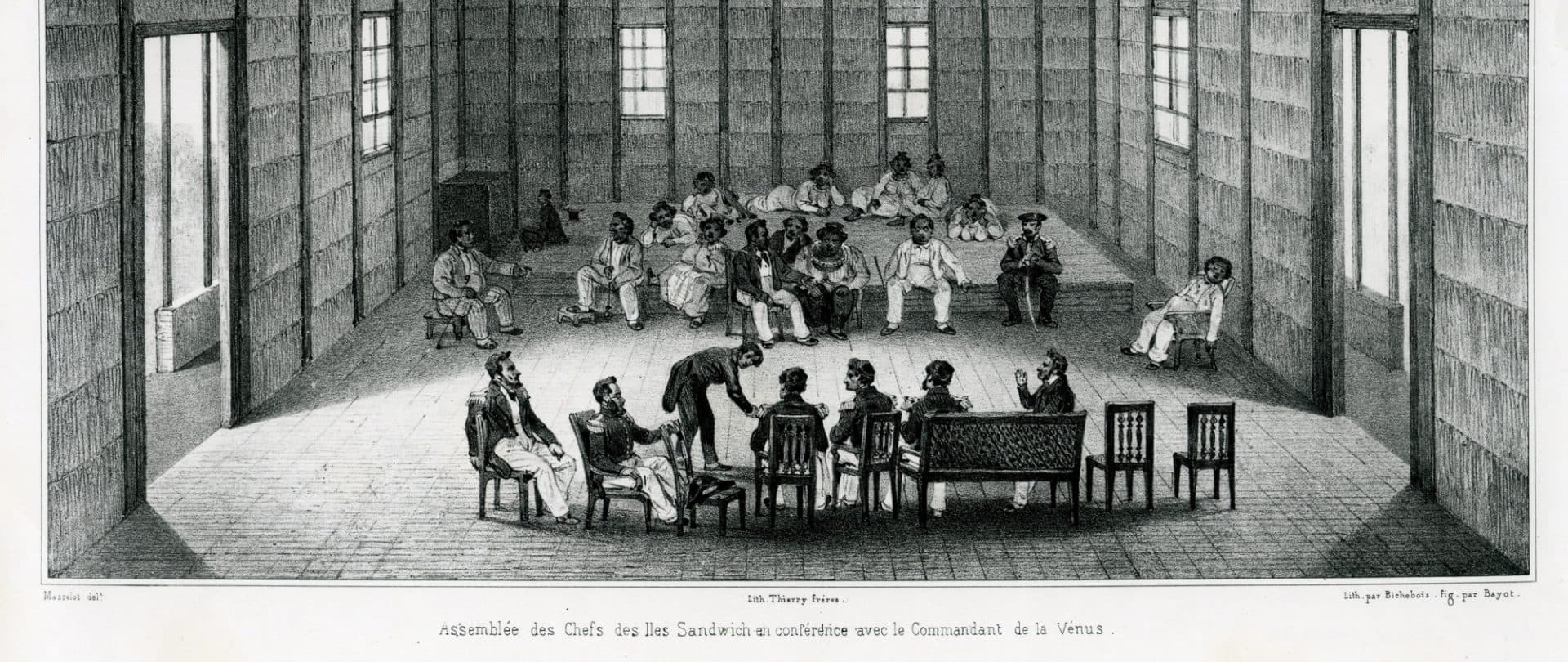
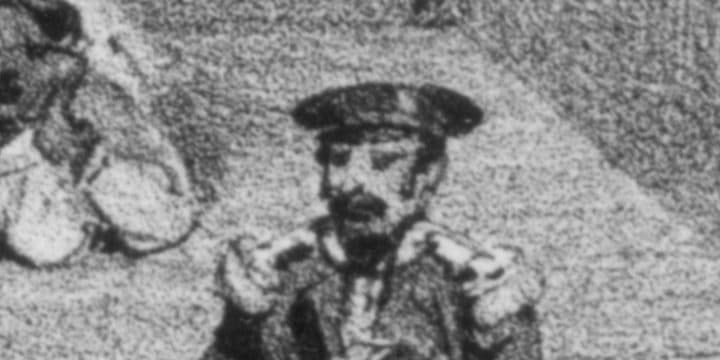
In the years that followed, Marín continued to serve the royal family with loyalty and distinction by providing the court with goods he grew or produced, offering translation services, and offering advice on military matters. Under Kamehameha II, he was appointed a captain in the Hawaiian Army and participated in diplomatic events with foreign dignitaries. One such event was the royal court’s hosting of the French Captain Abel Aubert du Petit-Thouars, where Louis-Jules Masselot memorialized him in an illustration that remains the only image of Marín today.
Over time, however, Marín’s standing at court declined following the death of Kamehameha II. He also faced growing disapproval from the increasing number of Christian missionaries in the islands, who rejected his polygamous lifestyle and the operation of his distillery. Later in life, he suffered from a persistent cough, likely a lingering effect of tuberculosis, and struggled with heavy drinking. On October 30, 1887, Marín passed away at his home in Honolulu and was laid to rest in the family crypt located on his property.
Today, Marín’s memory seems almost spectral — a man who traveled far from home, left a profound mark on Hawai‘i, and then faded from popular memory. Yet his legacy endures, from Marín Street in Honolulu’s Chinatown to the heavily trafficked Vineyard Boulevard and in the numerous plants he introduced that have become synonymous with Hawaiian agriculture. He came to the islands as a stranger, lived as a pioneer and left a legacy so deeply rooted that it bears fruit across the islands to this day.