


©2023 Savvy360, LLC. All Rights Reserved
PLAN A TRIP IN OUR APP


Bishop Museum Archives
Bishop Museum Archives
Bishop Museum Archives
Bishop Museum Archives
Hoʻoulu Lāhui
How King David Kalākaua turned hula, diplomacy, and a global vision into a renaissance for his people
BY Krystal Kakimoto
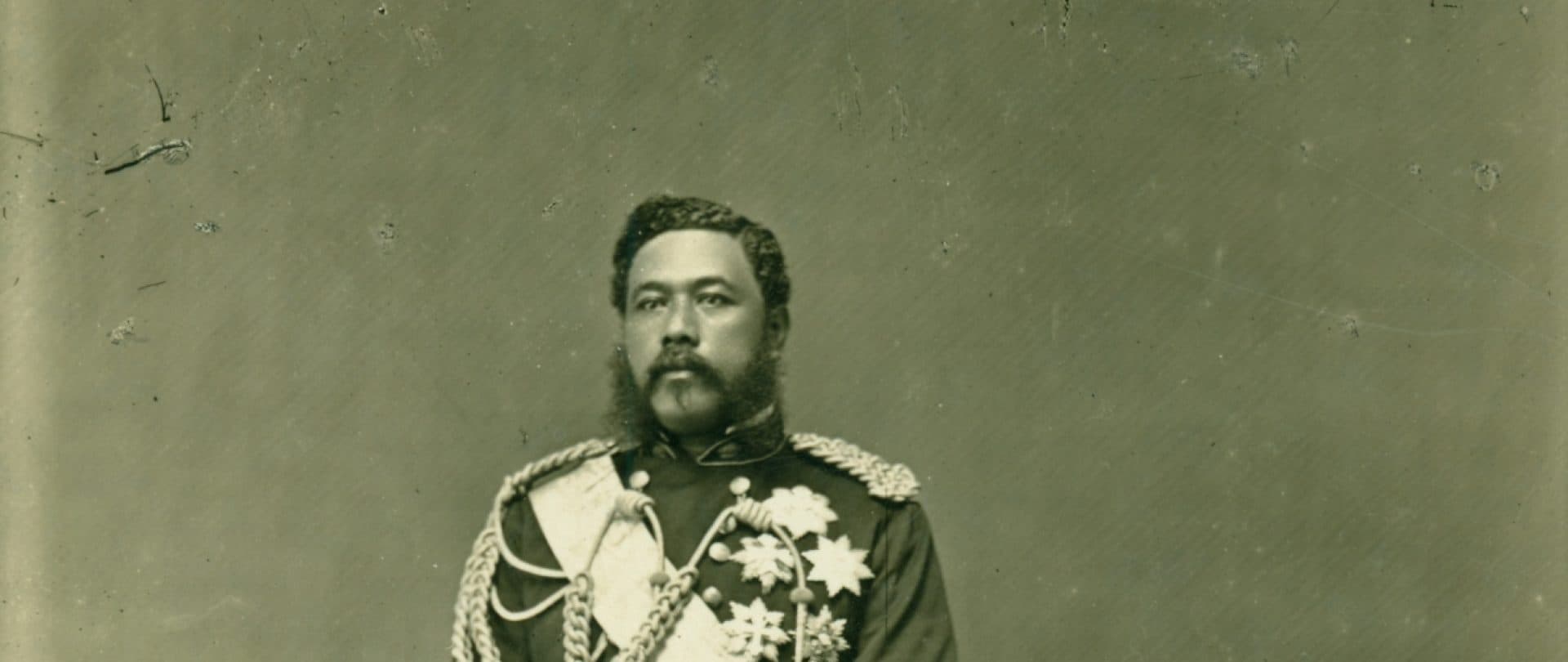
Known affectionately as the “Merrie Monarch,” King David Kalākaua is often remembered for the warmth and pageantry of his court. Yet his reign marked a decisive turning point in Hawaiian history. He ignited the first Hawaiian renaissance and reclaimed traditions that had been pushed to the margins, or sometimes even banned. Through the revival of hula, chant, and ceremony, Kalākaua wielded culture to strengthen national identity while asserting the legitimacy of his own rule on a global scale. The image of the festive king endures, but so does his legacy as a sovereign determined to restore the spirit of his people and project it to the world.
Born November 16, 1836, David La‘amea Kamanakapu‘u Māhinulani Nāla‘ia‘ehuokalani Lumialani Kalākaua entered the world in a humble hale pili (grass hut) at the base of Punchbowl Crater in Honolulu. He was the second son of Caesar Kaluaiku Kapa‘akea and Analea Keohokālole, both high-ranking ali‘i (Hawaiian nobility), whose lineage traced back to the revered 18th-century ruler Keawe‘īkekahiali‘iokamoku. His ancestry carried further weight, with both parents descended from two of the five royal counselors of Kamehameha I.
Given the name Kalākaua, which translates to “The Day of Battle,” the infant was entrusted through the Hawaiian tradition of hānai (informal adoption) to High Chiefess Ha‘aheo Kaniu and her husband, Keaweamahi Kinimaka. He was taken to Lahaina, then the kingdom’s capital, to be raised within the royal court of Kamehameha III. At the age of four, Kalākaua returned to O‘ahu for his education, entering the prestigious Chiefs’ Children’s School.
Founded by Kamehameha III, the Chiefs’ Children’s School was reserved for children whom the king had formally declared eligible for the throne of the Hawaiian Kingdom. There, under the instruction of American missionaries Amos Starr Cooke and his wife, Juliette Montague Cooke, students received a Western-style education that emphasized reading, writing, arithmetic, geography, and history. Kalākaua excelled in both English and ‘ōlelo Hawai‘i (Hawaiian language) but was most remembered for his wit and humor.
The Cookes retired in 1850, when Kalākaua was just 14 years old. He continued his studies at Joseph Watt’s English School at Kawaiaha‘o Church, but illness soon forced his return to Lahaina, where he recovered under his mother’s care. In early adulthood, Kalākaua pursued legal education under Charles Coffin Harris and later received military training under the Prussian officer, Major Francis Funk. These experiences, grounded in governance and discipline, would later inform his approach to leadership during his reign.
Kalākaua’s early adulthood was defined by service and the steady accumulation of responsibility. In 1852, he was appointed aide-de-camp to Alexander Liholiho, then a young prince who would later ascend the throne as Kamehameha IV. He was soon commissioned a brevet captain in the kingdom’s military and also served as first lieutenant in his father’s militia of 240 men, gaining practical experience in leadership and command. During this period, he formed a close friendship with Lot Kapuāiwa, later Kamehameha V, and accompanied the prince on a two-month tour of British Columbia and California. The journey offered Kalākaua a broader view of the world beyond the islands, an experience that would later shape his outlook as both a diplomat and monarch.
His ascent through the ranks of the Hawaiian Kingdom’s government was steady and deliberate. Under Kamehameha IV, Kalākaua was appointed to the Privy Council of State, followed by service as the Postmaster General and later as the King’s Chamberlain. He served as the King’s Chamberlain until 1869, when he resigned to complete his legal studies. After his admission to the Hawaiian bar, he joined the government as a clerk in the Land Office, where he remained until his path led him to the throne.
While Kalākaua’s public career advanced, his personal life was unfolding with equal complexity. He was briefly engaged to Princess Victoria Kamāmalu, sister of Kamehameha IV and Kamehameha V. However, the engagement was dissolved when she renewed her betrothal with her cousin, William Charles Lunalilo.
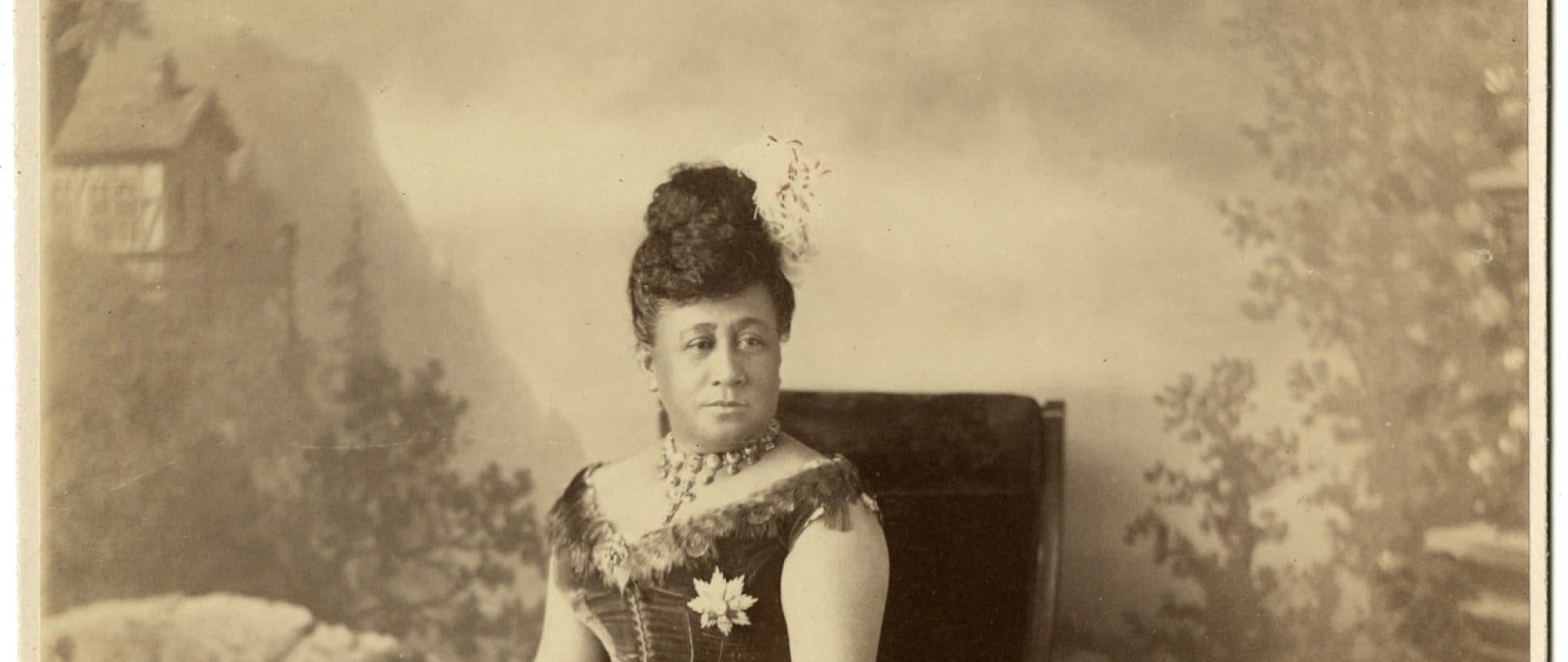
Kalākaua later found lasting affection with Kapi‘olani, a young widow and descendant of King Kaumuali‘i of Kaua‘i. At the time, she served as lady-in-waiting to Queen Emma and nurse to Prince Albert, placing her within the intimate circles of the royal court. The two were married on December 19, 1863, in a quiet ceremony that nonetheless drew public criticism for taking place during the official mourning period following the death of Kamehameha IV.
For nearly a decade, the couple lived not in spectacle but in service. Kalākaua worked quietly in his role as a land clerk, learning the intricate mechanics of governance from the ground up, while Kapi‘olani moved through the community with purpose, taking on roles in charities. Together, they embodied a partnership rooted in duty, a prelude to a far larger stage to come.
A turning point in Kalākaua’s life came in 1872 with the sudden passing of his friend, Kamehameha V. On his deathbed, the king summoned Princess Bernice Pauahi Bishop to succeed him, but she declined the throne. The kingdom then held an election that pitted the charismatic and liberal William Charles Lunalilo against Kalākaua. In a landslide victory, Lunalilo was elected to the throne. Yet even in defeat, Kalākaua remained central to the political fabric, serving as a colonel in the king’s military and maintaining an active presence in court.
Fate, however, proved relentless. Within months of Lunalilo ascending the throne, his health collapsed, and he, too, passed away without naming an heir. The kingdom was in turmoil as two individuals emerged as leading candidates for the throne. On the ballot were Dowager Queen Emma, wife of Kamehameha IV, and Kalākaua, who pledged to rule in strict accordance with the constitution. On February 12, 1874, legislators cast their votes, electing Kalākaua as their next monarch in a 39-to-6 vote. The decision ignited unrest and riots at the Honolulu Courthouse, which left legislators injured and the nation shaken. In response, a hastily arranged inauguration was set for the following day.
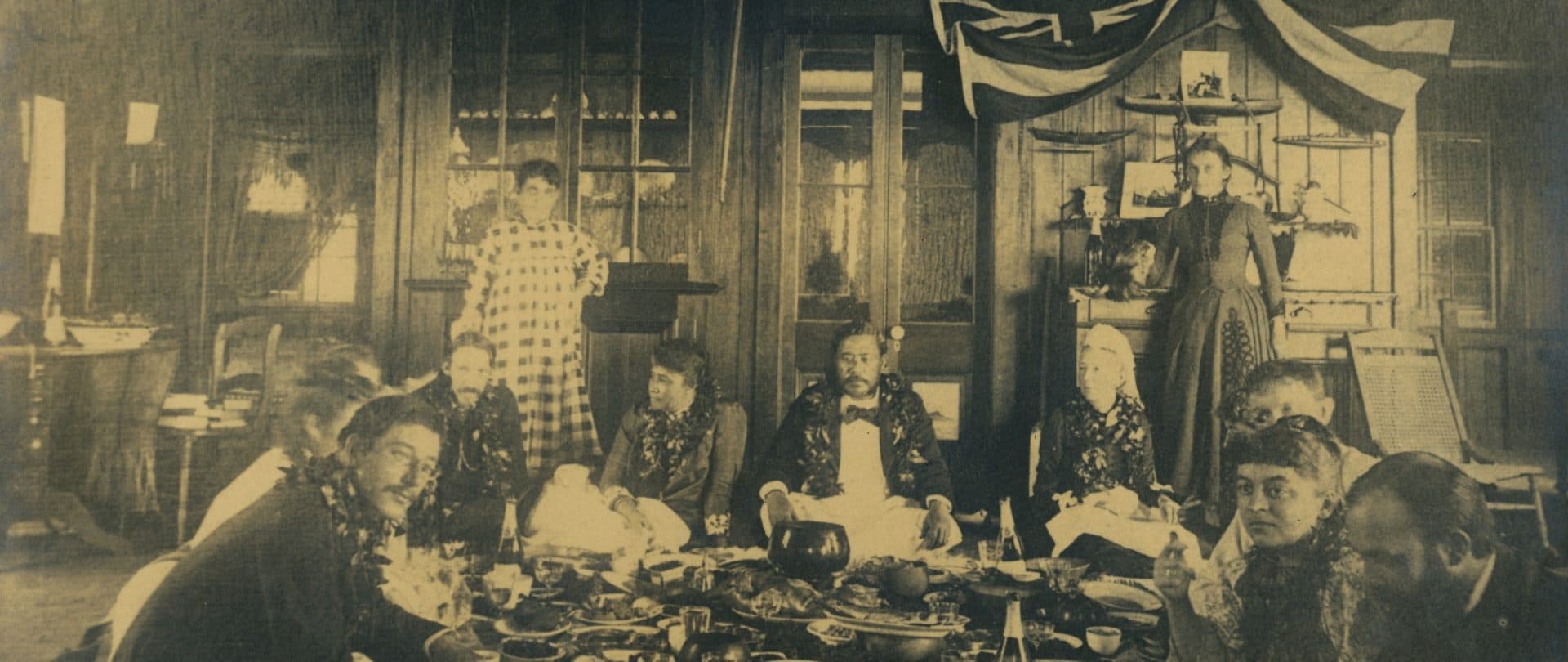
In deliberate response to the turbulence, Kalākaua and Queen Kapi‘olani immediately embarked on a three-month journey across the islands. They carried Kalākaua’s motto, Ho‘oulu Lāhui, to grow the nation. Through his campaign of presence, rather than proclamation, he met with people face-to-face and sought to unify the fractured kingdom.
He was, in every sense, a modern ruler, what we might now call a Renaissance man, blending tradition with forward-thinking ambition. In 1880, he launched the Education of Hawaiian Youths Abroad program, sending Native Hawaiian students around the globe to Italy, England, Scotland, China, and Japan to study medicine, law, military science, and languages. The mandate was clear: after their studies were completed, they were to return home and build a stronger Hawai‘i.
Economically, he proved equally astute. The Reciprocity Treaty of 1875, which he helped secure, opened American markets to Hawaiian goods duty-free. The results were staggering. Exports surged from $1.8 million in 1874 to $13.3 million by 1890 — a 639% increase that transformed the kingdom’s financial footing.
Kalākaua understood that power was also perception. In 1881, he embarked on an unprecedented 281-day circumnavigation of the globe, the first by any reigning monarch. Traveling without security, alongside ordinary passengers, he moved through Japan, China, Southeast Asia, Egypt, Italy, Britain, Germany, and Austria with curiosity and intent. He met world leaders, including Pope Leo XIII, and negotiated for labor agreements that would reshape Hawai‘i’s workforce. Critics dismissed the journey as indulgent; history would prove otherwise. Within four years, Chinese labor had tripled, and the first Japanese contract workers arrived in Hawai‘i in 1885.
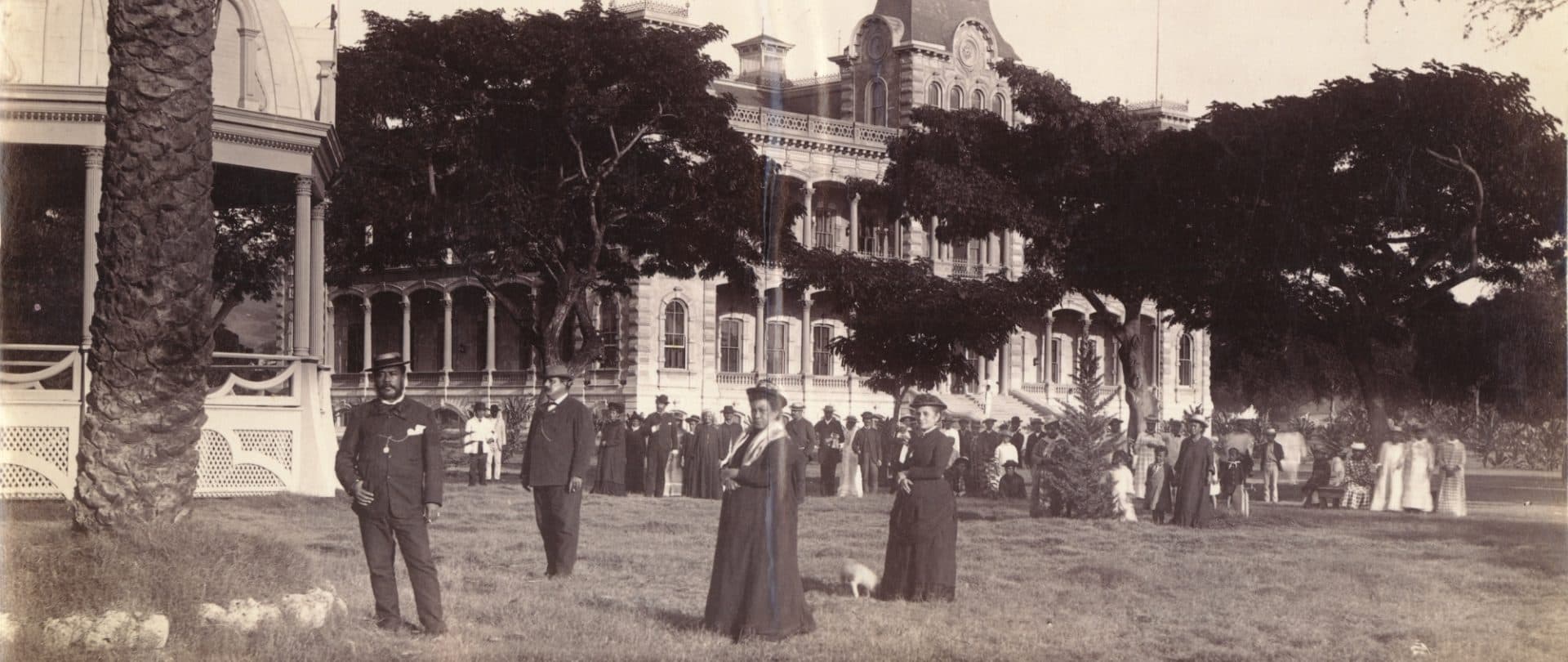
The journey also left him inspired. Returning home, Kalākaua envisioned a palace that would signal Hawai‘i’s place among modern nations. ‘Iolani Palace rose from that vision, an American Florentine masterpiece which was completed in 1882 at a cost of over $340,000. It was more than architecture; it was assertion. Equipped with electric lighting, installed in 1886 after Kalākaua encountered Thomas Edison’s inventions in Paris, the palace illuminated Honolulu years before even the White House. Inside, the palace reflected a ruler equally fascinated by progress and possibility. Telephones, indoor plumbing, and even Kalākaua’s own inventive sketches and designs for torpedo-proof vessels and maritime inventions hinted at a mind constantly reaching forward.
Yet for all his modernity, Kalākaua remained deeply rooted in culture. In 1883, he staged a coronation worthy of the global courts he had visited with two weeks of regattas, balls, and ceremony. But its most profound act was not imported from Europe; it was reclaimed from within with performances of hula on the lawns of ‘Iolani Palace. Ho‘opa‘a (chanters) and ‘ōlapa (dancers) were allowed to perform their art in public after being banned. It was a cultural renaissance, deliberate and defiant. Today, that legacy endures every April in the annual week-long Merrie Monarch Festival, a celebration named in his honor. It echoes his belief that “hula is the language of the heart, therefore the heartbeat of the Hawaiian people.”
Kalākaua’s story is not one of a king who simply ruled; it is of a man who reimagined what a monarch could be. A global traveler who never lost sight of home. A patron of tradition who championed innovation. A sovereign who governed not just with authority but also vision. And in the glow of ‘Iolani Palace, in the swell of a hula dance, in the enduring notes of “Hawai‘i Pono‘ī,” the Hawai‘i state anthem, with lyrics written in 1874 by Kalākaua and music composed by Henri Berger, his presence still lingers. Not as a relic of the past, but as a reminder of what it means to lead a nation into its future while fiercely honoring its soul.