


©2023 Savvy360, LLC. All Rights Reserved
PLAN A TRIP IN OUR APP





Hot Spot - Alan Wong’s at The Kāhala Hotel & Resort
Chef Alan Wong returns to the island’s fine-dining stage with a new address, a storied legacy, and the same flavors Hawai‘i loves
BY Krystal Kakimoto
Few restaurant names in Hawai‘i evoke the deep nostalgia, unwavering devotion, and genuine reverence that Alan Wong’s does. For decades, the celebrated chef’s flagship restaurant was not merely a dining destination; it was a place where families celebrated milestones, where friendships deepened over shared meals, and where lasting island memories took shape.
Long before farm-to-table became a global movement, Wong was championing local producers and elevating the flavors of Hawai‘i, earning accolades including a James Beard Award for Best Chef: Pacific Northwest and becoming the first chef to cater a lū‘au (Hawaiian feast) at the White House. As a founding force behind the Hawai‘i Regional Cuisine movement, he helped redefine how the world viewed the islands’ flavors.
When the original Alan Wong’s on King Street closed in 2020, it felt like the end of a defining chapter in Hawai‘i dining. The loss was felt by generations of loyal patrons who watched the chef transform local ingredients into cuisine that was both unmistakably Hawai‘i and globally influential. Today, that story enters a new and exciting chapter at The Kāhala Hotel & Resort. The partnership unites two of Hawai‘i’s most beloved names, bringing Wong’s signature dishes to one of the islands’ most storied destinations. For longtime devotees, the experience is a welcome return to flavors that have endured for decades. For first-time guests, it offers an introduction to one of Hawai‘i’s most influential culinary voices.
Set within the resort’s signature fine-dining restaurant, the dining room commands sweeping ocean views from every table. Yet despite the dramatic setting, the room feels remarkably personal. Wong trains his staff to greet guests with the same warmth and ease he brings to the floor, so the experience reads as welcoming, not just refined.
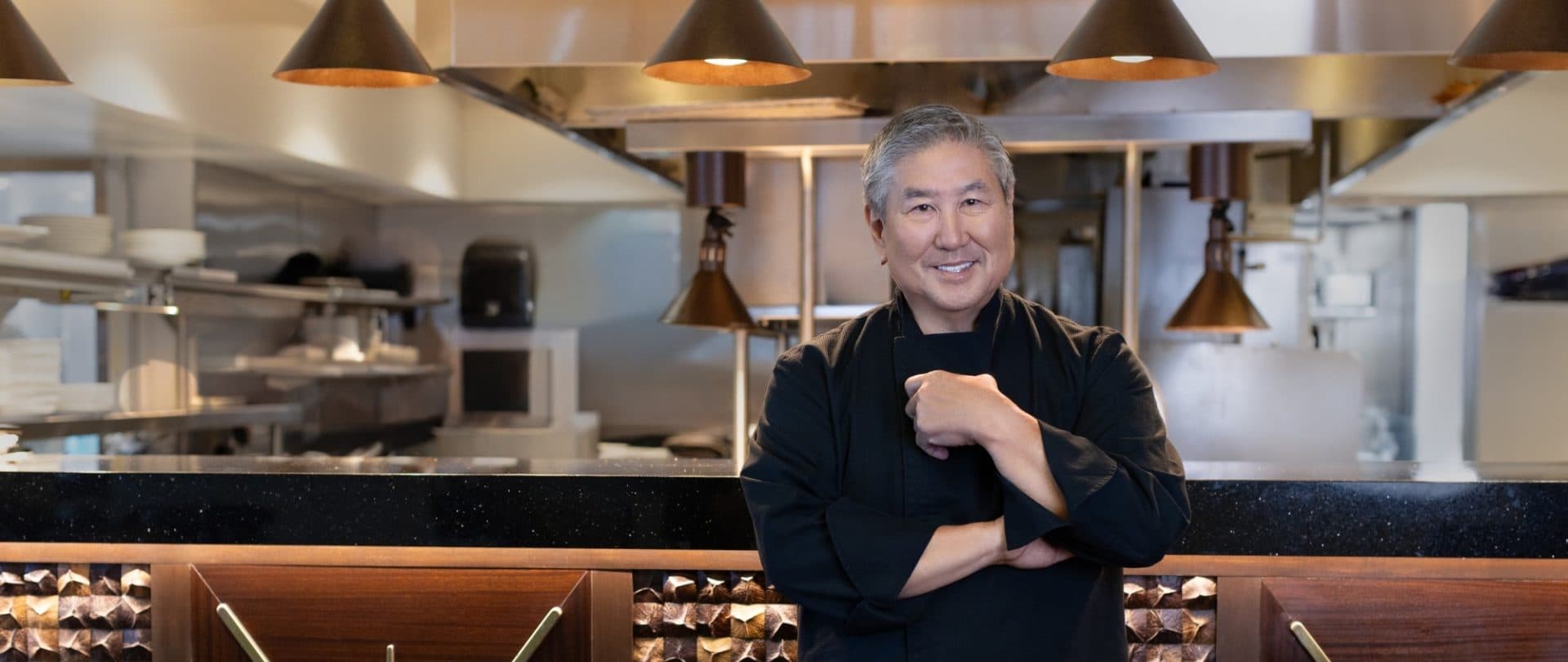
Although he serves as a consultant to the restaurant, Wong remains a constant presence, often spending evenings on the floor alongside his team. His hands-on approach is central to the culture he is building. “I am trying to create a culture from the inside out,” Wong says. “Part of that strategy is being present and working with the staff to lead by example. I believe the success of any business comes down to its people. When you invest time in them and teach them, they become successful, and so does the business.”
That philosophy extends to the menu, where the dishes are distinctly Wong’s own creations. Realized in collaboration with Chef de Cuisine Spencer Yamanaka and a skilled kitchen team, the offerings draw flavors from the multicultural influences that shaped his upbringing as the son of a Japanese mother, a Filipino stepfather, and a Chinese grandfather, as well as a lifetime spent in Hawai‘i. “When you grow up in Hawai‘i, going to potlucks and hibachi barbecues, and then combine that with French culinary training, it naturally becomes East-West,” he explains. “It’s like chop suey (Chinese noodle stir-fry), a little bit of this and a little bit of that.”
For Wong, the menu is more than a collection of recipes; it is a culinary narrative of Hawai‘i itself. Each dish reflects the island’s layered history and the generations of immigrants whose traditions continue to define local cuisine. “The Chinese arrived first to work on the plantations,” Wong says. “Then came the Portuguese, Puerto Ricans, Japanese, and Filipinos. If you really want to understand what a place eats and how it eats, you have to understand who influenced it.”
He points to the profound demographic and cultural shifts that followed the arrival of immigrant laborers throughout the islands. Along with their skills and traditions, they brought ingredients, cooking techniques, and family recipes that have become woven into Hawai‘i’s identity. “When you are eating the food of modern Hawai‘i,” he says, “you are tasting the many ethnic influences that have shaped the islands over generations.” The result is unique, not representing a single culture, but a convergence of many. Through Wong’s menu, that story unfolds one course at a time.
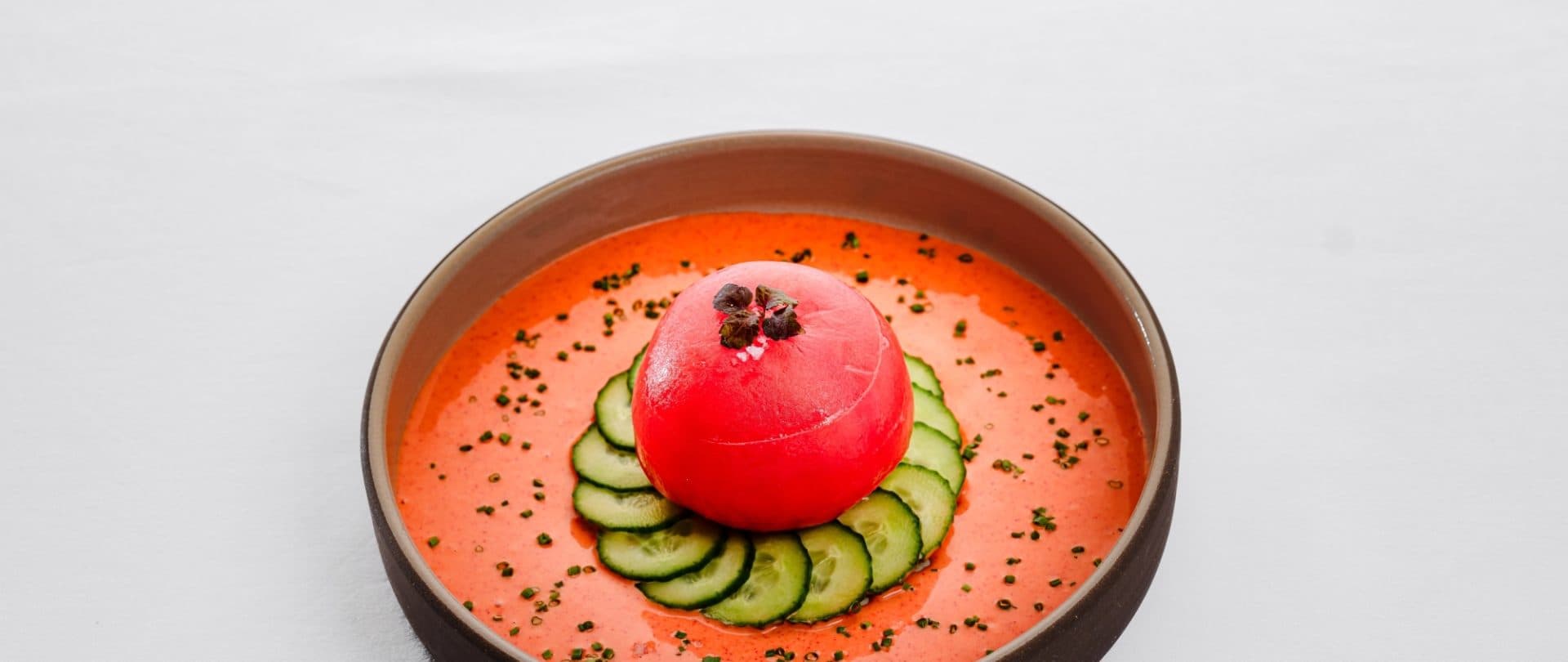
Guests can begin their meal with one of Wong’s most iconic creations, the Whole Tomato Salad. Set atop a dressing made of li hing mui (Chinese preserved plum) and ume (Japanese plum), the dish features a perfectly vine-ripened tomato alongside a fan of sliced cucumbers. Chilled and refreshing, the salad delivers a vibrant balance of sweet, tart, and savory flavors, awakening the palate for the courses to come.
Another perennial favorite is “Da Bag,” a theatrical presentation that marries French techniques with island flavors. Drawing inspiration from the classic en papillote method, clams and kālua (cooked in an underground oven) pig are sealed inside a foil pouch, allowing the steam and aromatics to infuse the ingredients as they cook. The dish arrives tableside intact, before a ceremonial puncture of the foil releases a fragrant cloud of steam. Beneath it all, tender seafood sits in a rich broth infused with the smoky essence of the pork, creating a dish that is captivating as much to watch as it is to eat.
Drawing equally from Hawai‘i’s fertile landscapes and surrounding waters, Wong’s entrées celebrate the island’s abundance with dishes that are hearty, deeply flavorful, and designed for sharing. Among the standouts are the Twice Cooked Kalbi Style Short Ribs, one of Wong’s signature creations. Slow-braised until fork-tender, the rich marbled beef is finished with a glossy kochujang (Korean chili paste) glaze that balances sweet heat with piquant depth. Honey-sesame-roasted carrots provide a subtle sweetness that complements the dish’s bold flavors.
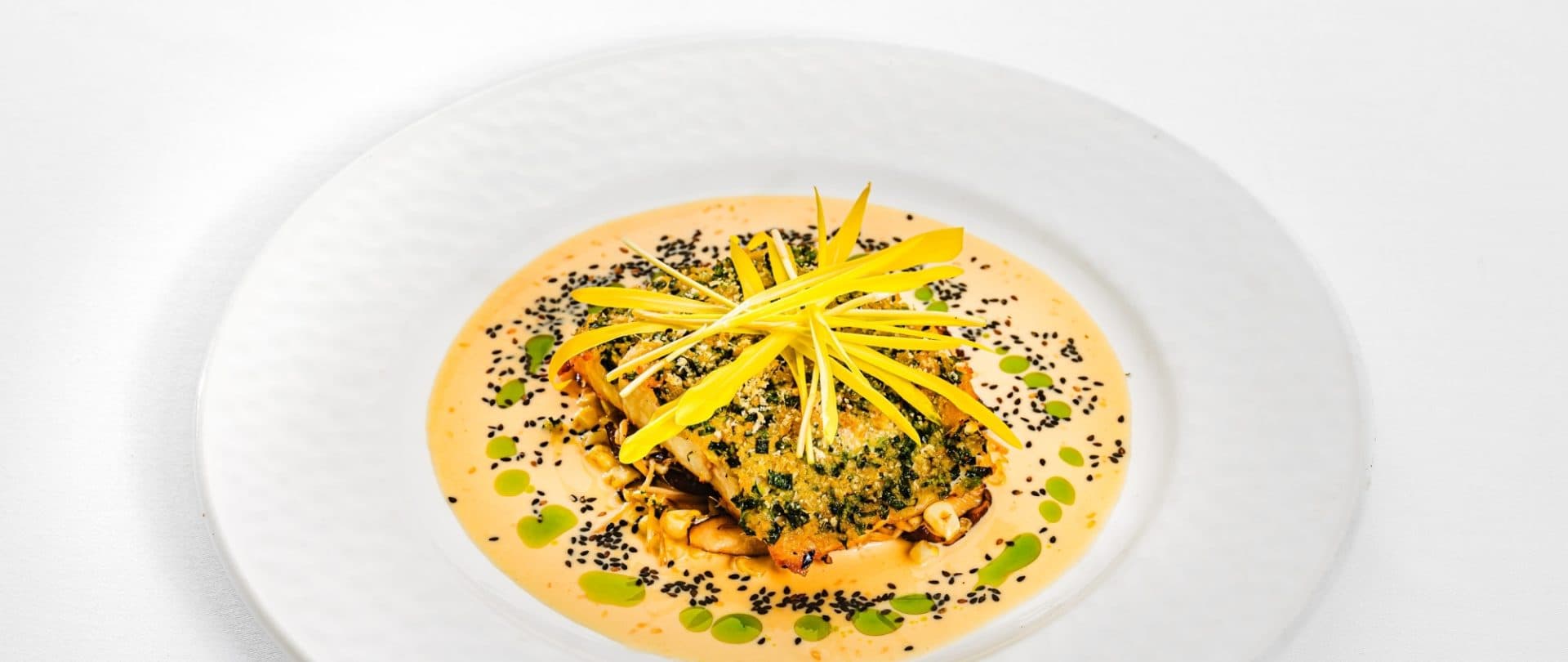
Seafood, naturally, plays a starring role throughout the menu. The Steamed Opakapaka showcases the pristine quality of Hawai‘i’s waters by pairing the delicate pink snapper with shrimp pork hash, gingered vegetables, and a fragrant truffle nage. Equally compelling is a Sesame Crusted Seared ‘Ahi, where the buttery richness of the tuna is complemented by the flavorful karashi mustard sauce.
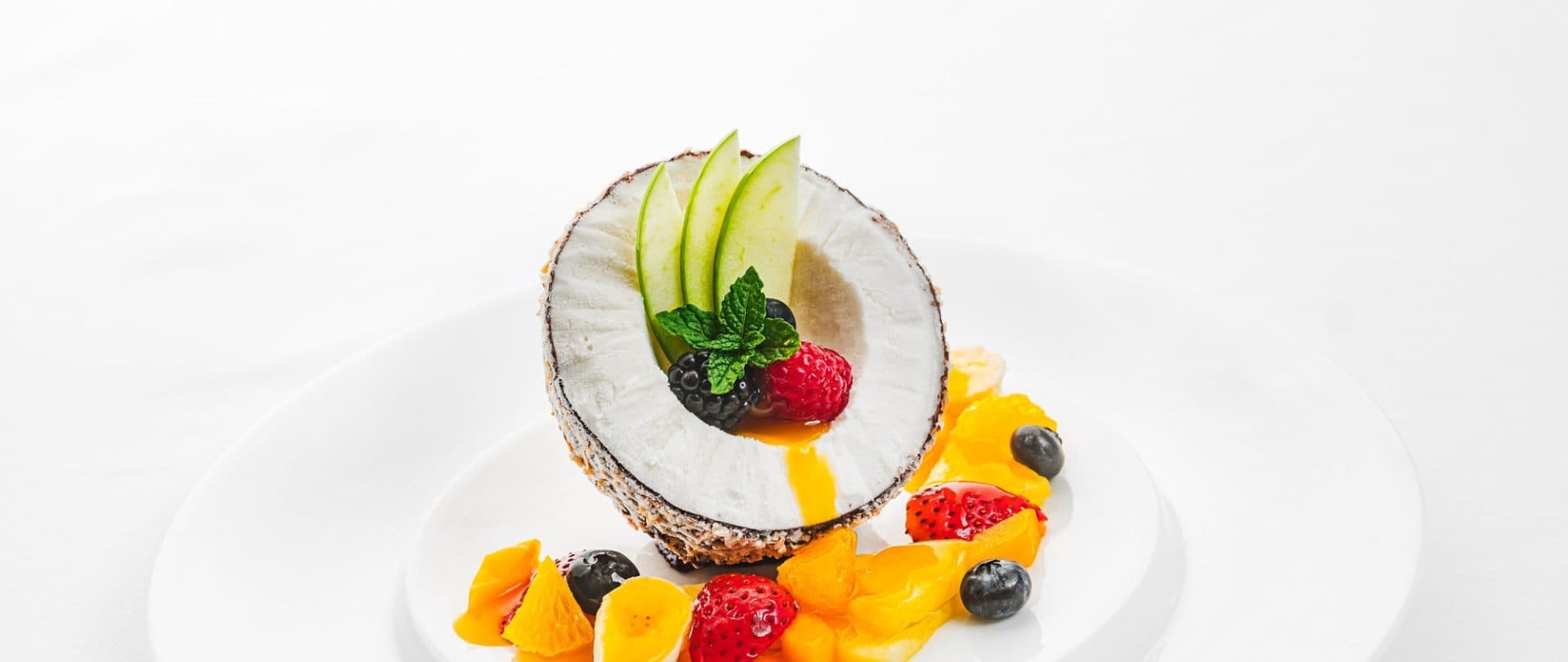
The restaurant’s dessert program is every bit as enchanting as its savory offerings, thanks to Executive Pastry Chef Miya Nakashima, whose creations balance technical precision with a sense of whimsy. Standouts include the Waialua Chocolate Crunch Bars, paired with Niçoise olive cacao nib relish and bourbon diplomat cream, as well as “The Coconut,” an enduring favorite carried over from Alan Wong’s original restaurant. The latter features haupia (coconut pudding) sorbet encased in a chocolate shell sculpted to resemble the tropical fruit itself, a playful nod to nostalgia and local tradition. Throughout the dessert menu, island-grown ingredients remain front and center, transformed into dishes that feel both rooted and imaginative.
To accompany the sweets, guests can explore a selection of estate-grown Hawaiian coffees, offering yet another expression of the island’s agricultural richness and providing a fitting finale to the meal.
For now, Wong is intentionally limiting reservations, allowing the restaurant and his team time and space to grow deliberately. But he hints at what may lie ahead, including intimate wine dinners, evolving menus, and new opportunities to deepen the restaurant’s connection to guests. Like the chef himself, the restaurant remains in motion, evolving while remaining firmly anchored to the values that have defined Wong’s career for decades.
As he reflects on this latest chapter, Wong remains focused on a mission that extends far beyond the dining room. Throughout his career, he has challenged conventional notions of Hawai'i's cuisine, advocating instead for a deeper understanding of the island’s agricultural abundance, cultural diversity, and culinary sophistication. “What’s the world’s perception of what Hawai‘i is and what we eat?” he asks. “It’s sort of a joke, but people around the world think that we put pineapples on pizzas and burgers and call it ‘Hawaiian Pizza.’ In reality, we might eat pineapples for breakfast. I want people to see what we grow here, what we produce, and the dishes that reflect our multiethnic culture. I’m doing my small part in that. When you read our menu, you see local farmers and businesses reflected on the menu, and that we support local.”
It is a philosophy that has guided Wong for much of his career, but one that feels especially resonant today. In an era where authenticity is often reduced to a marketing term, his work serves as a reminder that a true sense of place is built through relationships with farmers, producers, communities, and traditions. At his newest restaurant, every dish becomes part of a larger story about Hawai‘i: not the version imagined from afar, but the one lived every day by the people who call the islands home. And as Wong looks ahead, his greatest legacy may not be a single restaurant or recipe, but the broader understanding he has helped cultivate one meal at a time.
Alan Wong’s at The Kāhala Hotel & Resort; 5000 Kāhala Avenue, Honolulu; (808) 739-8760; dinner Tuesday–Saturday, 5–10 p.m.; kahalaresort.com/dining/alan-wongs