


©2023 Savvy360, LLC. All Rights Reserved
PLAN A TRIP IN OUR APP



Bucket List
Connect with the island on a deeper level through one-of-a-kind cultural, adventure, and epicurean experiences.
BY Sara Stover
Uncle Danny Akaka’s fingers casually strum his ‘ukulele, but as he gazes at the royal fishpond behind the Eva Parker Woods Cottage, he appears to be deep in thought. A mullet jumps up from the brackish waters, bringing him back to the present to share his contemplation.
“Here on Hawai‘i Island, we have Mauna Kea, the highest mountain on the face of this earth, from the base on the ocean floor to the mountain top. It’s the mountain that has the greatest number of days with the clearest views into the night sky of the cosmos and the universe,” says Uncle Danny, kahu hānai (knowledge keeper) at Mauna Lani, Auberge Resort Collections. “And on the same island, we have not only this connection to our universe, but also a portal into the center of this earth — Kīlauea, a volcano that’s creating new land all the time. There’s nowhere else on earth where you will find both of those connections to the far reaches of the universe and to the earth’s core energy but on this island.”
At 93 miles across and 4,038-square miles in size, Hawai‘i Island has a well-earned reputation for being big and exceptionally unique. In addition to Mauna Kea, which measures 33,496-feet tall from seafloor to summit, and Kīlauea, which is one of the world’s most active volcanoes, the Big Island of Hawai‘i encompasses four out of the five major climate zones and 10 of the 14 subgroups found on the planet, ranging from arid deserts to volcanic rainforests.
Equally as unique, Hawai‘i’s rich diversity is rooted in indigenous Polynesian traditions and complemented by the cultures of immigrants from Portugal, Puerto Rico, China, the Philippines, Japan, and other Pacific Islands who came to work on the islands’ plantations. The “melting pot” that resulted has influenced everything from Hawai‘i’s celebrations, style, and music to its cuisine.
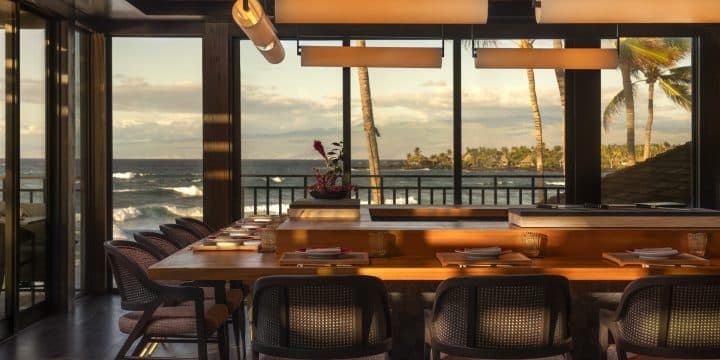
According to an ancient Hawaiian celestial navigation story, Polynesian voyagers relied on three birds to guide them by day. The ‘i‘iwi (scarlet honeycreeper), manu-o-kū (white tern), and noio (black noddy) helped guide seafaring navigators in determining how far they were from dry land, inspiring modern beliefs that the noio represents good fortune. And for sushi enthusiasts, it’s good fortune indeed to join Executive Chef Nuri Piccio for the Omakase Experience at the Four Seasons Resort Hualalai’s sushi lounge, Noio.
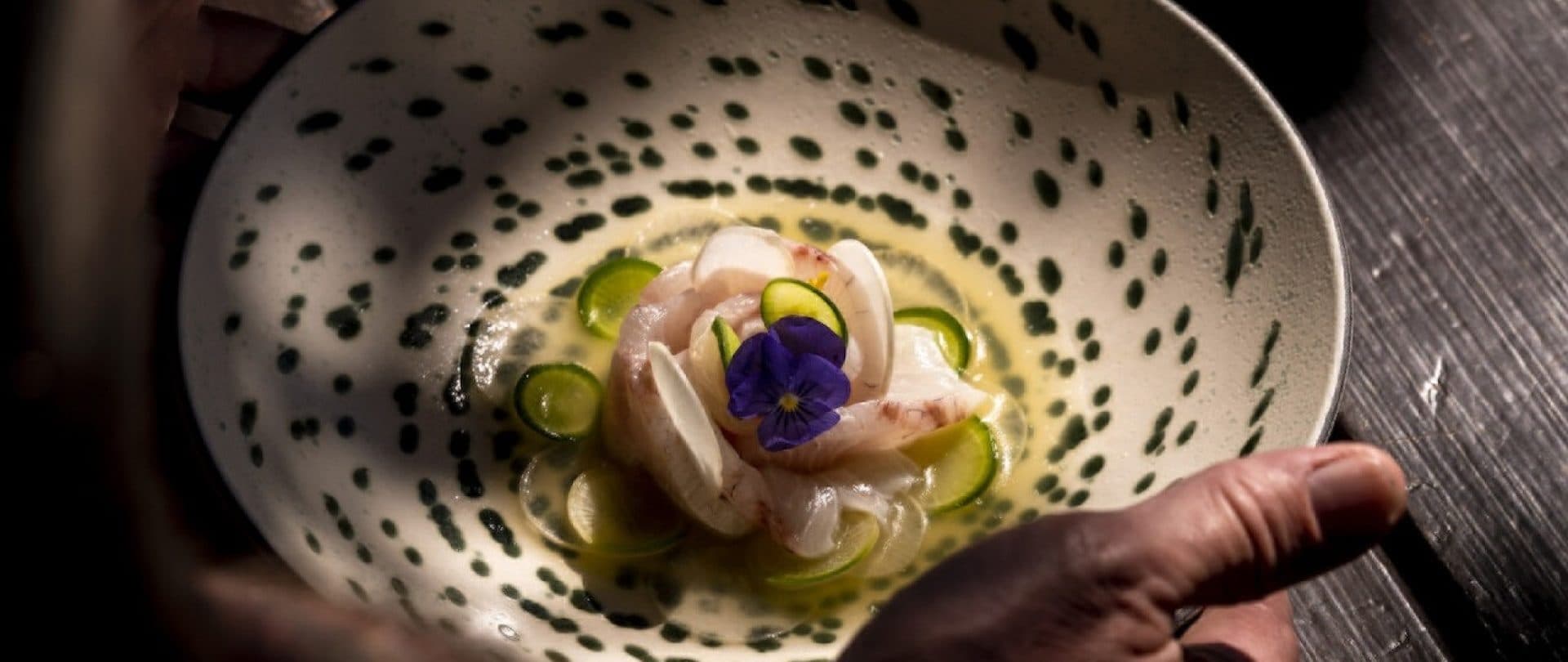
Omakase, which translates to “I’ll leave it up to you,” is a Japanese dining experience in which the chef is entrusted to select and serve a curated, multi-course meal from the highest-quality ingredients available. Chef Nuri puts an innovative spin on this concept, blending local ingredients such as Hawaiian seaweeds with freshly caught fish and seafood to create unique, authentic Japanese dishes.
As a child growing up in a large family, Chef Nuri often spent time in the kitchen with his Japanese grandmother, steaming rice, cleaning fish, and preparing meals. As a young adult, he attended culinary school, where he immersed himself in the art of sushi making before spending six months in an apprenticeship at an acclaimed kaiseki restaurant in Kyoto, Japan.
Today, Chef Nuri showcases his expertise, preparing one meticulously plated dish after another at the omakase counter while the ocean waves serve as the evening’s soundscape. The counter’s setting is intimate and exclusive, with only 12 seats and limited nightly reservations.
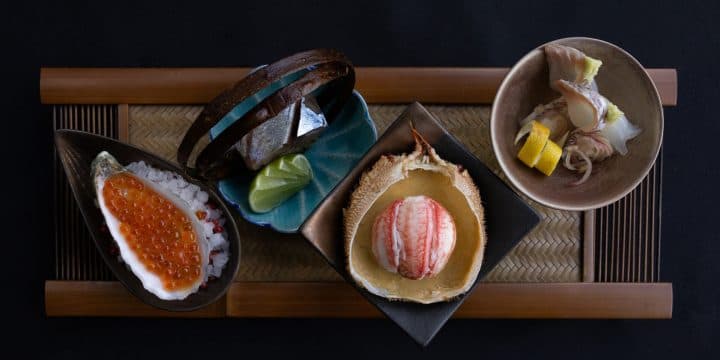
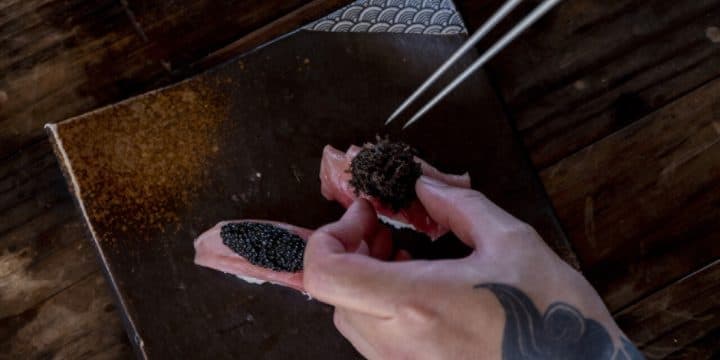
“The menu may feature a sequence of up to 11 different, carefully selected fish dishes that take us hours to prepare,” says Chef Nuri, who enjoys the interactive element of omakase. As he prepares the zensai, or appetizer, which can include oysters grown at the resort and a melt-in-your-mouth chutoro (medium-fatty) tuna cut, he explains the dish. Each piece is eaten promptly upon presentation out of respect for Chef’s craftsmanship.
Watching Chef Nuri prepare the suimono, a Japanese course of soup with a delicate dashi broth base, and the yakimono course, which may feature highly prized sea urchin, ahi tuna, and Okinawan sweet potato, is so spellbinding that no one notices that chopsticks, flatware, and plates are removed and replaced between courses, and cups refilled with sake.
While the fine-dining experience is often reserved for special occasions such as birthdays and anniversaries, Chef recalls a couple who chose to stay at Four Seasons Hualālai to enjoy an evening at the omakase counter.
“Seafood is essential to Hawaiian culture. It doesn’t just represent nourishment, but also our deep connection to the ocean,” Chef Nuri explains between presenting an intermezzo of Hakkaisan Sake sorbet and champagne to clear the palate and serving the Shokuji Omakase course. Like all courses, this one’s featured fish is a surprise to the diner. The crown jewel could be abalone, kanpachi, or some other delightfully fresh catch. Each course is presented with such subtle elegance that it isn’t until you’re savoring your dessert that you realize you’ve just enjoyed a feast.
Since opening in January 2025, Noio has presented 14 different variations of the Omakase Experience menu. Chef Nuri and his team are always reimagining the courses, inspired by what’s in season, making every visit to the omakase counter a new and unforgettable culinary journey.
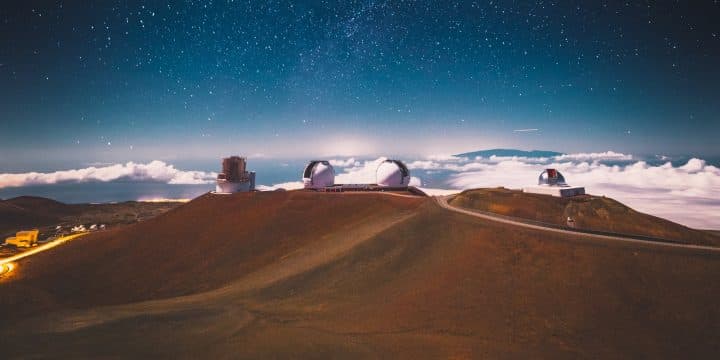

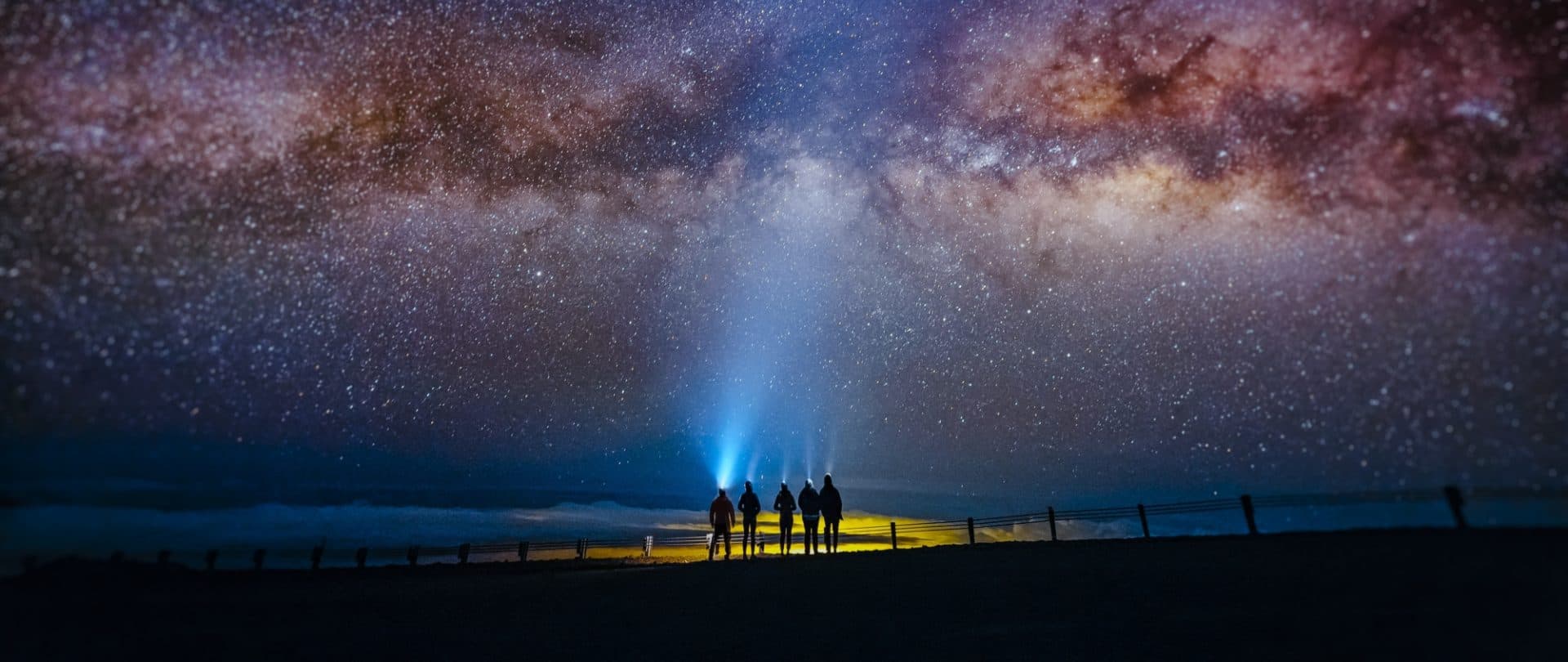
While the noio was their guide by day, Polynesian navigators relied on kilo hōkū (star watchers) to guide them across the Pacific by night. If you’re ready to gaze at the cosmos and discover more stars than you imagine existed, a visit to Mauna Kea at sunset is a must.
As you turn off Saddle Road and begin your ascent up the Mauna Kea Access Road, consider the cultural significance of this dormant volcano, which last erupted around 4,500 years ago. Meaning “white mountain,” Mauna Kea is culturally sacred in the Native Hawaiian creation story, which describes it as the first-born mountain son of the original ancestors of the Hawaiian race, Papahānaumoku (Earth Mother) and Wākea (Sky Father). At 13,803 feet, the summit of Mauna Kea is revered as the wao akua (realm of the gods) and the dwelling place of the snow goddess Poli‘ahu, who uses her icy power to hinder the volcanic eruptions of fire goddess Pele.
In ancient Hawai‘i, only the highest chiefs and priests could access the summit. Today, Mauna Kea is sacred to Native Hawaiians as a site for gathering resources for cultural and spiritual practices, visiting ancestral burial sites, and practicing traditional rituals at the summit and on the mountain’s slopes. For everyone who visits, the summit region is respected as a Traditional Cultural Property (TCP) on the Hawai‘i Register of Historic Places and a living resource at the piko (navel) of Hawai‘i Island.
Mauna Kea is also home to the Hawaiian hoary bat, ‘ahinahina (silversword) plant, and other unique species, and contains the most cutting-edge collection of large telescope observatories and astronomical research facilities in the world. Whether you’re a sunset chaser, star gazer or just want an adventure on top of the world, a visit to Mauna Kea is a once-in-a-lifetime experience.
Those who choose to explore the mountain on their own will take Mauna Kea Access Road to the Mauna Kea Visitor Information Station (VIS) to acclimatize for at least 30 minutes, to prevent altitude sickness, before driving to the summit. The gateway to the summit, VIS provides ample opportunities to learn more about Mauna Kea through exhibits, videos, and ranger talks. Once a month, VIS also offers a reservation-based, limited-capacity telescope-viewing experience for private sessions.
If you’re continuing to the summit, timing is everything. Mauna Kea’s summit is only open to visitors during the day and closes from 30 minutes after sunset to 30 minutes before sunrise the next day. Additionally, a four-wheel-drive vehicle is required to reach the summit, as the first four miles are unpaved, the entire drive is notably steep, and snow can often blanket the mountain during the winter months.
At the summit, the sun sets dramatically into the sea of clouds below, painting the sky with glowing colors of gold, fiery reds, and majestic purples. Once everyone returns to VIS, the blankets, hats, and mugs of hot cocoa come out, and the headlights, phones, and other lights turn off as star gazers let their vision adjust to the cozy darkness, which can take 20 to 30 minutes.
Mauna Kea’s extreme altitude, which puts it above most atmospheric moisture and light pollution, and dry air create incredibly clear conditions for viewing the Milky Way, shooting stars, numerous constellations like Orion, Leo, and Sagittarius, star clusters like the Pleiades, some deep-sky objects like the Andromeda Galaxy, and even the Southern Hemisphere’s stars.
Book a stargazing tour with a guide to take the guesswork out of timing, driving, and acclimatization, while you enjoy stunning views of about 85% of all the stars visible from Earth. When you finally descend from the slopes of the world’s tallest mountain after gazing at stars so close that you can almost touch them, you’ll never look at Mauna Kea or the night sky the same again.


Back at sea level, immerse yourself in the charm of old Hawai‘i by spending an evening with Uncle Danny Akaka at Eva Parker Woods Cottage for Twilight at Kalāhuipua‘a. A monthly series that takes place on the Saturday closest to the full moon, this free community event celebrates the area of historic Kalāhuipua‘a through live music, dance, and storytelling.
As the sun begins to set into the ocean, shrouding the palm trees in shadows, Mauna Lani residents, resort guests, and locals gather on the grounds of Kalāhuipua‘a, many bringing their beach chairs or blankets, food, and a bottle of wine to enjoy a picnic under the stars.
“Here in the piko (center) of these five great mountains, we are surrounded on the backside by six ancient fishponds. In front of us, the ocean. It’s a wahi pana, a sacred place, surrounded by these amazing pinnacles of mana, spiritual energy, in these mountains that exist around us. And here we are, in the center of it,” says Uncle Danny, a musician and storyteller who graduated from the first-ever University of Hawai‘i at Mānoa Hawaiian Studies program before beginning his 40-year career at Mauna Lani. “The first time Anna and I actually touched this land or experienced it was back in 1972, when we were touring Hawai‘i Island with our Hawaiian language professor.”
At the time, the only way to reach Kalāhuipua‘a was by hiking a long, dirt path from Spencer Park. When they finally arrived, Anna, Danny, and their classmates documented the cultural lifestyle practice of catching a‘ama crabs by day. At night, everyone gathered at the Eva Parker Woods Cottage to talk story over dinner and cold beers, play the ‘ukulele, practice hula, and serenade the moon.
For Uncle Danny, being at Kalāhuipua‘a was like stepping back in time, which is an experience he’s been passionate about preserving for three decades through Twilight at Kalāhuipua‘a. Over the course of the evening, Uncle Danny and his friends reminisce about growing up in Hawai‘i when there were no resorts or residential neighborhoods, the shoreline was remote, and Queen Ka‘ahumanu Highway was a lava field, often recalling stories passed down by their parents and kūpuna (elders) that weren’t written down but were shared orally.
In between stories, the sound of ‘ukulele drifts from the cottage’s lānai (porch) into the ocean air, and the grounds become an extension of the lānai. As the stars emerge, couples abandon their beach chairs to dance.
From local students to iconic performers, Twilight at Kalāhuipua‘a transforms into a true impromptu kanikapila (Hawai‘i’s version of a jam session) as the night goes on and talented musicians join Uncle Danny and Aunty Anna on the lānai. Greg Sardinha, a renowned steel guitarist, and masterful Hawaiian singer Aunty Genoa Keawe are just a few of the legends who have graced the green cottage with their beloved music. No matter who Uncle Danny’s special guests may be, he always ends the evening with a rendition of the song “Hawai‘i Aloha.”
Palms sway with the music as hands join and voices fill the air, singing, “Mai nā aheahe makani e pā mai nei, mau ke aloha no Hawai‘i. From the gentle breezes blowing here, love for Hawai‘i endures forever.”
Noio; Four Seasons Resort Hualālai, 72-100 Ka‘upulehu Drive, Kailua-Kona; (808) 325-8000; fourseasons.com/hualalai/dining/restaurants/noio.
Mauna Kea Summit Adventures; Several pickup locations available; (808) 322-2366; maunakea.com.
Hawaii Forest & Trail; Several pickup locations available; (808) 331-8505; hawaii-forest.com.
Mauna Kea Visitor Information Station; Mauna Kea Access Road (milepost 28); (808) 934-4550; hilo.hawaii.edu/maunakea/visitor-information/station; Open daily, 9 a.m. to 9 p.m.
Twilight at Kalāhuipua‘a; Mauna Lani, Auberge Resorts Collection; 68-1400 Mauna Lani Drive, Kohala Coast; (855) 201-3179; auberge.com/mauna-lani/experiences/twilight-live-music-storytelling.