


©2023 Savvy360, LLC. All Rights Reserved
PLAN A TRIP IN OUR APP


Andrew Richard Hara
Andrew Richard Hara
Andrew Richard Hara
Andrew Richard Hara
Andrew Richard Hara
Andrew Richard Hara
Wild at Heart
On Mauna Loa’s southern slopes, the Kahuku Unit offers a rare glimpse of Hawai‘i’s lava fields, native forest, and birdsong
BY Sara Stover
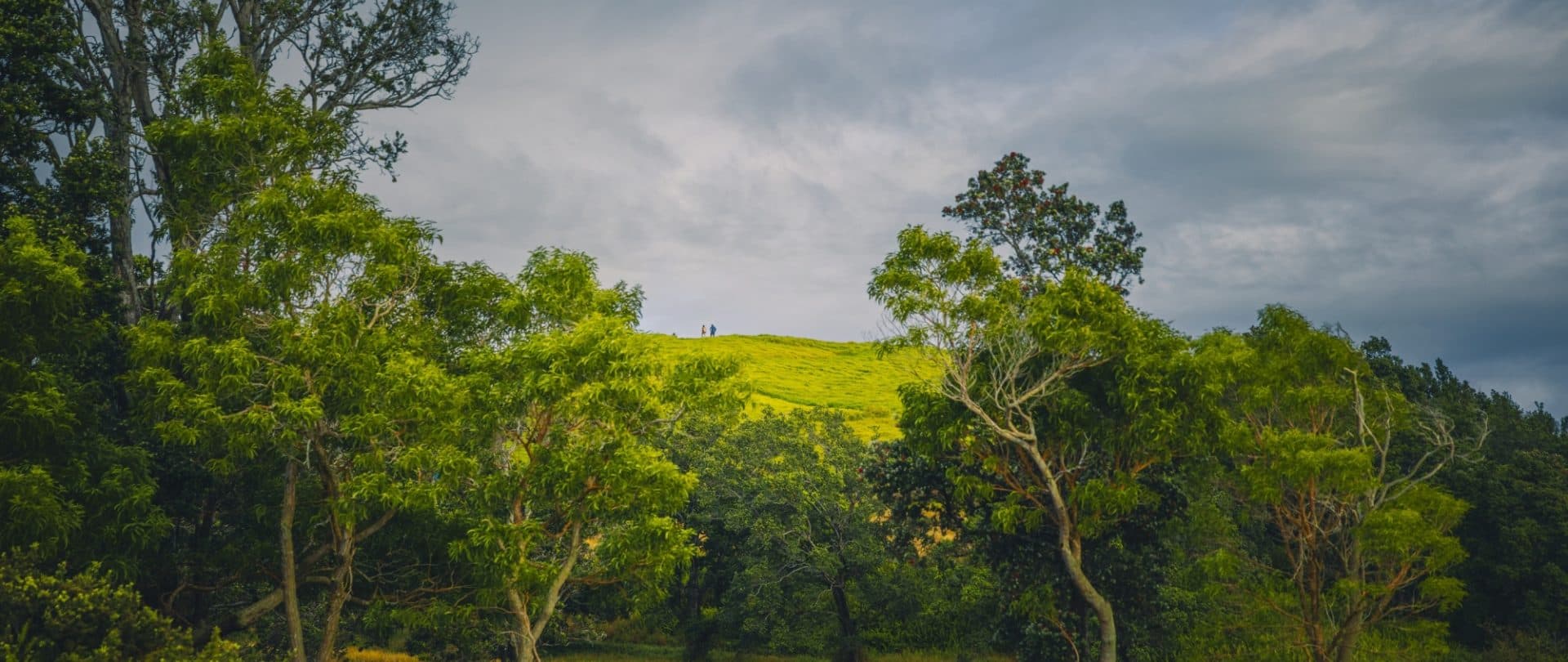
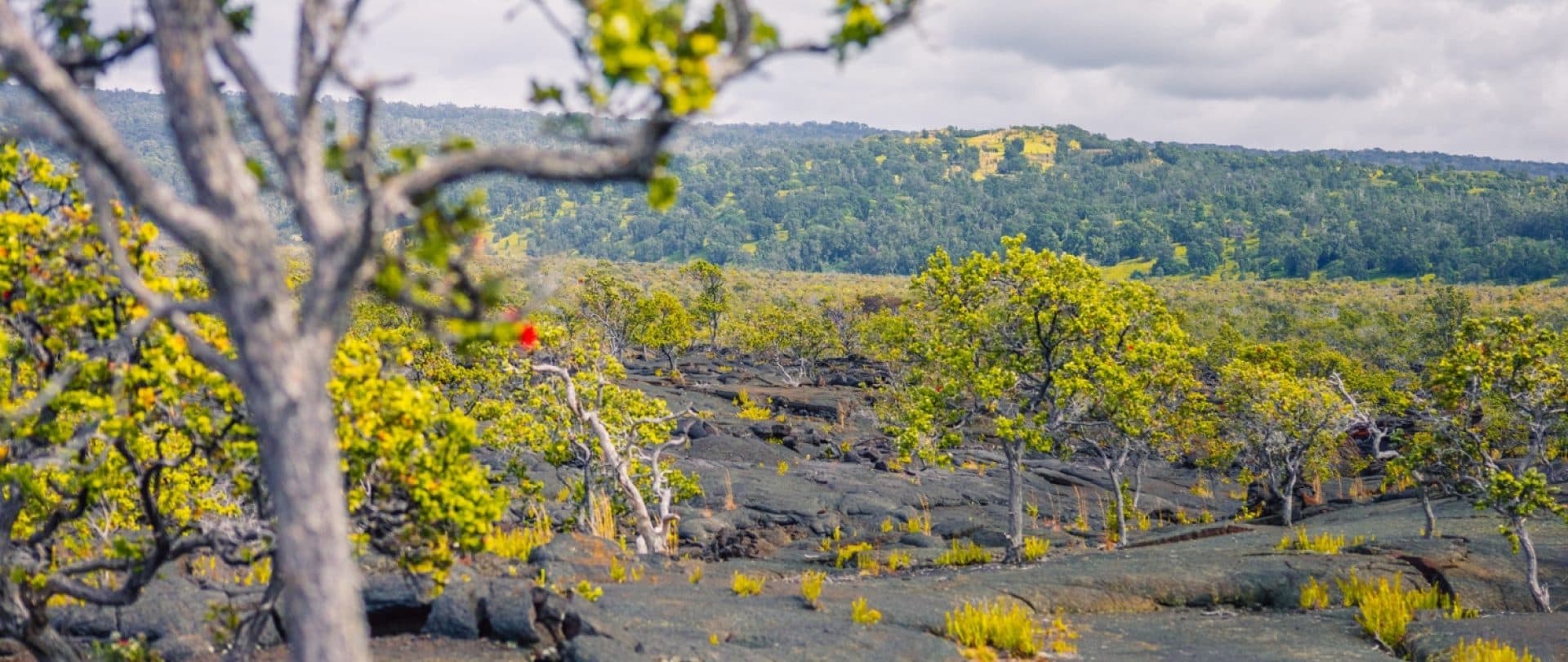
Stretching across the remote, southwestern slopes of Mauna Loa is the Kahuku Unit of Hawai‘i Volcanoes National Park. From rolling green pastures and rugged lava fields to pockets of native Hawaiian rainforest, geology and agriculture have left their stamp on this 116,000-acre landscape, which has been part of the park since 2003.
Before it belonged to the National Park Service, however, most of the Kahuku Unit was in the 184,298-acre Kahuku Ahupua‘a, the biggest traditional land division in Hawai‘i and the domain of King Kamehameha I and his family. Since the late 1700s, Native Hawaiians have traveled to Kahuku’s uplands, hunting birds for food and feathers, and wild cattle, goats, and pigs for household use and for trade.
By the mid-1800s, Hawaiians foraged there for ‘iliahi (sandalwood) and pulu (tree fern fiber) to sell on the international market. The pulu, wood, and wild cattle attracted attorney and entrepreneur Charles Coffin Harris, who bought the entire ahupua‘a (land division) from King Kamehameha IV in 1861.
Harris then sold the land to Theophilus Brown a few years later, and his brother, Captain Robert Brown, managed the historic ranch until one fateful day in 1868. On March 27, Mauna Loa, Earth’s largest active volcano, woke from her slumber. By April 7, lava began pouring out of a fissure on the Kahuku Ranch. At the time, Captain Brown was living in the main ranch house.
The lava advanced so quickly that he, his wife, and their nine children narrowly escaped death. Within a few hours, the one-mile-wide lava flow reached the ocean, burying Captain Brown’s home in the process.
In 1871, Brown sold Kahuku and its livestock to Ka‘ū entrepreneurs who established Kahuku Ranch Co., bringing the ranch back from the brink of devastation and returning it to active agricultural use. By the 1900s, Kahuku was producing such large quantities of beef and hides that it caught the attention of Parker Ranch, which acquired it in 1912. After a century of property buyouts, Kahuku Ranch ultimately became part of Hawai‘i Volcanoes National Park.
Today, it’s free to visit the Kahuku Unit, known for hiking trails featuring mowed-grass paths, dramatic ascents and descents, punctuated by breathtaking views. Whether you’re a birder or a hiker, wear sturdy hiking boots or trail shoes and bring water with you for your Kahuku adventure.
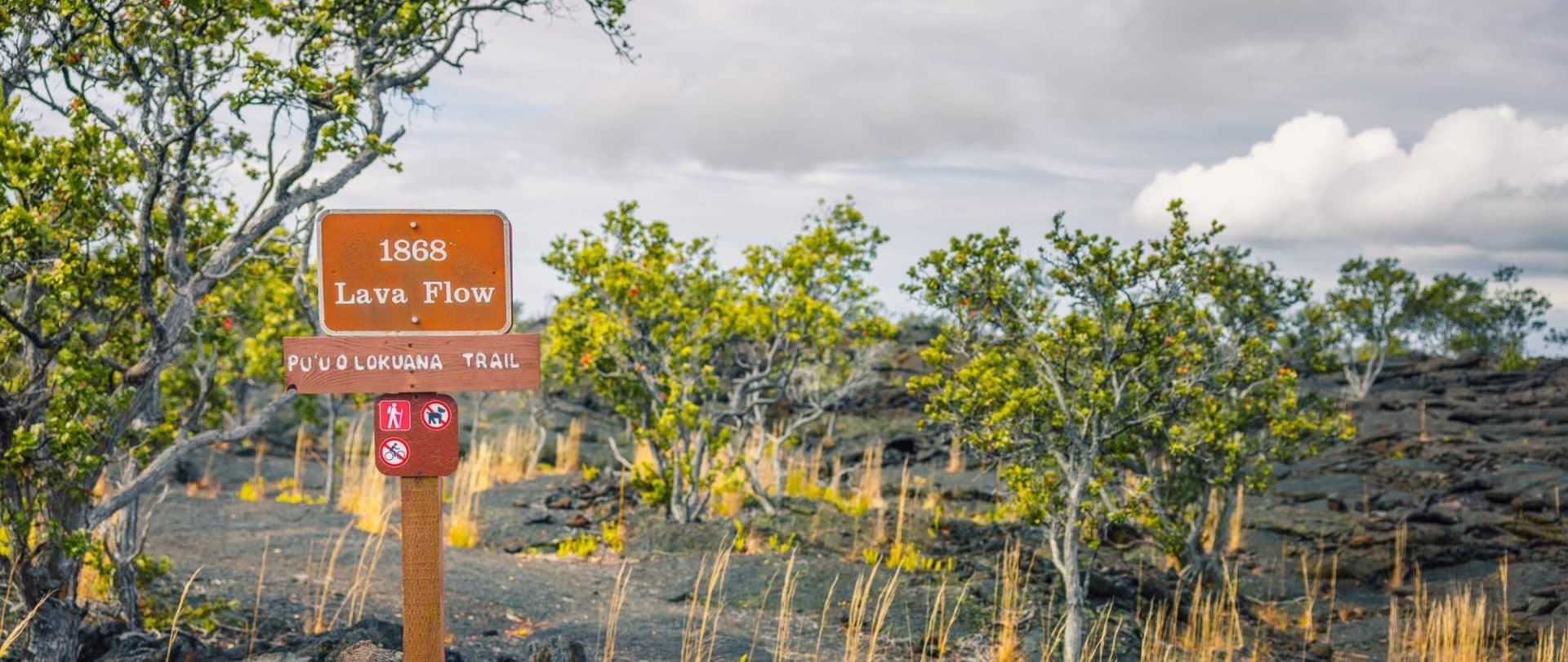
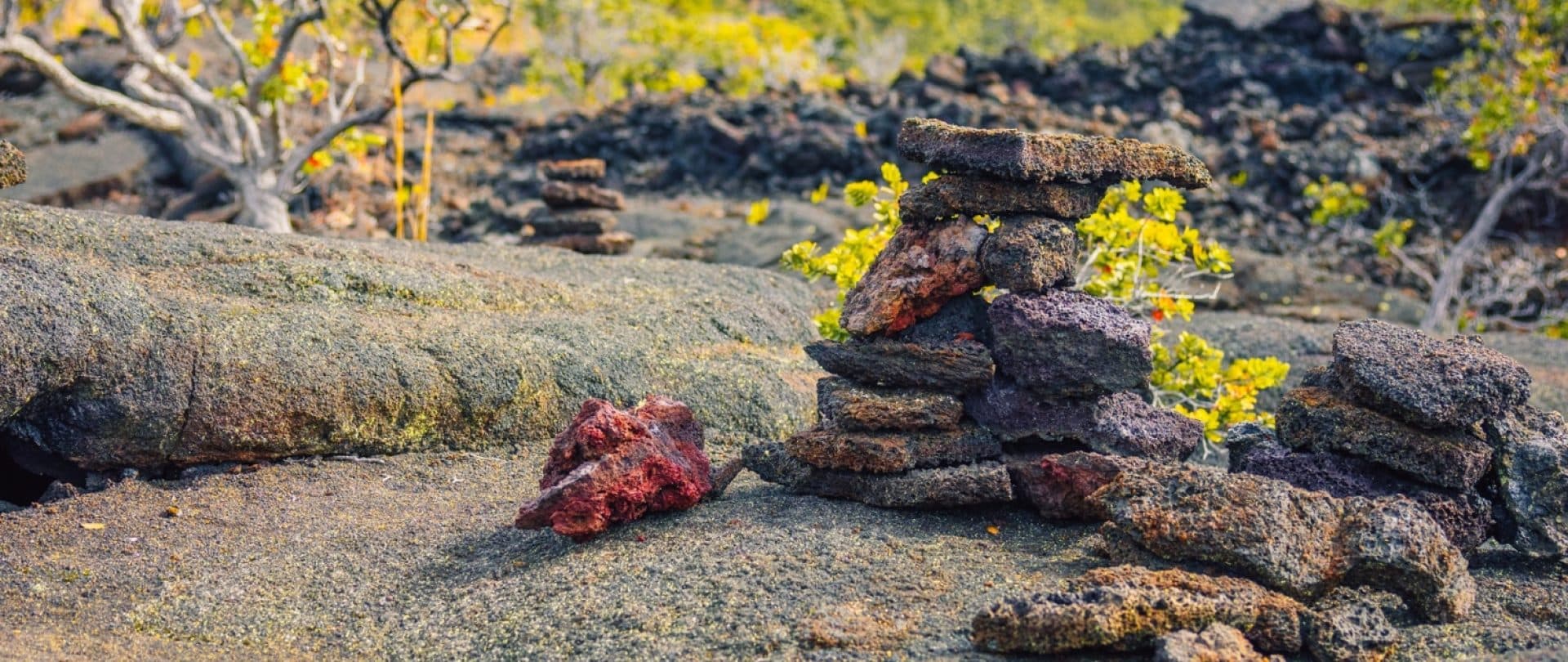
Consider starting at the visitor contact station to learn more about the unit’s cultural, historical, and ecological significance and familiarize yourself with trails like Pu‘u o Lokuana Trail. This two-mile loop along historic ranch roads takes you to a hidden pasture where wide open spaces invite you to breathe the wild air and imagine cattle roaming the ranch’s pastures. Along the way, you’ll pass lava flows and tree molds from the eruption of 1868. It’s believed the Brown family’s home lies somewhere beneath the 1868 lava flow.
For a shorter but more challenging excursion, follow signs for the Pu‘u o Lokuana Cinder Cone. The highlight of this loop, which is less than one mile, is the climb to the top of the cinder cone. On the backside is where you’ll see all that remains of the secret Kahuku Radar Station built by the U.S. military in the 1940s, which included a tower atop Pu‘u o Lokuana that was decommissioned in 1947.
If you’re looking for an easy hike through verdant meadows, take Kamakapa‘a Trail to the top of a small cinder cone where soaring views of the ocean and the Ka‘ū coastline await. Palm Trail and Pali o Ka‘eo Trail also offer unforgettable panoramas. Palm Trail is a 2.6-mile loop that leads through pastoral terrain, past volcanic features along the 1868 fissure, and across the main lava channel.
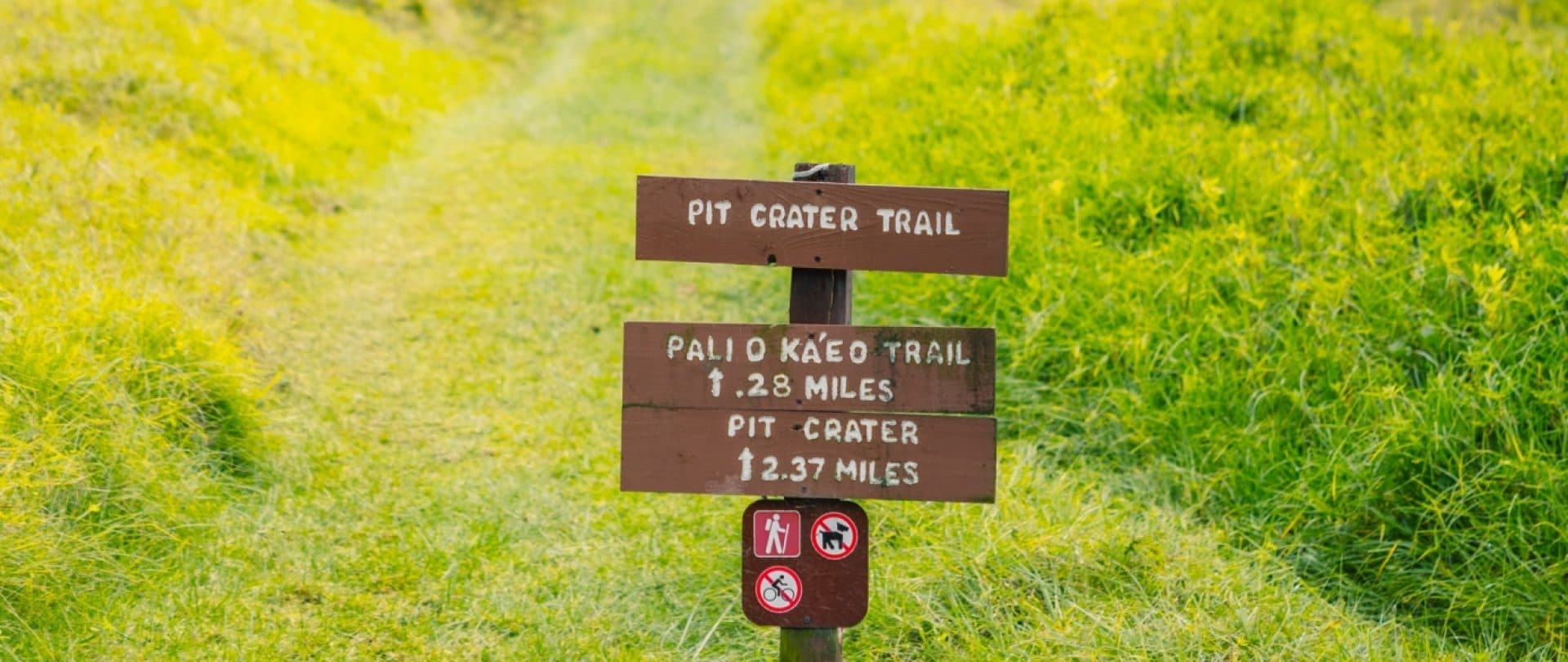
Meander through serene woodland atop a steep slope by taking Pali o Ka‘eo Trail. To make it a 2.1-mile loop, return by taking a portion of the Pit Crater Trail and road.
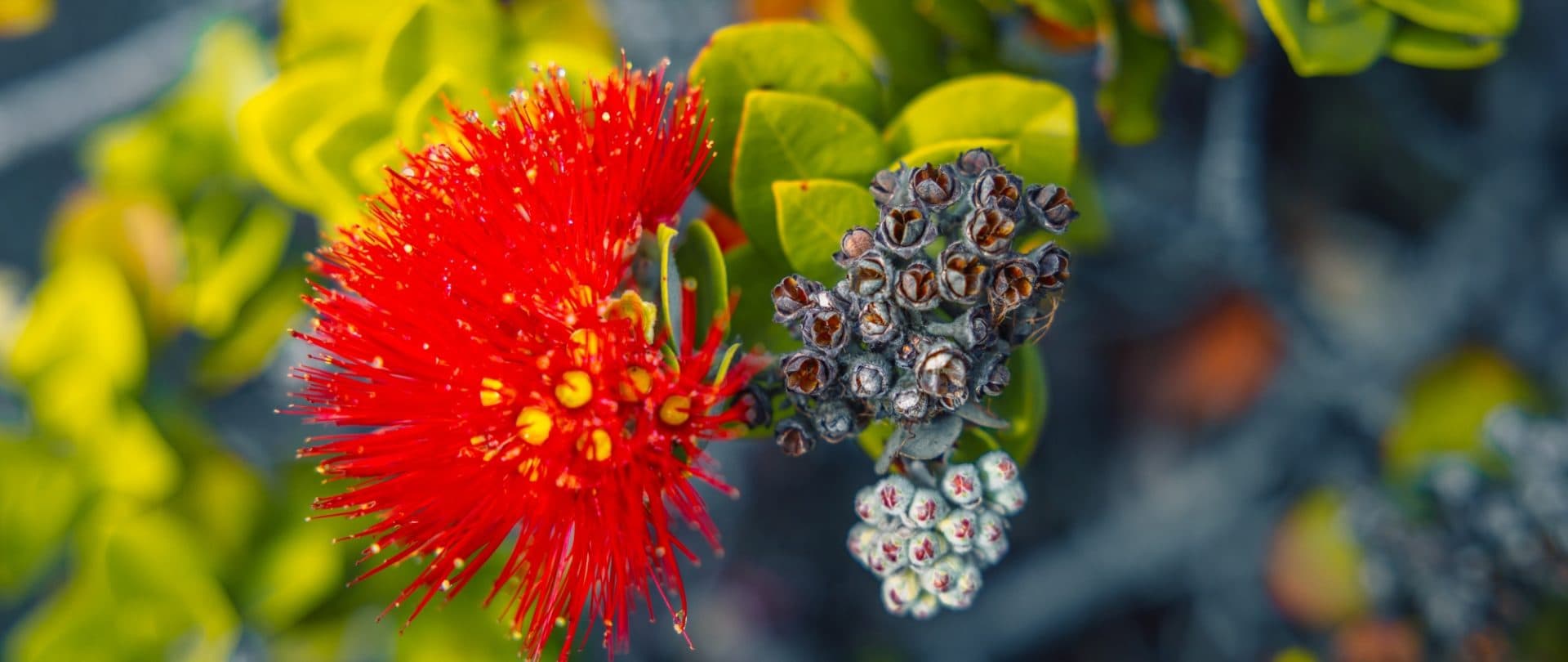
To hike the entire Pit Crater Trail, begin at the trailhead until you reach the Rapid ‘Ōhi‘a Death (ROD) Quarantine Gate. Before and after your hike, clean your footwear at the decontamination station here to prevent the spread of ROD, a destructive fungal disease that’s killing precious, native ‘ōhi‘a lehua trees. After climbing up 2.4 miles of old pasture roads, the Pit Crater Trail will hit the Glover Trail, which leads you to the edge of the Forested Pit Crater, where you can gaze at the lush Hawaiian rainforest growing within its craggy walls.
From the Forested Pit Crater, you can also access the Spur Trail and follow it directly to a lava flow from a 1926 eruption that swallowed up Kahuku’s new pastureland. Return the way you came or continue onto Upper Glover Trail, which was named for James Glover, who bought Kahuku from Parker Ranch in 1947. After building fences, roads, and a water system, Glover sold the property to the Damon Estate, which in turn sold it to the National Park Service 45 years later.
By following the Glover Trail signs, you’ll traverse 2.7 miles, passing cattle corrals and other remnants of Kahuku’s ranching heritage on your way back to Pit Crater Trail. If this hike isn’t challenging enough for you, follow signs for the Kona Trail. This 4.6-mile loop trail is defined by the hardened basalt of the 1887 lava flow, which reached the ocean in less than a day, as well as tenacious ‘ōhi‘a lehua trees reclaiming the land.
Roaming the trails of the Kahuku Unit is almost certain to work up an appetite, so pack a light lunch or snacks. At the picnic area that is 1.2 miles before the ROD Quarantine Gate, take a well-earned break and note how the undeveloped coastline offers a striking contrast against the windmills at Ka Lae (South Point) turning in the unrelenting trade winds.
Bulldozing, burning, seeding invasive species, fertilizing, overgrazing, eruptions, extraction, and alterations have all taken their toll on a land whose towering native trees were once the source of timber for King Kamehameha I’s outrigger canoes. Fortunately, native koa, ‘ōhi‘a lehua, ‘a‘ali‘i, and Ka‘ū silversword have been planted on the former cattle ranch, restoring its natural habitat and helping preserve its rare ecosystems. Today, Kahuku’s hills are alive with the spirit of resilience and the sound of crimson ‘apapane, endangered Hawai‘i ‘ākepa, and other forest birds singing from the branches of majestic native trees once again.
Kahuku Unit, Hawai‘i Volcanoes National Park; off Highway 11 at the 70.5-mile marker; Thursday–Sunday, 8 a.m.–4 p.m.; nps.gov/havo/planyourvisit/kahuku.htm