


©2023 Savvy360, LLC. All Rights Reserved
PLAN A TRIP IN OUR APP




Island Legacy
Historic estates, mission homes, and museums across Kaua‘i reveal the people, cultures, and communities that shaped the Garden Isle.
BY Krystal Kakimoto
Across Kaua‘i, history is written into the island’s homes, estates, and gathering places. Plantation-era manors, mission houses, and community museums preserve the stories of the people who shaped the Garden Isle — from immigrant laborers and missionary families to artists, educators, and cultural stewards. Today, these historic sites invite visitors to explore the island’s past through restored homes, curated exhibits, and preserved landscapes that reveal Kaua'i's layered heritage and enduring spirit.


Between 1852 and the 1940s, approximately 400,000 immigrant laborers journeyed to Hawai‘i to work in the islands’ sugar plantations. Arriving from countries such as Japan, China, the Philippines, Portugal, Korea, and Puerto Rico, these men and women became the backbone of Hawai‘i’s sugar industry. Their stories come to life at Grove Farm Museum, established in 1864 and developed under the leadership of George Norton Wilcox. Under Wilcox’s direction, the plantation flourished as a hub of innovation. Advances included sophisticated irrigation systems, the transition from oxen to steam-powered plows, and the installation of the island’s first telephone line.
Today, visitors can stroll through the Wilcox family homestead and step back into a preserved chapter of Hawai‘i’s plantation era. From the main residence to staff cottages, each structure has been carefully restored and furnished to reflect daily life on the plantation. Through thoughtfully curated exhibits featuring authentic artifacts, guests gain insight into the experiences of immigrant laborers, witness how diverse cultures blended, and better understand the unique social fabric that developed on Kaua‘i. More than a historic property, Grove Farm Museum stands as a tribute to perseverance, innovation, and community. It honors the countless individuals whose labor shaped the land and preserves their stories for generations to come.
Grove Farm Museum; 4050 Nawiliwili Road, Līhu‘e; (808) 245-3202; Tours available Mondays, Wednesdays, and Thursdays at 10 a.m. and 1 p.m.; grovefarm.org


A visit to the historic grounds of Kilohana Plantation transports guests to an era when sugar reigned across Hawai‘i. Offering a vivid glimpse into life on Kaua‘i in the 1930s, the estate was once the private residence of sugar baron Gaylord Parke Wilcox and his wife, Ethel. The property’s roots trace back to 1896, when Gaylord’s uncle, Albert Spencer Wilcox, established a cattle ranch on the land. Decades later, in 1936, Gaylord and Ethel brought their vision to life with the construction of the estate’s magnificent 16,000-square-foot Tudor-style mansion.
Once a vibrant social and cultural hub for the island, the mansion and its surrounding grounds have since been transformed into a living museum. Guests are invited to wander through the estate, imagining the elegance and rhythm of plantation-era life. The former living quarters — from gracious parlors to intimate bedrooms — now house a restaurant and a collection of local boutiques. Visitors can explore each room at their leisure, admiring the original woodwork and taking in sweeping views from the same windows the Wilcox family once enjoyed.
Beyond the mansion, the experience continues aboard a scenic, conductor-led rail ride. The 40-minute journey winds along a 2.5-mile track through the estate’s 35 acres — a fraction of the 22,000 acres the plantation once commanded — passing rows of kō (sugarcane), mango groves, and lush gardens that supply the on-site restaurant. Along the way, guests encounter pigs, goats, sheep, and donkeys, bringing Kilohana Plantation's agricultural heritage to life.
Kilohana Plantation; 3-2087 Kaumuali‘i Highway, Līhu‘e; (808) 245-5608; Shops and main building open daily; Train rides available daily at 10 a.m., 11 a.m., 12 p.m., 1 p.m., 2 p.m., and additional rides on Tuesdays and Fridays at 4:30 p.m. and 5:30 p.m.; kilohanakauai.com
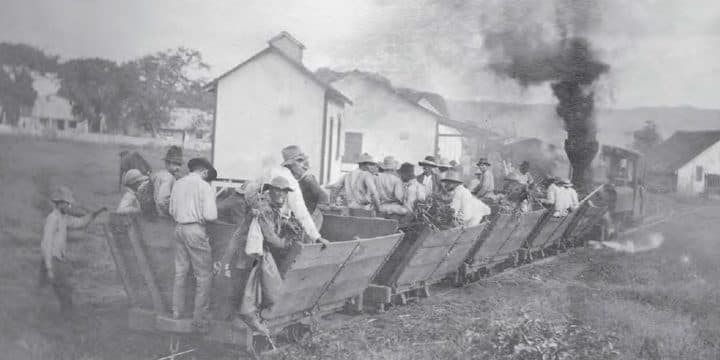
Founded in 1914, the Kaua‘i Historical Society is dedicated to collecting, preserving, and sharing the island’s oral, written, and pictorial history. Through the commitment of its staff, board members, and volunteers, the Society provides invaluable research services and curates engaging online exhibits that make Kaua‘i’s history accessible to audiences worldwide. From historic images of Kīlauea Sugar Plantation to rare royal patents and treasured archival manuillegalscripts, the Society’s collection offers a vivid visual record of the island’s past. Beyond its archives, the Society actively shares these stories through its social media platforms, broadcasting virtual tours and hosting engaging “talk story” sessions. These gatherings bring historians, cultural practitioners, and community members together to explore Kaua‘i’s heritage and ensure that the island’s voices continue to be heard far beyond its shores.
Kaua‘i Historical Society; 4396 Rice Street, Līhu‘e; (808) 245-3373; kauaihistoricalsociety.org
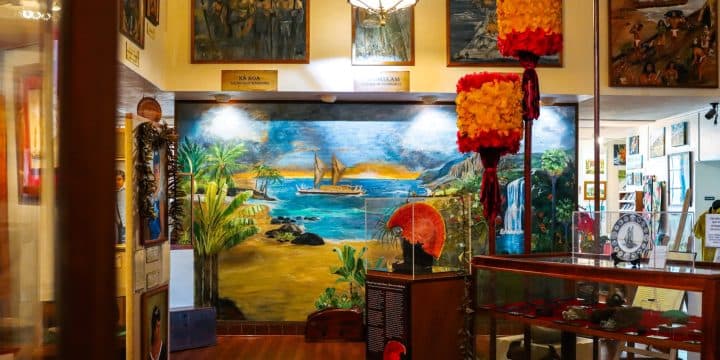
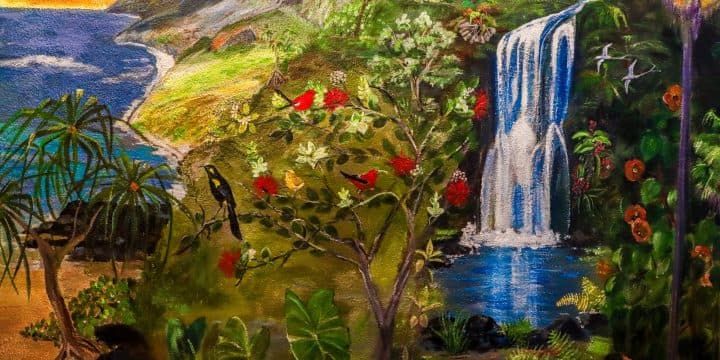
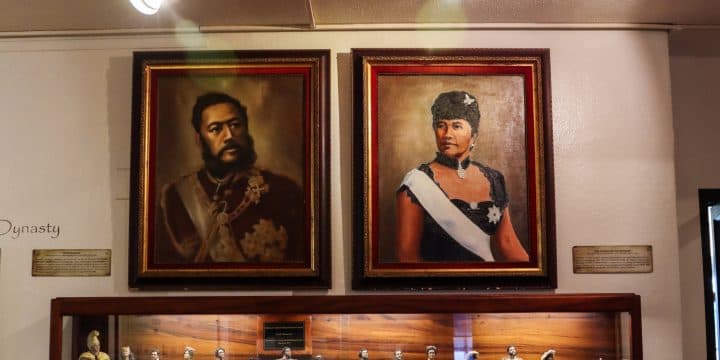
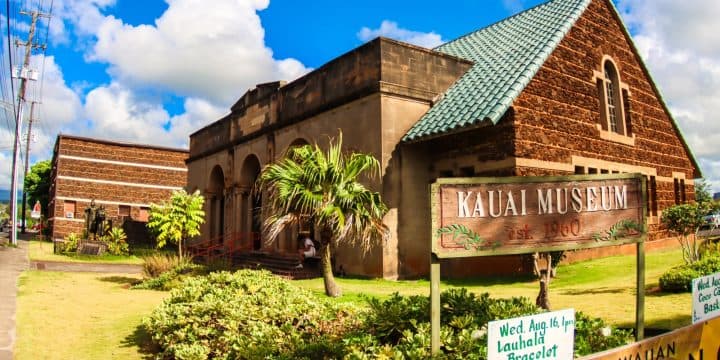
The history of Kaua‘i and Ni‘ihau comes to life at Kaua‘i Museum, where thoughtfully curated exhibits honor the people, traditions, and stories of the islands. The museum was founded through the vision and determination of two remarkable women: Juliet Rice Wichman, a renowned conservationist, botanist, and author who served as chair of the museum committee, and Dora Jane Isenberg Cole, a dedicated committee member. Together, they worked tirelessly to raise funds for a permanent home for the museum.
Their efforts culminated in December 1960, when the museum officially opened to the public, with Wichman serving as director and Cole as manager. Spanning 22,000 square feet, the museum houses an expansive collection tracing the islands’ past and present. Cultural galleries highlight the artistry of local craftspeople, from intricate kapa (beaten bark cloth) pieces and delicate Ni‘ihau shell lei to portrait galleries honoring the ali‘i (Hawaiian royalty). Each gallery reflects the enduring traditions and cultural heritage of Kaua‘i and Ni‘ihau.
The museum also offers interactive cultural classes for visitors of all experience levels. From haku lei (braided head lei) and weaving workshops to introductory hula lessons, these hands-on experiences deepen visitors’ understanding of the traditions represented throughout the exhibits. Together, the galleries and educational programs create an immersive journey that preserves the past while inspiring appreciation for the cultural legacy of Kaua‘i and Ni‘ihau.
Kaua‘i Museum; 4428 Rice Street, Līhu‘e; (808) 245-6931; Open Monday–Friday, 9 a.m.–4 p.m.; Saturdays, 9 a.m.–2 p.m.; kauaimuseum.org


High in the cool, mist-laced uplands of Kōke‘e State Park, where it feels as though you are standing at the crest of the island, sits the Kōke‘e Natural History Museum. Though modest in size at just over 800 square feet, this rustic gem features exhibits that illuminate the rich natural and cultural heritage of Kaua‘i. The museum’s lodge-style setting invites visitors to slow down and connect with the surrounding landscape before heading out on nearby trails. Engaging exhibits introduce the region’s diverse flora and fauna, helping hikers recognize native plants and wildlife found throughout the upland forests.
Among its treasures are botanical prints created in 1885 by Isabella Sinclair, a Scottish-born botanical illustrator and author who moved to the islands after marrying Francis Sinclair, the son of her aunt Eliza Sinclair, who purchased Ni‘ihau for $10,000 in 1864. A carefully assembled display of mounted native forest birds alongside introduced game species provides insight into Hawai‘i’s delicate and evolving ecosystem. One of the museum’s most compelling features is its rotating cultural storytelling exhibits. Displays have explored subjects ranging from Laka, the goddess of hula, to Queen Emma’s 1871 sojourn to Kōke‘e.
Established in 1953, the museum continues to serve as both an educational resource and a gateway to exploration. Knowledgeable staff are on hand to answer questions, share insights, and help visitors make the most of their time in Kōke‘e and across Kaua‘i.
Kōke‘e Natural History Museum; 3600 Kōke‘e Road, Kekaha; (808) 335-9975; Open Monday–Friday, 10:30 a.m.–3:30 p.m.; Saturday–Sunday, 10:30 a.m.–4 p.m.; kokee.org
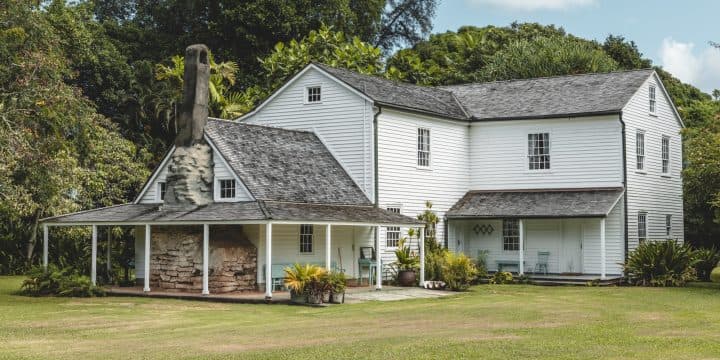
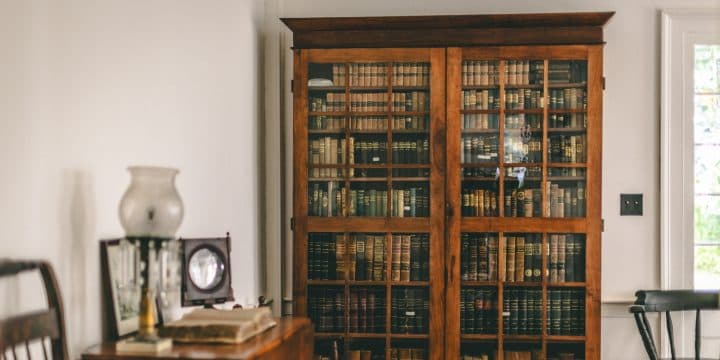
Built in 1836, the Wai‘oli Mission House stands as a lasting landmark and testament to the perseverance of the first Christian missionaries to settle on Kaua‘i. Its story begins in 1834, when Reverend William Patterson Alexander, his wife, Mary Ann McKinney, and their young son traveled from Waimea to Hanalei by double-hulled canoe, paddled at the invitation of Governor Kaikio‘ewa, the ruling chief of Kaua‘i, to establish Wai‘oli Mission Station. Alexander first constructed a thatched-roof meeting house with a belfry; two years later, in 1836, the white clapboard Mission House — remarkably still standing today — was completed as the family’s permanent home.
Although their time in Wai‘oli was relatively brief due to health concerns, their work laid the foundation for the mission’s future. In 1846, Abner Wilcox and Lucy Eliza Hart Wilcox assumed leadership of the mission. Along with their many sons, the Wilcox family remained in the area for decades, serving as missionary teachers and becoming deeply woven into the community’s fabric.
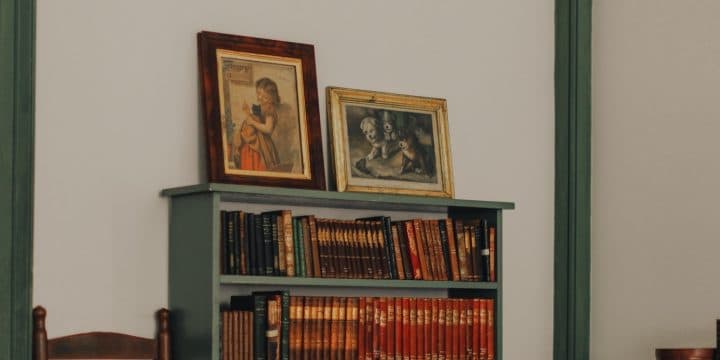
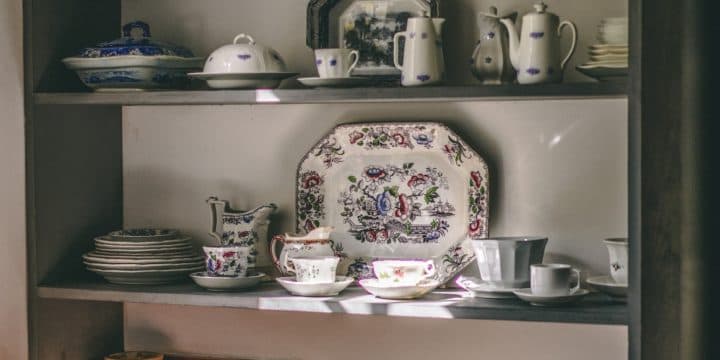
Today, visitors can tour the preserved home and step back into the early nineteenth century, imagining life for families who had sailed nearly 18,000 miles from Boston to Hawai‘i. Original artifacts remain throughout the house, creating the sense that its residents have only briefly stepped away. Highlights include the original lava rock chimney that warmed the home, beautifully crafted koa wood furniture, and a large 1837 wall clock that continues to keep accurate time — a quiet reminder of the home’s enduring legacy.
Wai‘oli Mission House; 5-5373 Kūhiō Highway, Hanalei; (808) 826-1528; Tours available Tuesdays, Thursdays, and Saturdays, 9 a.m.–3 p.m.; grovefarm.com/waioli-mission-house
From the plantation-era innovations of Grove Farm to the preserved missionary life at Wai‘oli Mission House and the cultural galleries of Kaua‘i Museum, these sites reveal the many layers that shaped the island. Together, they tell a story not only of the past, but of the communities, traditions, and shared histories that continue to shape Kaua‘i today.