


©2023 Savvy360, LLC. All Rights Reserved
PLAN A TRIP IN OUR APP


First Planting
The staff of life that arrived by canoe, ʻulu is returning to Hawaiʻi's tables as curry, flour, bread, and more.
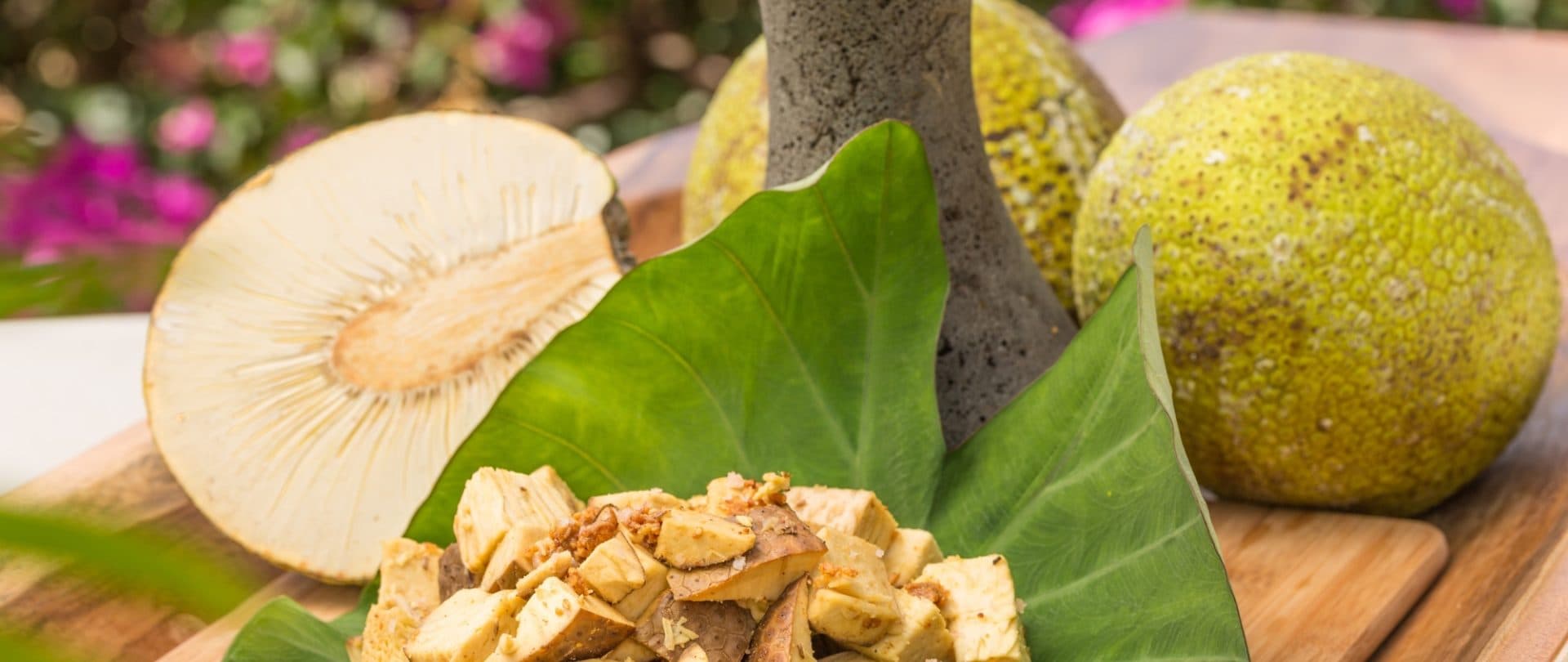
The leaves come first — deeply lobed, as long as three feet, broad enough to shade a doorway — and beneath them hang the heavy green globes of ‘ulu (breadfruit), the fruit Hawaiians long called the staff of life. Onemo‘olelo (traditional account) holds that ‘ulu reached these islands in the twelfth century, when the navigator Kaha‘i a Ho‘okamali‘i carried a tree from Samoa or Tahiti and planted it near Kualoa on O‘ahu’s windward coast. Other accounts place the earliest plantings in ‘Ewa and Ko‘olaupoko, while another tells of the god Kū, who, during a famine, buried himself and rose again as an ‘ulu tree so his family might eat. Hawaiians baked ‘ulu in an imu (earth oven), boiled it, dried it for storage, or pounded it into poi. The bark dressed skin wounds, and the sticky sap served as birdlime, catching birds whose feathers went into ceremonial featherwork. A mature fruit can weigh up to 10 pounds, and the trees still stand between 1,000 and 2,000 feet on every main island, though ‘ulu grows readily from the shoreline up. Now it is coming back, boiled into curries, fried in butter, baked into bread, folded into dips, and milled into flour, in a state that imports most of what it eats. Find it at farmers' markets and on menus across O‘ahu, where it turns up tasting more like a potato than like bread.