


©2023 Savvy360, LLC. All Rights Reserved
PLAN A TRIP IN OUR APP



Tev Media

Mark Kushimi

Mark Kushimi
Open Secret
In Chinatown, Waikīkī, and Kaimukī, three hidden bars built around a record collection, a father’s memory, and a shelf of old books
BY Natalie Schack
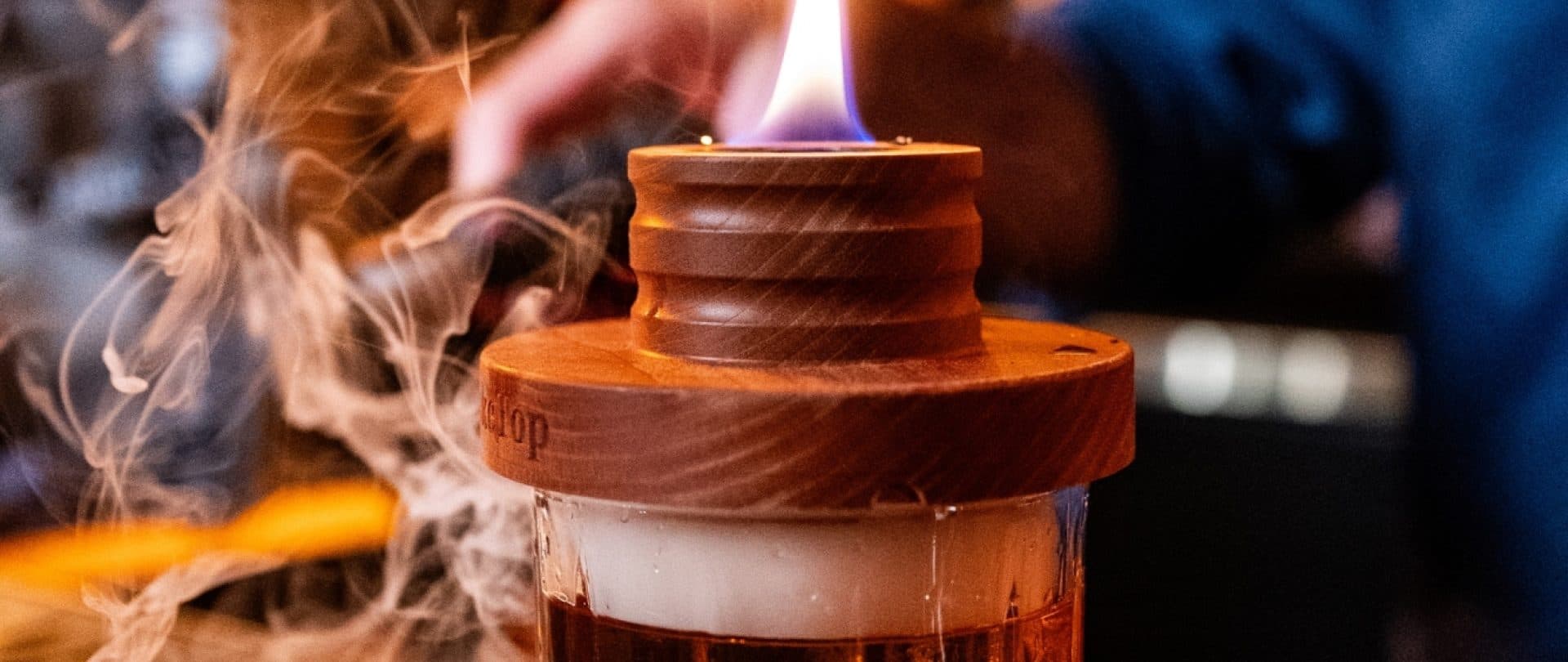
Speakeasies are having a moment. In Honolulu, it seems like there are always new ones popping up, and the creative minds behind them continue to surprise us with their innovative concepts and wonderfully artistic approaches to storytelling through space and menu. Whether it’s an urban, artsy space behind an unassuming juice machine, or a hotel suite turned moody, sensuous watering hole, the speakeasy has become a fixture in the city.
While the Prohibition-era concept has evolved far beyond hidden passwords and secret entrances, Honolulu’s latest crop of hidden bars still trades on the same irresistible idea: discovery and the absolute thrill of finding a place not everyone knows about, of knowing a different world exists just beyond an unmarked door.
Some of today’s most ambitious speakeasies, however, are about more than secrecy. Increasingly, Honolulu’s hidden bars are becoming immersive spaces built around a particular mood, memory, or obsession. Some celebrate music. Others draw inspiration from literature. A few look backward, creating intimate rooms that feel deliberately removed from the polished modernity outside their walls.
Together, they represent a new generation of themed cocktail destinations, places where finding the entrance is only the beginning of the story.
And if you’re looking for a story, what better place to start than Chinatown, one of the few neighborhoods on the island that still wears its history on its sleeve, er, facade? Everywhere you look, there’s evidence of the people and periods that came before. There are countless threads on these gritty streets, but this bar’s thread starts with a record collection.
Set apart from the usual bustle of Hotel Street, EP Bar occupies a modest brick building on Pauahi Street that feels as though it has been standing quietly in place for decades. Peek through the windows and you may wonder if you’ve arrived at the wrong spot. The front room appears almost empty. But head toward the back, and it reveals itself.
While many bars are built around energy and spectacle, EP Bar cultivates something altogether different. People aren’t shouting over music or squeezing shoulder to shoulder around a crowded bar. They’re listening. Hanging out. Settling in. There is a calmness to the room that feels increasingly rare.
Anyone who has wandered into one of Tokyo’s tiny listening bars may recognize the feeling. Not because EP is trying to replicate them exactly, but because it captures a similar spirit. The intimacy, for instance, or the way a compact room somehow feels expansive once you’re inside. The ability to cram an extraordinary amount of personality into a relatively small footprint.
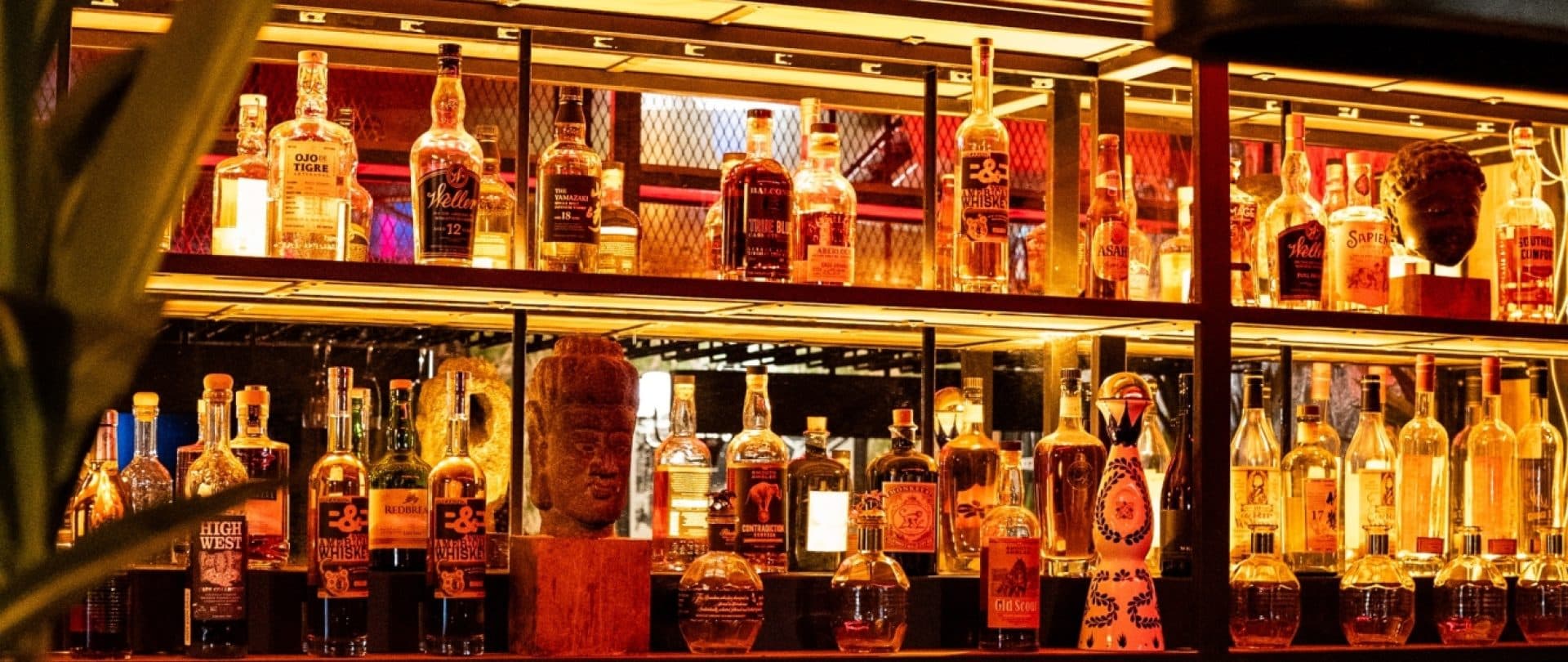
Most cocktail bars build their identity around illuminated shelves of liquor bottles. EP has those too, including a deep whiskey bench. But the bottles are dwarfed by the true centerpiece: records. Hence the name. An EP is an extended play, the record that runs longer than a single and shorter than a full album.
Stacks upon stacks of vinyl fill cube shelving from floor to ceiling, climbing the walls and framing the room. In one corner, selections spin throughout the evening, creating a soundtrack that feels every bit as important as the drinks themselves.
The Japanese influence extends beyond the music. Highballs headline the menu, but these aren’t simple whisky-and-soda pours. The house EP Highball brightens Japanese whisky with yuzu and lemongrass, while the Umai Highball incorporates ume shrub for a drink that finishes with a surprising snap of salinity. Like the room itself, they’re thoughtful, restrained, and quietly memorable.
Perhaps that’s what makes EP Bar work so well. Rather than feeling thematically manufactured, it feels personal. Like stepping into someone else’s carefully cultivated obsession with records, music, and good drinks. The result is one of Honolulu’s most singular hidden rooms — and proof that sometimes the best nights begin with following the music.
From Chinatown, the search continues in Waikīkī. And RM 38 doesn’t reveal itself easily. To find it, you must first pass through the sort of spaces that define modern Waikīkī: a fluorescent-lit lobby, a front desk, an aloha shirt shop, and the polished commercial corridors that have become increasingly common throughout the neighborhood. Then, suddenly, a neon pawnshop sign appears, glowing like a relic from another era.
You’ll find yourself in a small front room, filled with retro curios and collected oddments that evoke the feeling of an old pawnshop. The effect is playful without tipping into kitsch, creating the sense that you’ve stumbled onto something hidden amid the machinery of contemporary Waikīkī. Outside, after all, sits Lewers Street, one of Waikīkī’s most modern corridors, a landscape of smooth stone, new construction, and visitors moving from one attraction to the next. Waikīkī has been reinvented countless times, each new version polishing away another layer of what came before. All of which makes RM 38’s backward glance feel that much more deliberate.
Named for legendary restaurateur Rocky Aoki, who was born in 1938, RM 38 is a tribute from owner Kevin Aoki to his father and to the places and eras that inspired him. Leather booths create intimate pockets for conversation. Vintage tropical wallpaper wraps the room in warm patterns of palms and foliage. Artwork and collected objects draw inspiration from old Hawai‘i and Southeast Asia, creating an interior that feels assembled over decades rather than designed all at once. A cigar selection reinforces the old-world lounge atmosphere.
Hidden behind a neon sign and tucked away from the crowds outside, RM 38 offers a version of Waikīkī that feels slower, more intimate, and more personal than the one most visitors encounter. In a neighborhood defined by reinvention, RM 38 finds its identity in memory.
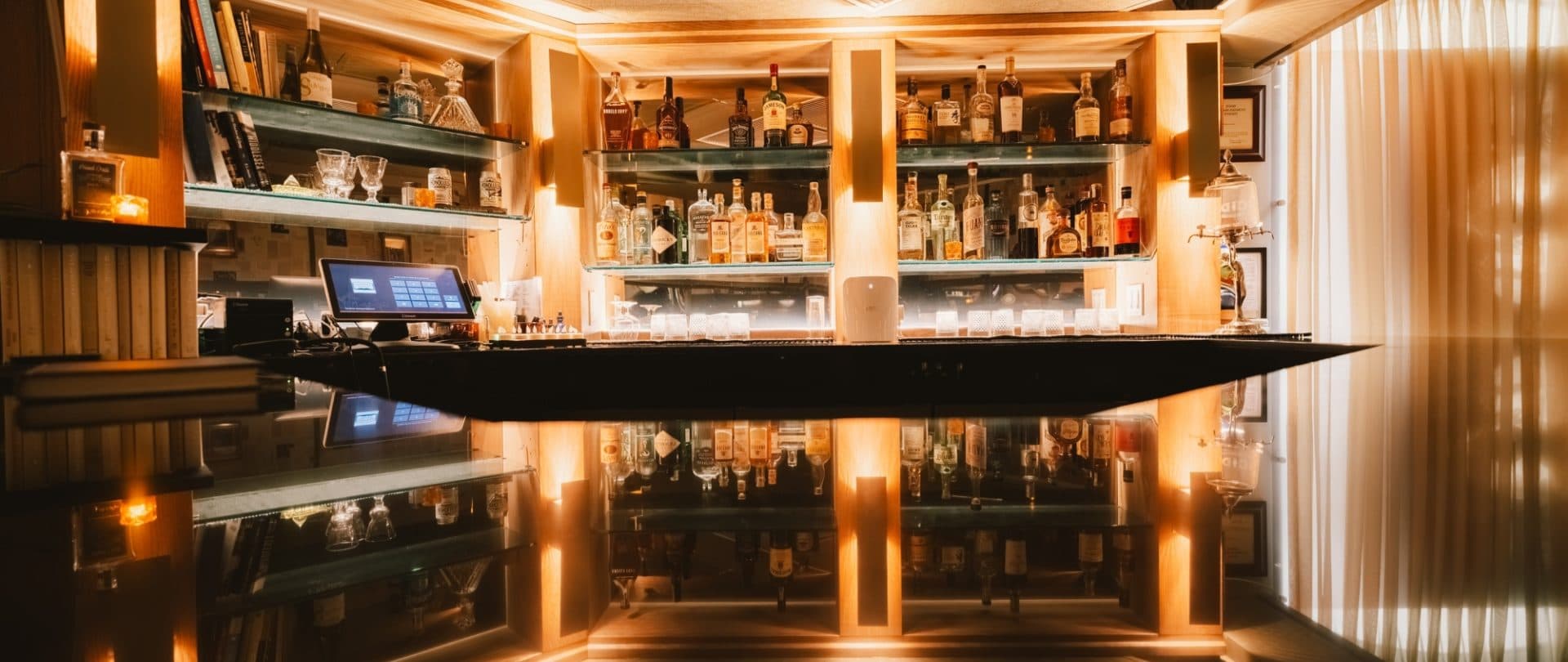
Memory takes another form in Kaimukī. At first glance, Vintage Books wears its theme openly. Books line the shelves. Books sit stacked on tables. Books fill the corners. Behind the glass storefront, the venue resembles a cozy neighborhood bookstore.
Then the back door opens.
What appears to be a single room unfolds into a surprisingly expansive collection of interconnected spaces. Deep lounge seating invites long conversations. A communal table encourages groups to gather. Hidden corners and tucked-away nooks create the sense that there is always another room waiting to be discovered. As at any good speakeasy, the reveal is part of the experience.
Yet the books themselves may be the venue’s most impressive detail.
Look closely, and it becomes clear these aren’t simply decorative props ordered in bulk to support a concept. Many of the titles are deeply local. Worn and loved, they’re the sort of books that feel as though they came from an old auntie’s bookshelf or a family library that has quietly accumulated stories for generations. For longtime Hawai‘i residents, some may even feel familiar, books discovered and rediscovered during hanabata days, pulled from shelves and flipped through again and again. That attention to detail is what gives Vintage Books more soul than your average bar.
There is something especially comforting about the collision of nostalgia and modernity here. The literary theme never feels forced because it is rooted in real objects carrying real histories. The result is a room that feels lived in rather than decorated.
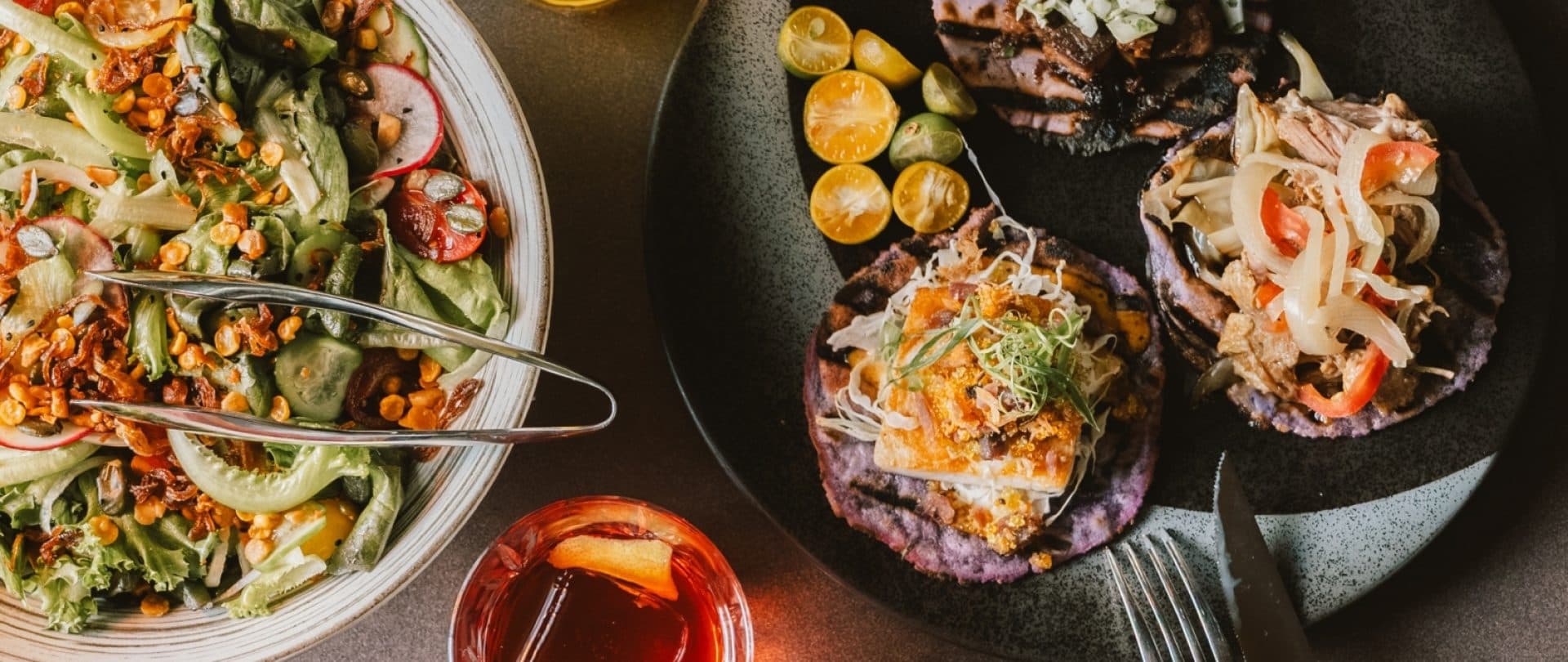
The kitchen and bar follow a similar philosophy. Prohibition-inspired cocktails arrive with contemporary flourishes. Globally influenced dishes draw from local flavors. Menus evolve alongside changing themes and storylines, reinforcing the sense that this is less a restaurant than an unfolding narrative. It rewards curiosity. Every room, every shelf, and every corner offer something new to discover.
And that, in the end, is what connects all three of these destinations. The appeal of a speakeasy has never been the hidden door itself. It’s what waits on the other side. At EP Bar, you find a soundtrack. At RM 38, another era. At Vintage Books, a story.
Each creates a world distinct from the surrounding city, transforming an ordinary night out into something a little more memorable. In Honolulu’s evolving cocktail scene, that’s the new definition of a great speakeasy: not simply a place that’s hard to find, but one worth finding.
EP Bar; 1150 Nu‘uanu Avenue, Unit A, Honolulu; enter on Pauahi Street; (808) 753-9720; open Monday 6 p.m.–11 p.m., Tuesday–Saturday 5 p.m.–11 p.m., closed Sunday; epbar.co
RM 38 at The Imperial Hawaii Resort; 205 Lewers Street, Honolulu; open Sunday–Wednesday 5 p.m.–midnight, Thursday–Saturday 5 p.m.–1 a.m.; ring the hotel bell after 11 p.m.; rm38hawaii.com
Vintage Books; 3660 Wai‘alae Avenue, Suite 101, Honolulu; (808) 736-4917; open Sunday–Thursday 4 p.m.–11 p.m., Friday–Saturday 4 p.m.–midnight, brunch Saturday–Sunday 10 a.m.–2 p.m.; vintagebookshawaii.com